Booking a Visit
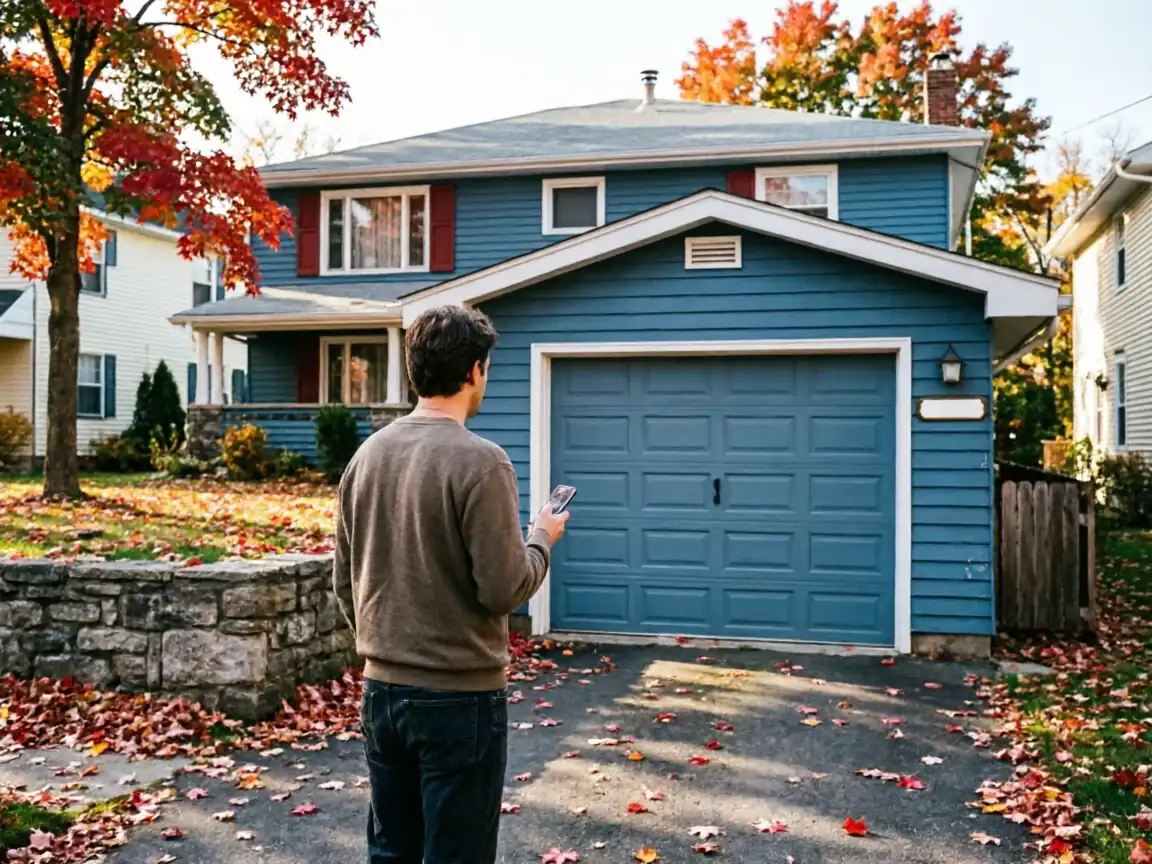
We run this call from Bethesda, about 2 miles out, so there's no branch office in Chevy Chase itself and we won't pretend there is. What we do have is a good sense of what breaks on a street of 1930s-era houses versus the newer stock further out in the service area. When you call, tell us the age of the house if you know it - a door original to a 1938 build behaves nothing like one installed during a 1970s remodel, and that changes what we bring on the truck.
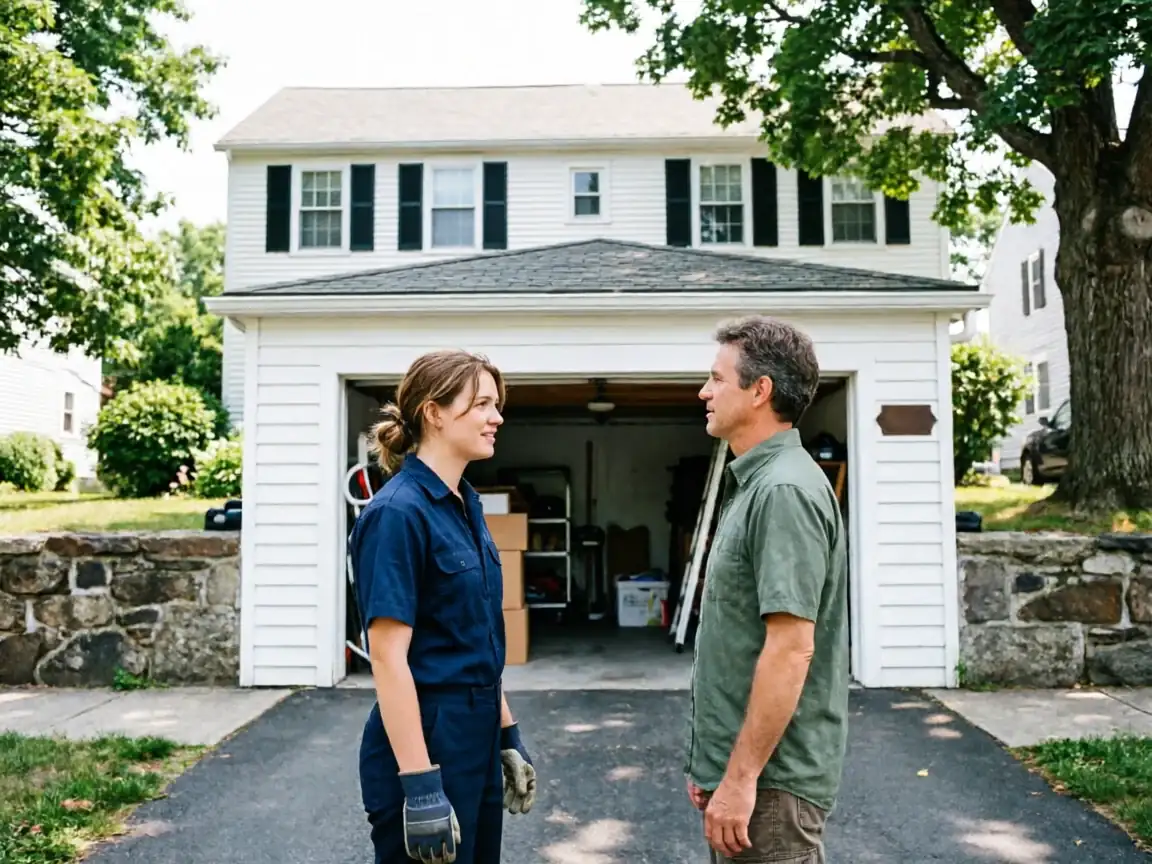
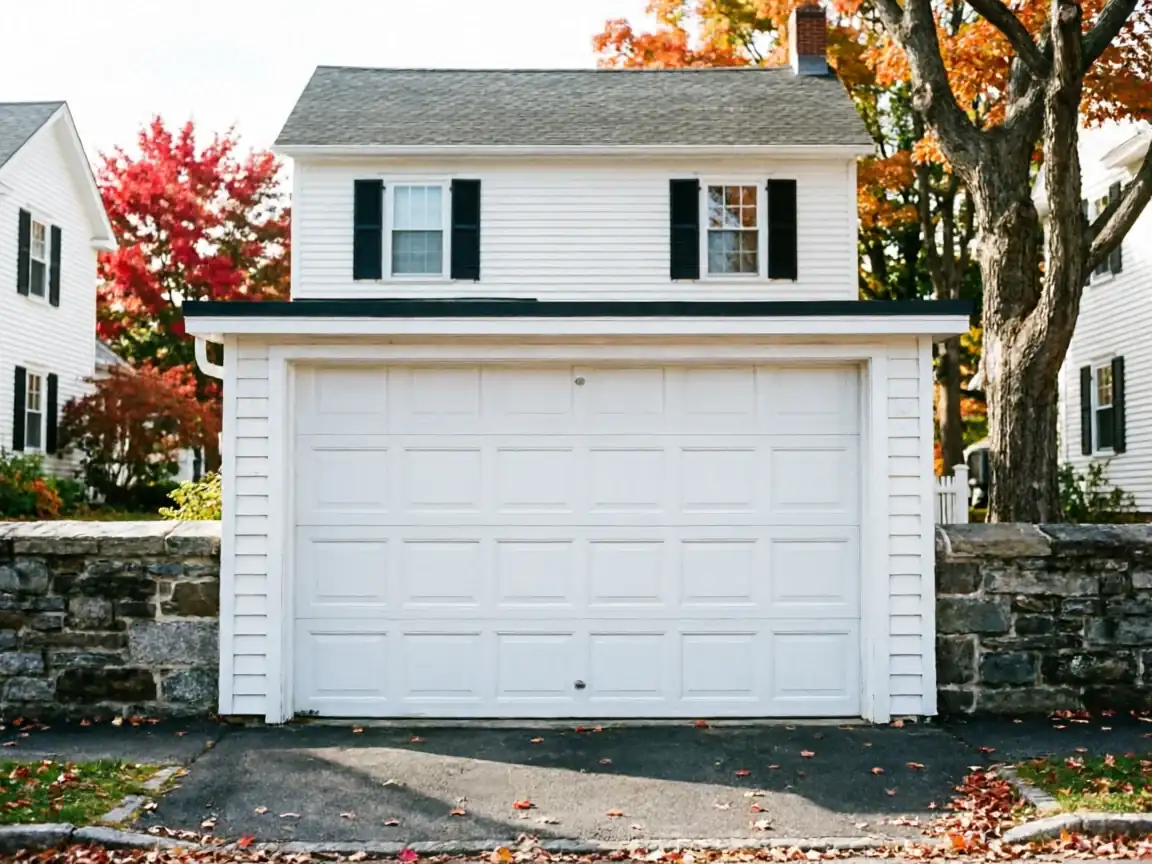
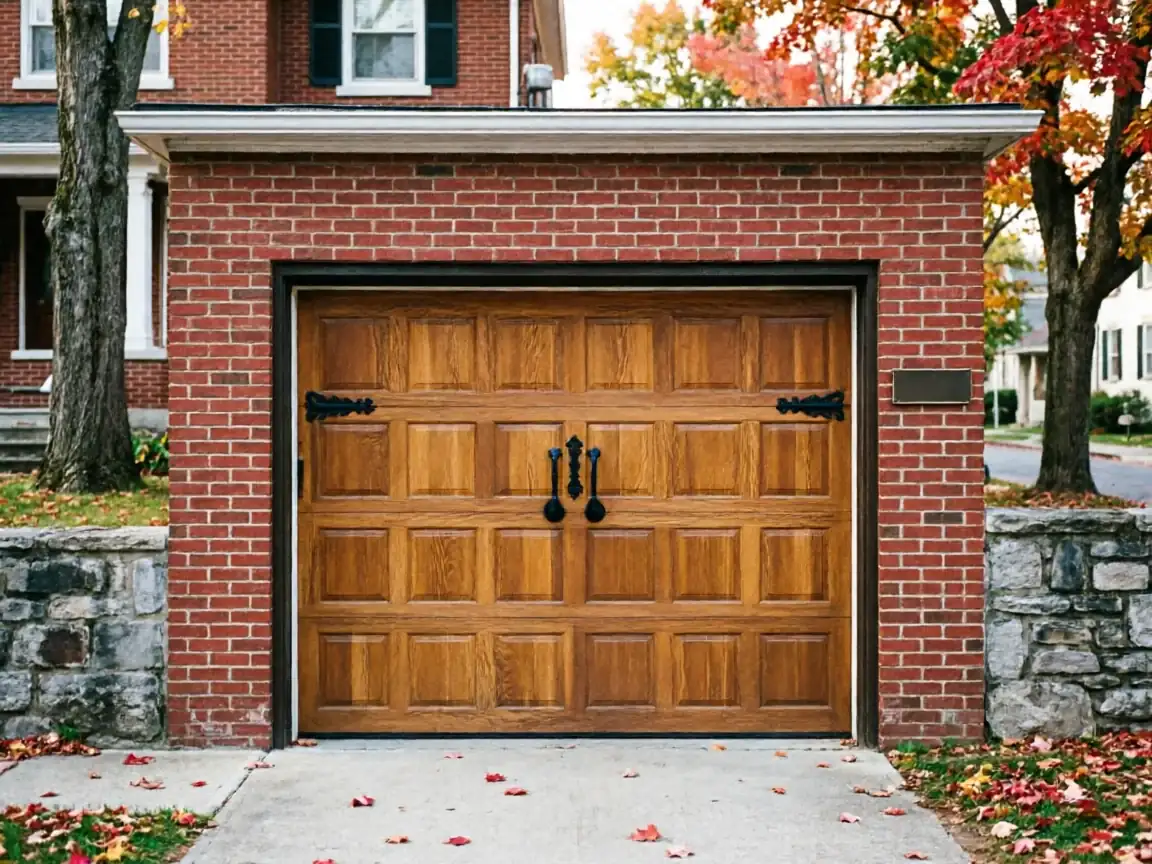
Most of what we see in Chevy Chase is older single-door garages, sometimes converted or narrowed at some point in the house's life, which means the opening itself can be a non-standard width. That's worth mentioning before we show up with a stock-width panel that doesn't fit. If your garage has been altered from its original footprint, say so when you book - it saves a second trip.
We don't do same-day guarantees here or anywhere else in the area; we don't have a response-time figure to quote you, and we're not going to invent one.
The Cost of This Job
Chevy Chase sits in a part of the service area where median household income runs well above the regional figure of $116,255
Chevy Chase's own number is around $250,001. That doesn't change what a torsion spring or a new opener costs; parts are parts. What it does mean is that owners here are more likely to ask us to replace an original 1938-era door outright rather than keep patching failing hardware, because the math on an old single-layer wood door with no insulation often doesn't favor another repair.
We won't quote a number in this page we can't back up locally
But we will say this plainly: a repair on a door that old sometimes costs most of what a new one would, once you account for hardware that no longer matches current rollers and track. We'll tell you straight when fixing it stops making sense, rather than billing you for a patch that fails again in a year.
How Long It Takes
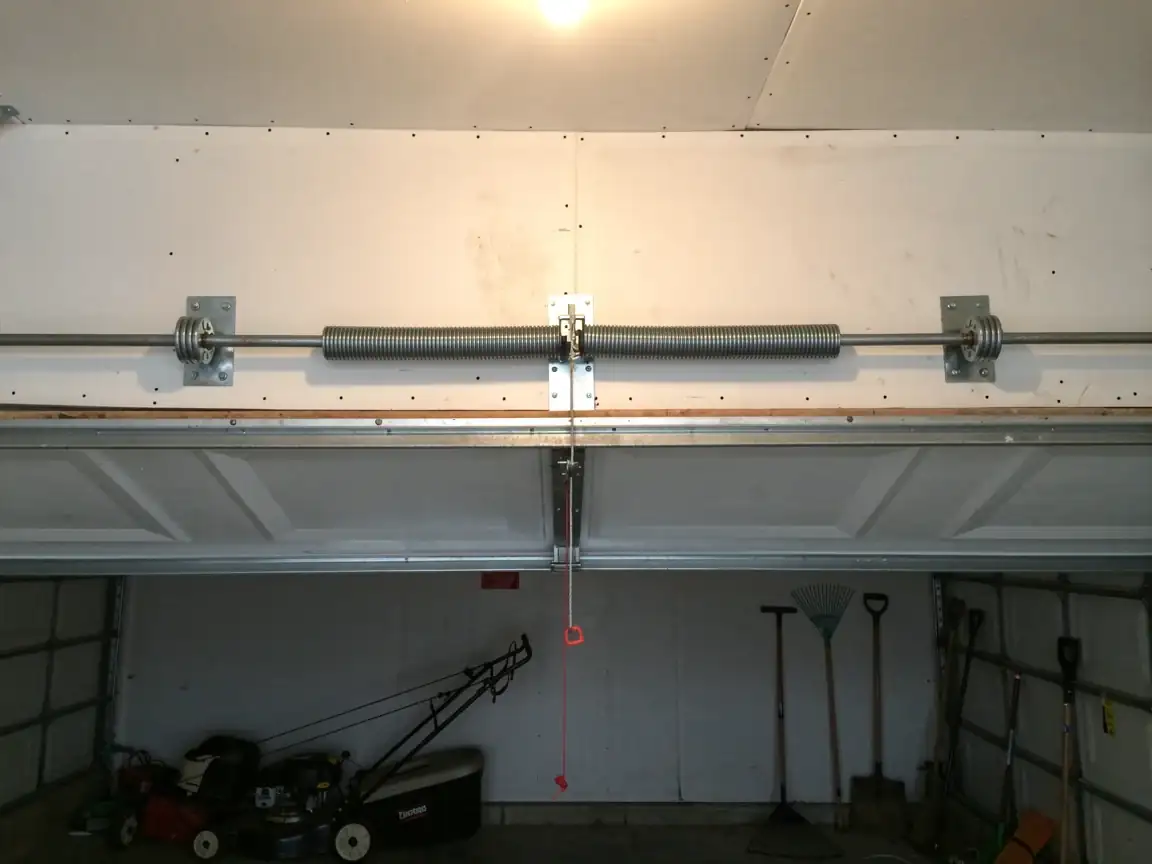
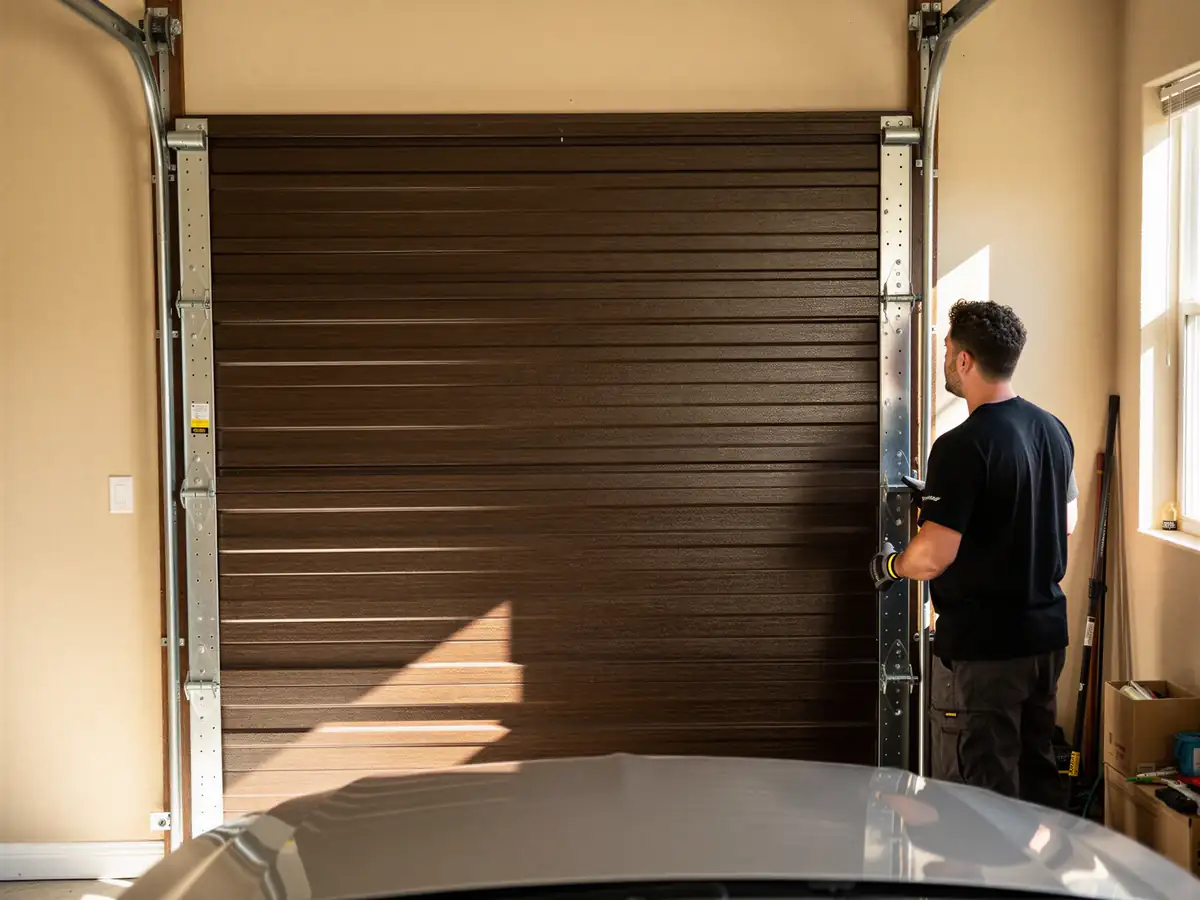
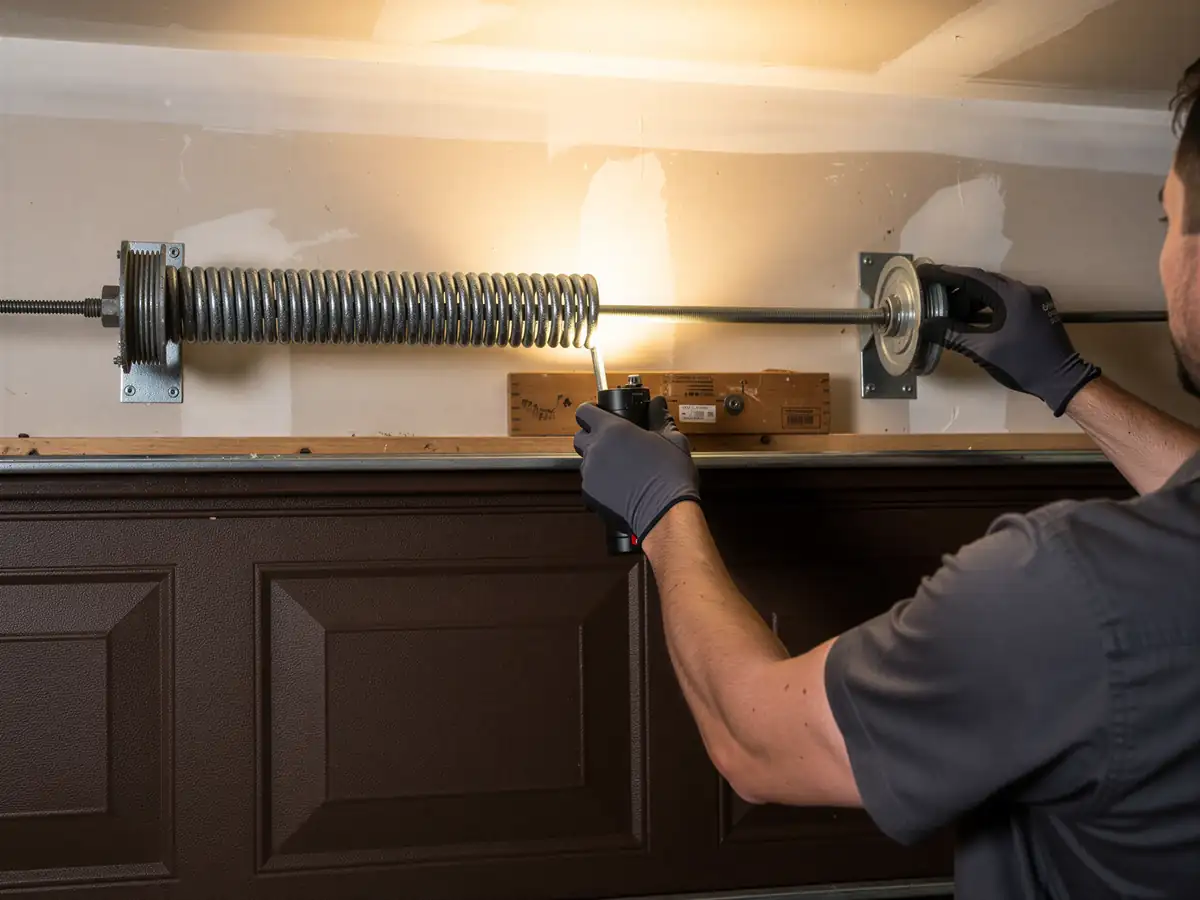
A straightforward spring or roller job on a standard door doesn't take long regardless of the town. What slows a job down in Chevy Chase specifically is sourcing hardware for an opening built before modern torsion systems were standard - houses from 1938 sometimes still run side-mounted extension springs instead of a center torsion bar, and that hardware isn't something every supplier stocks on the shelf.
If your door and track are original or close to it, expect us to confirm part compatibility before we commit to a timeline, rather than promising a same-visit fix we can't guarantee. Newer openers and standard-width double doors, which you'll find more often further out in the service area's 1960s-70s tract housing, are a faster, more predictable job.
What Causes It Around Here
The service area overall runs from 1938 to 2014 construction with a median around 1973, but Chevy Chase sits at the old end of that range. A door, track, or opener original to a 1938 house has had close to nine decades to work on its hardware, and in a climate band this agency classifies as cold-severe, that hardware has been through a lot of freeze-thaw cycling on the metal fasteners and track brackets.
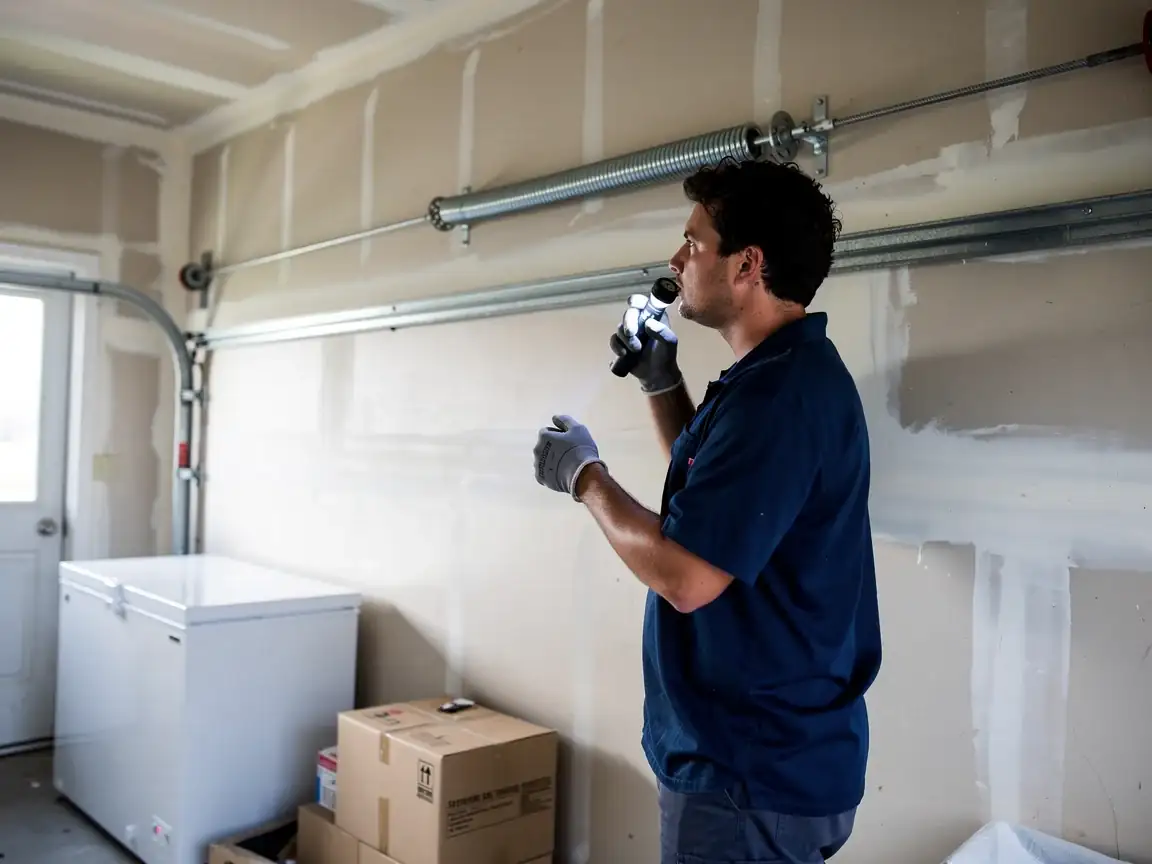
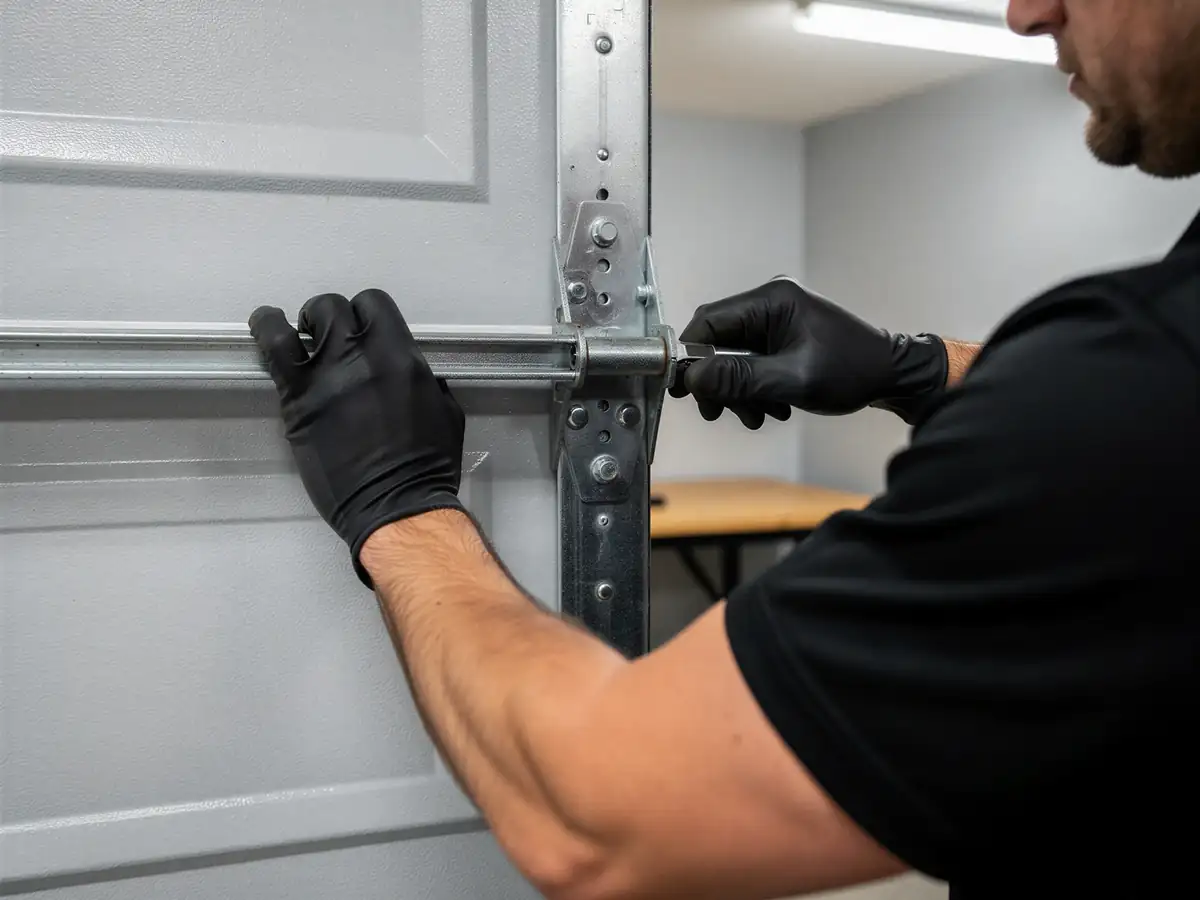
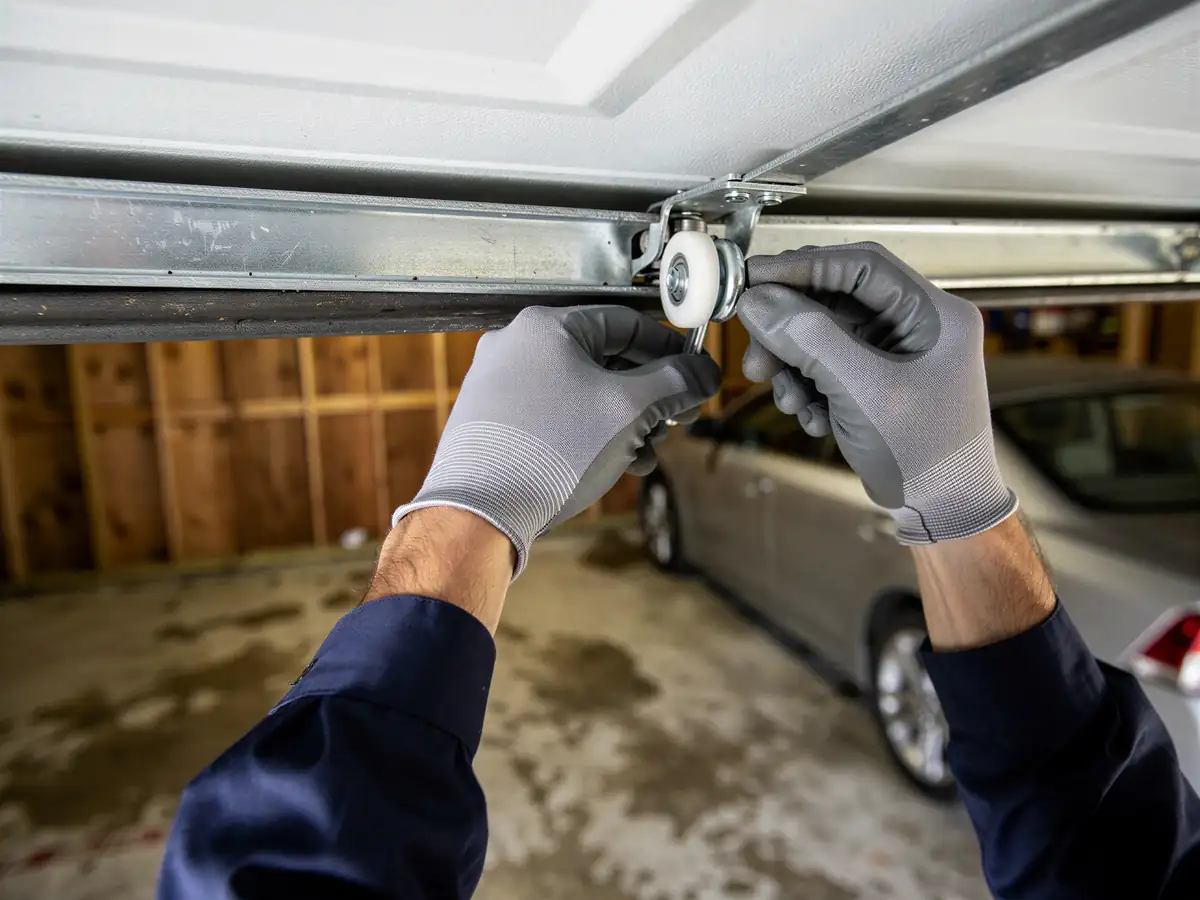
The common failure we see on these older openings is a worn or corroded hinge and roller set rather than a dead opener - the motor side often outlives the moving metal on these doors. Extension springs on older single doors also fatigue and snap after enough winters, and because the hardware predates today's standard parts, a repair sometimes means adapting a modern part to an old bracket rather than a straight swap.
The Symptom
The complaint we hear most from this stretch of Chevy Chase is a door that drags, binds, or won't seat flush at the bottom
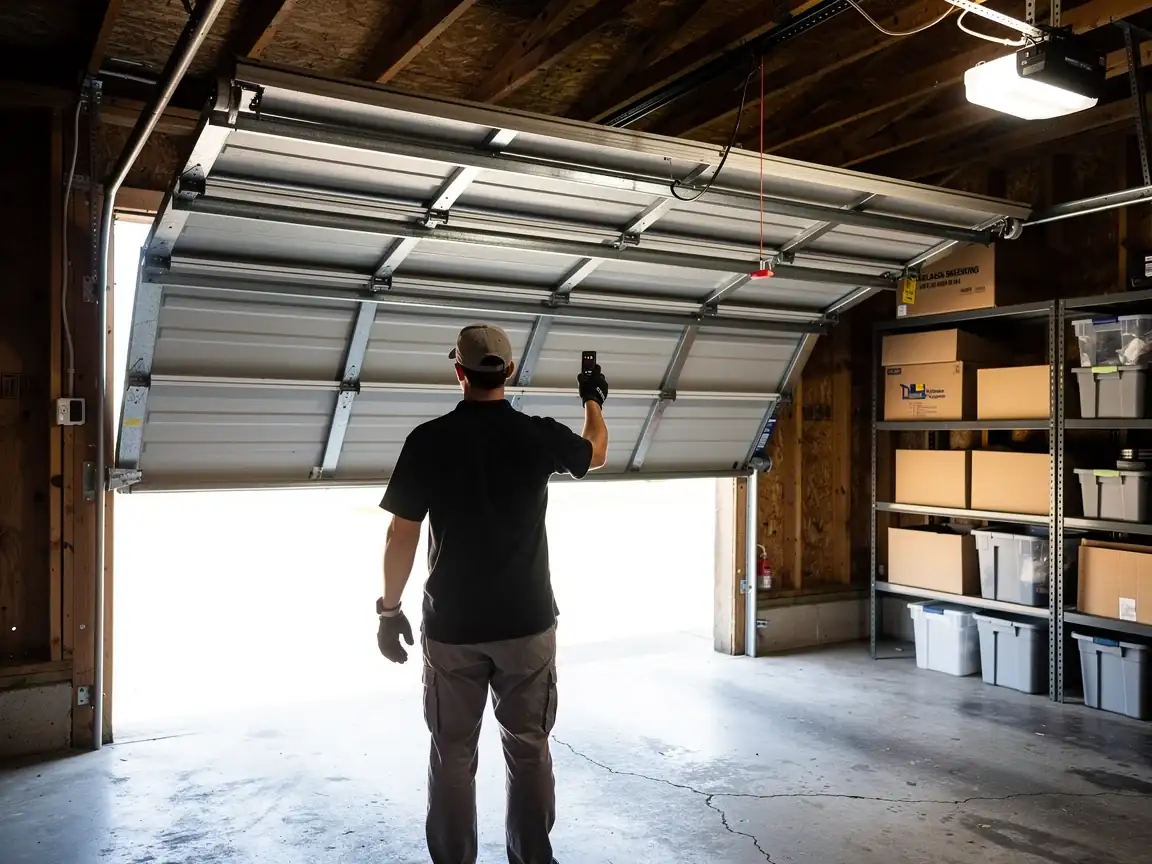
Not an opener that fails outright. That's consistent with a house this old: the track has shifted slightly out of plumb over decades, or the original hinges have worn enough play into the panel seams that the door no longer travels straight.
If your door closes unevenly, scrapes one side of the frame, or needs a shove partway up, that's track and hardware wear
Not necessarily a dead spring. We check alignment and hinge wear before we touch the spring tension, because on a door this old, replacing a spring that wasn't the actual problem just means a second call.