Leaving It Alone
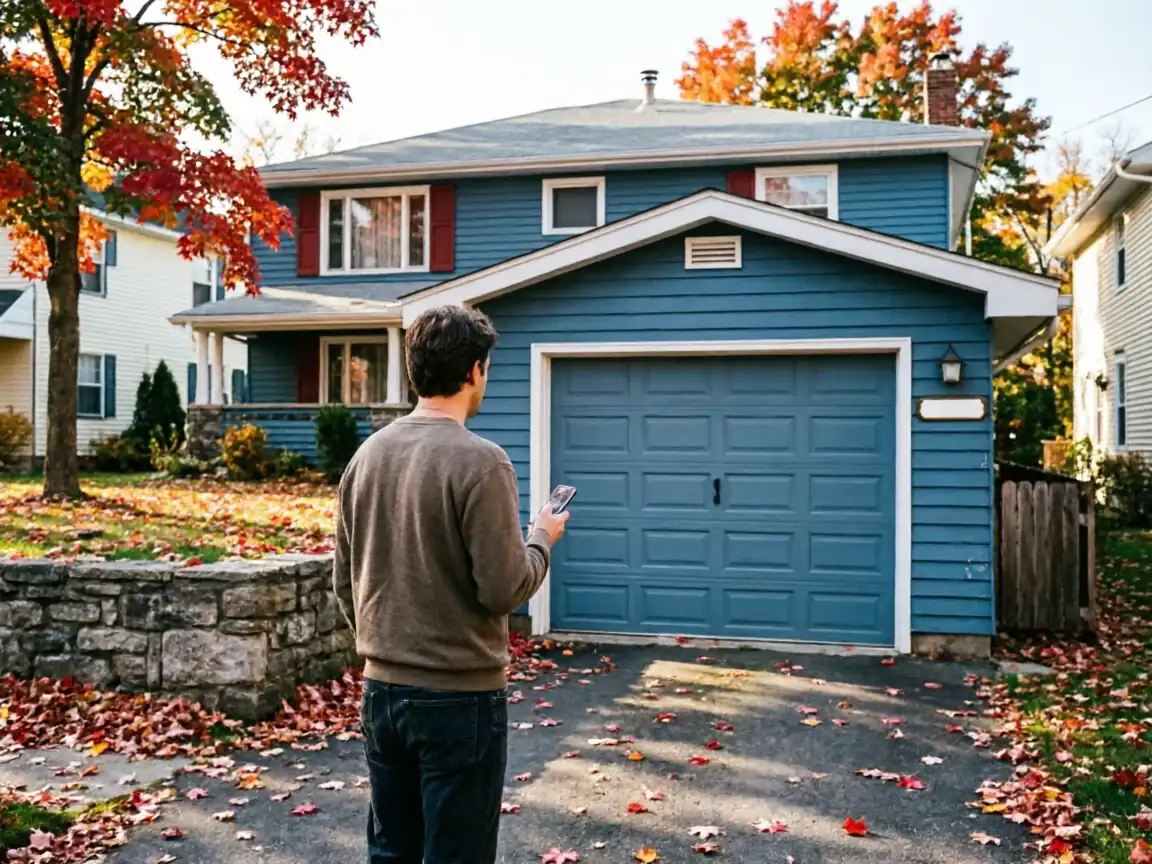
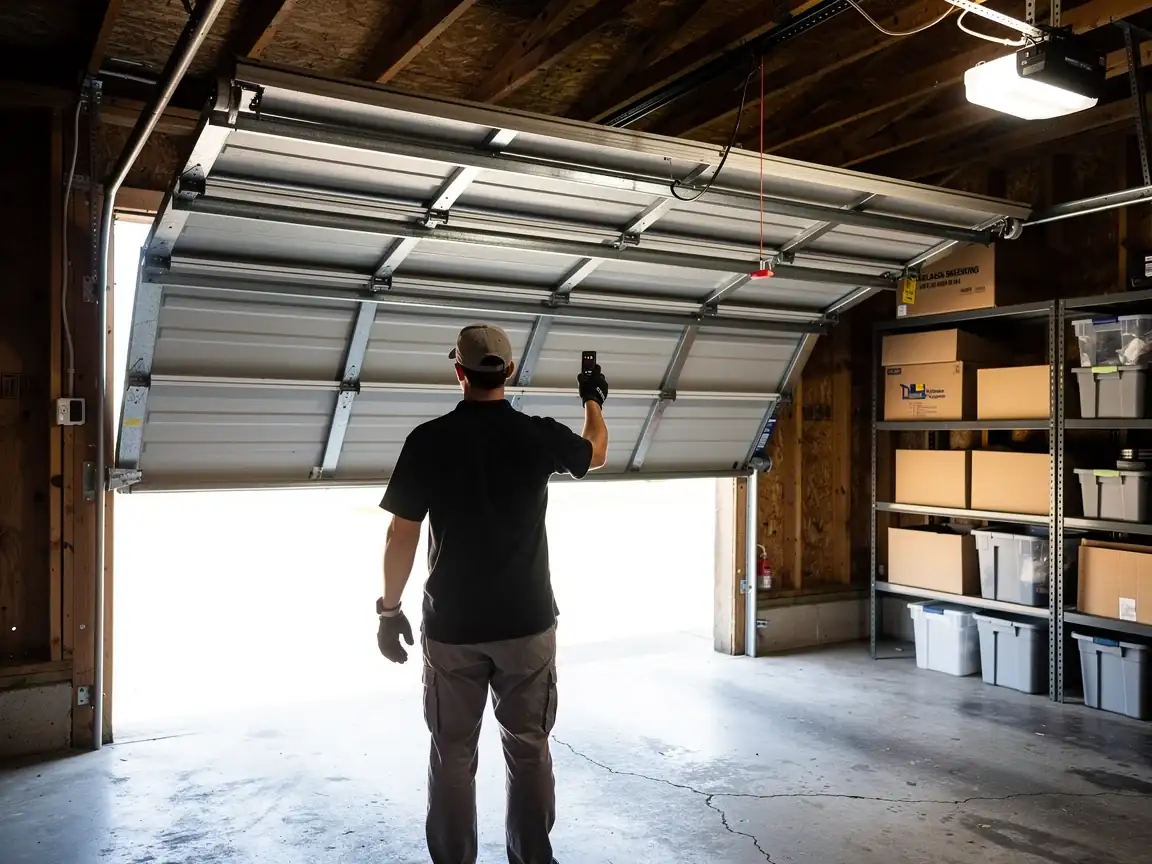
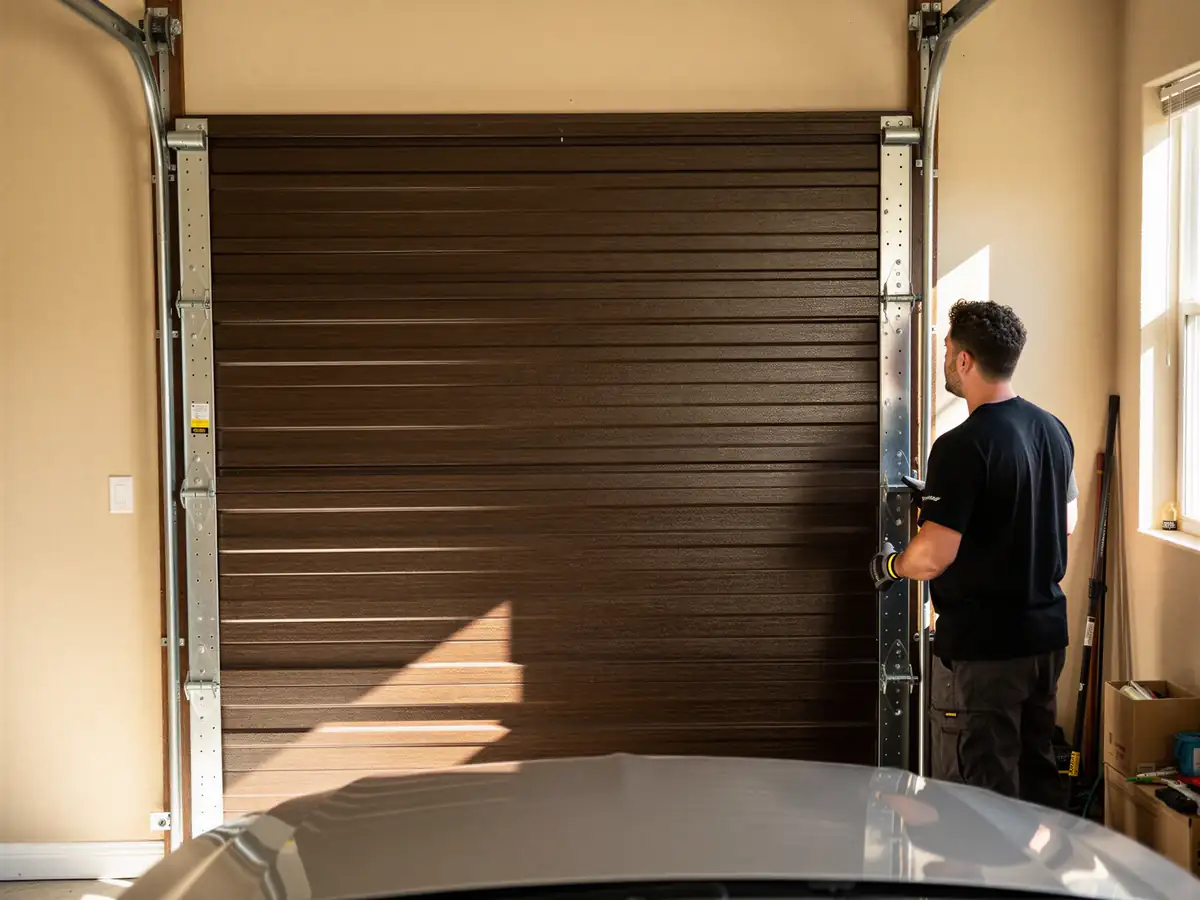
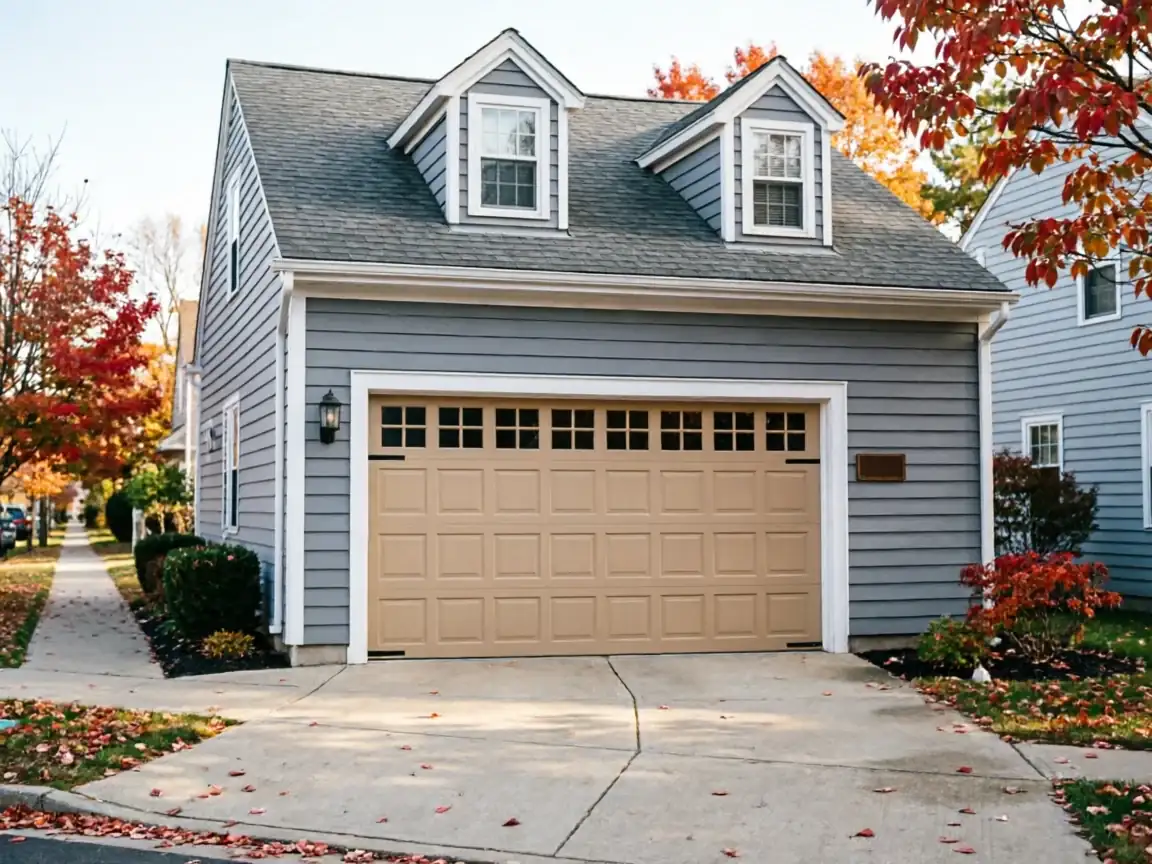
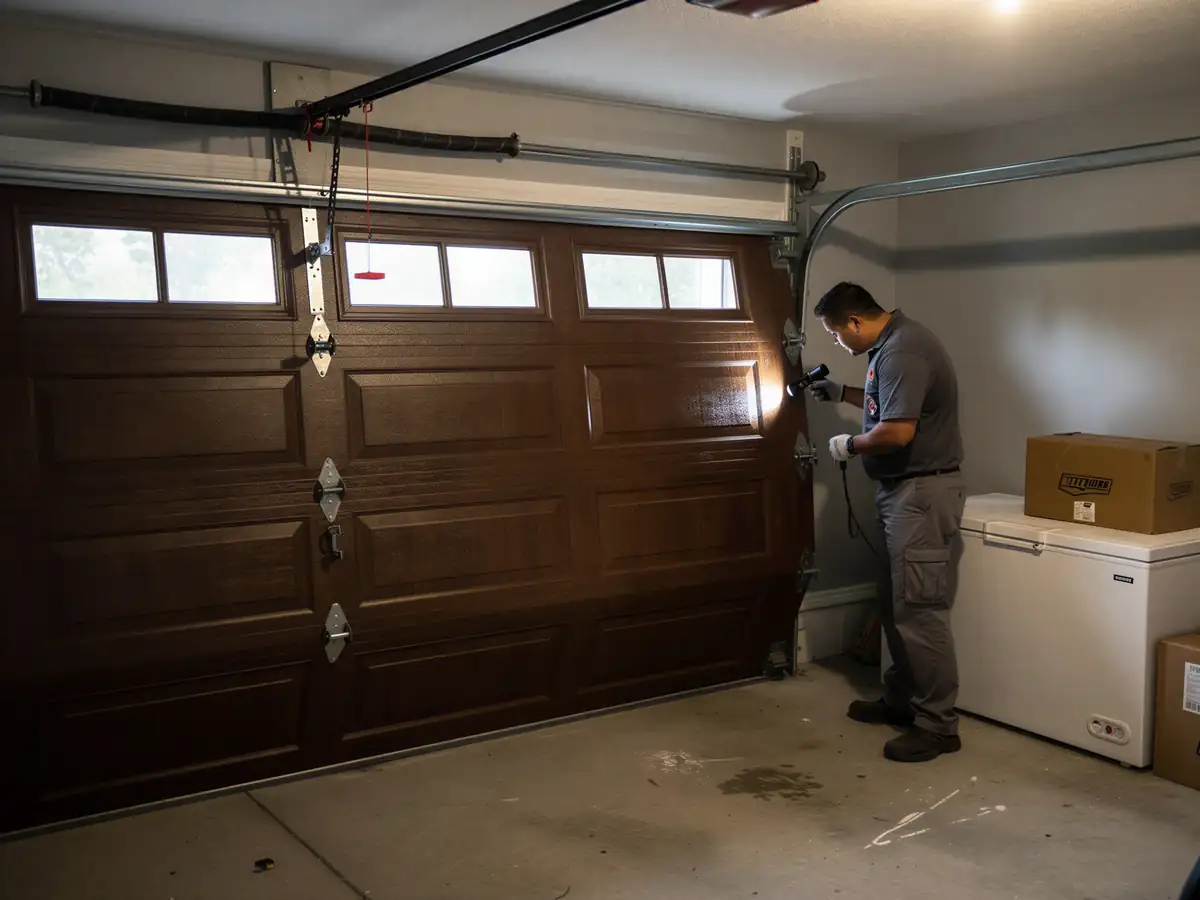
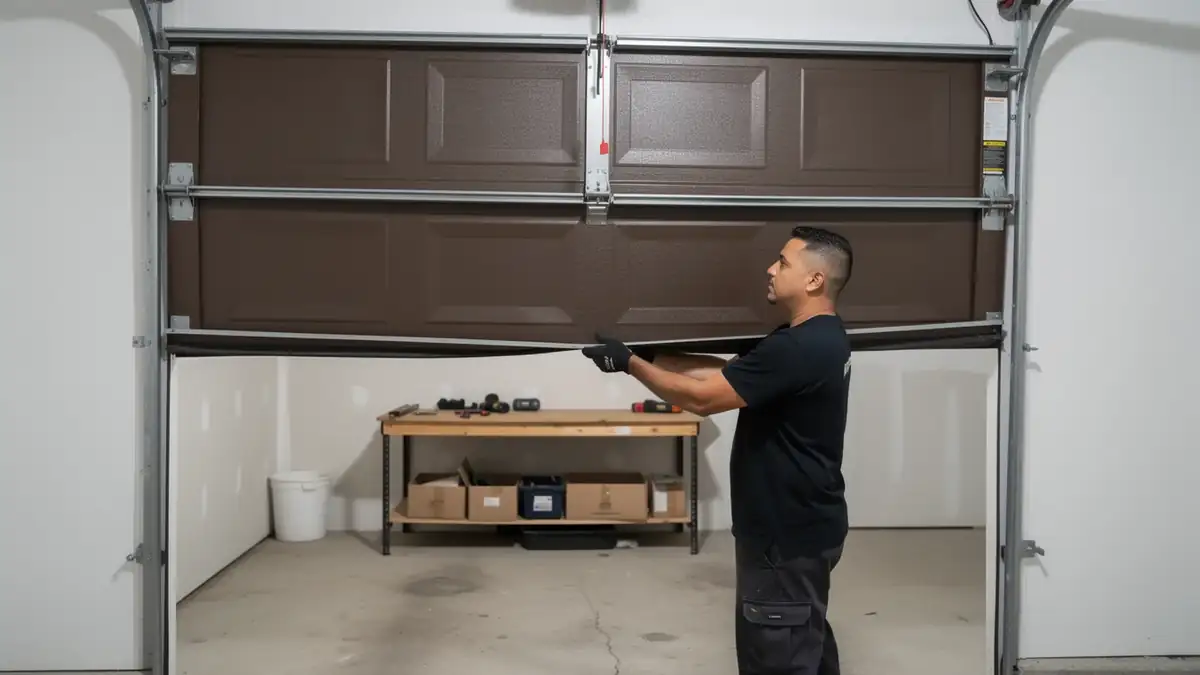
Most calls we get start with someone convinced their door needs a full replacement when it doesn't. If the door still opens and closes on its own power, even slowly or with a groan, we don't start swapping parts. We watch it run a full cycle first. A lot of houses in this area went up between 1938 and 1973, median build year, and the hardware on those doors was often sized for lighter doors than what's hanging on the track now after a previous owner upgraded panels. Before we touch a spring or a track bracket, we want to see the whole cycle, because half the noise complaints we get turn out to be a loose hinge, not a failing part. Tearing into a system that's basically sound just because it's old wastes your money. If the door is original to a house from the 1960s or 70s, which covers a lot of the 75 named areas around here, we treat the age as information, not an automatic reason to replace.
What Is Going On
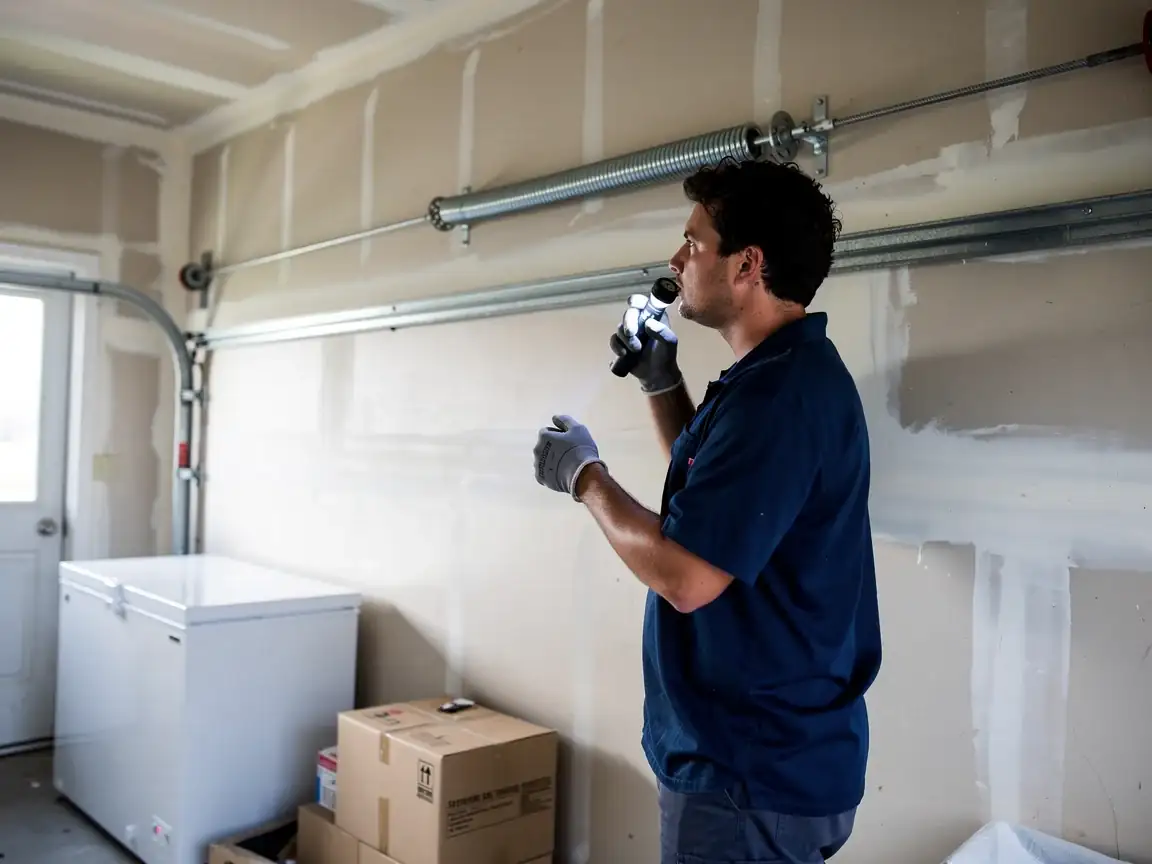
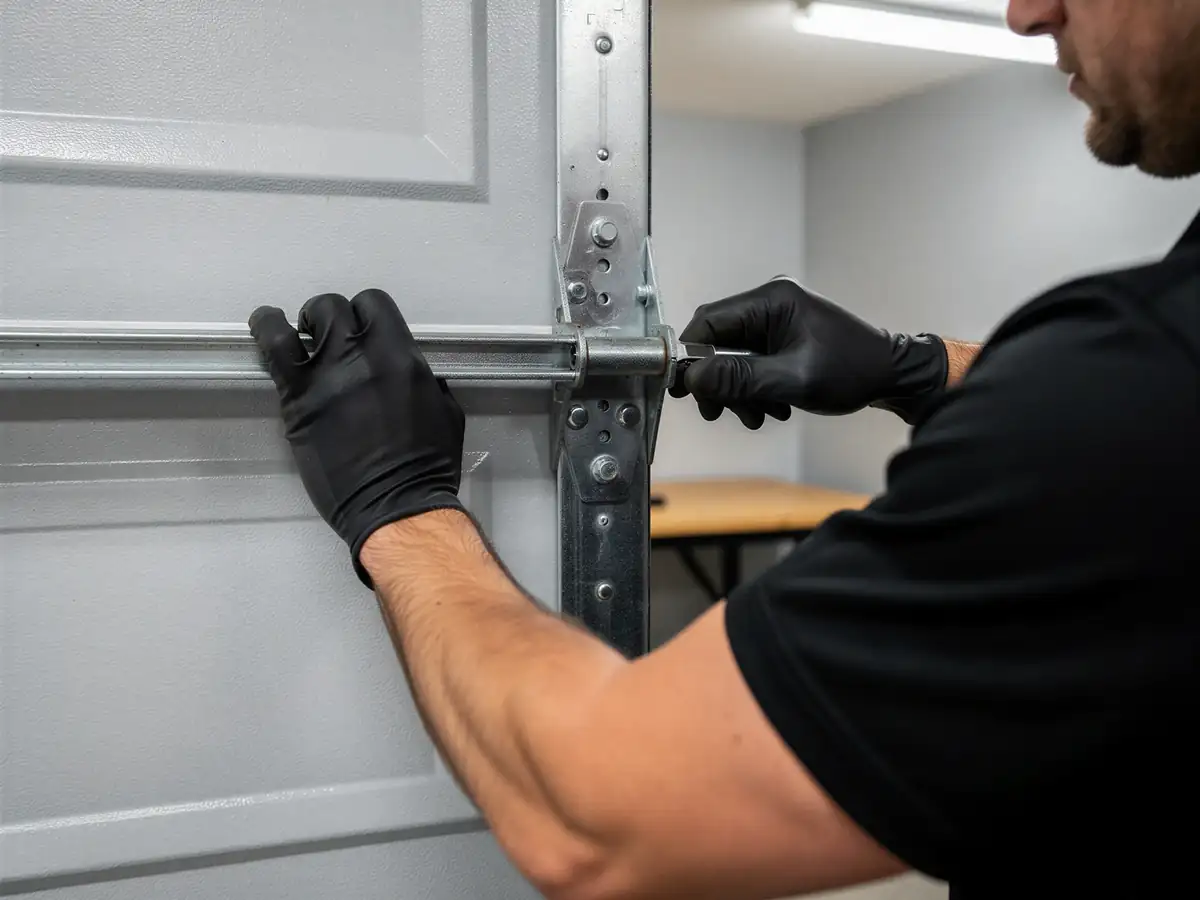
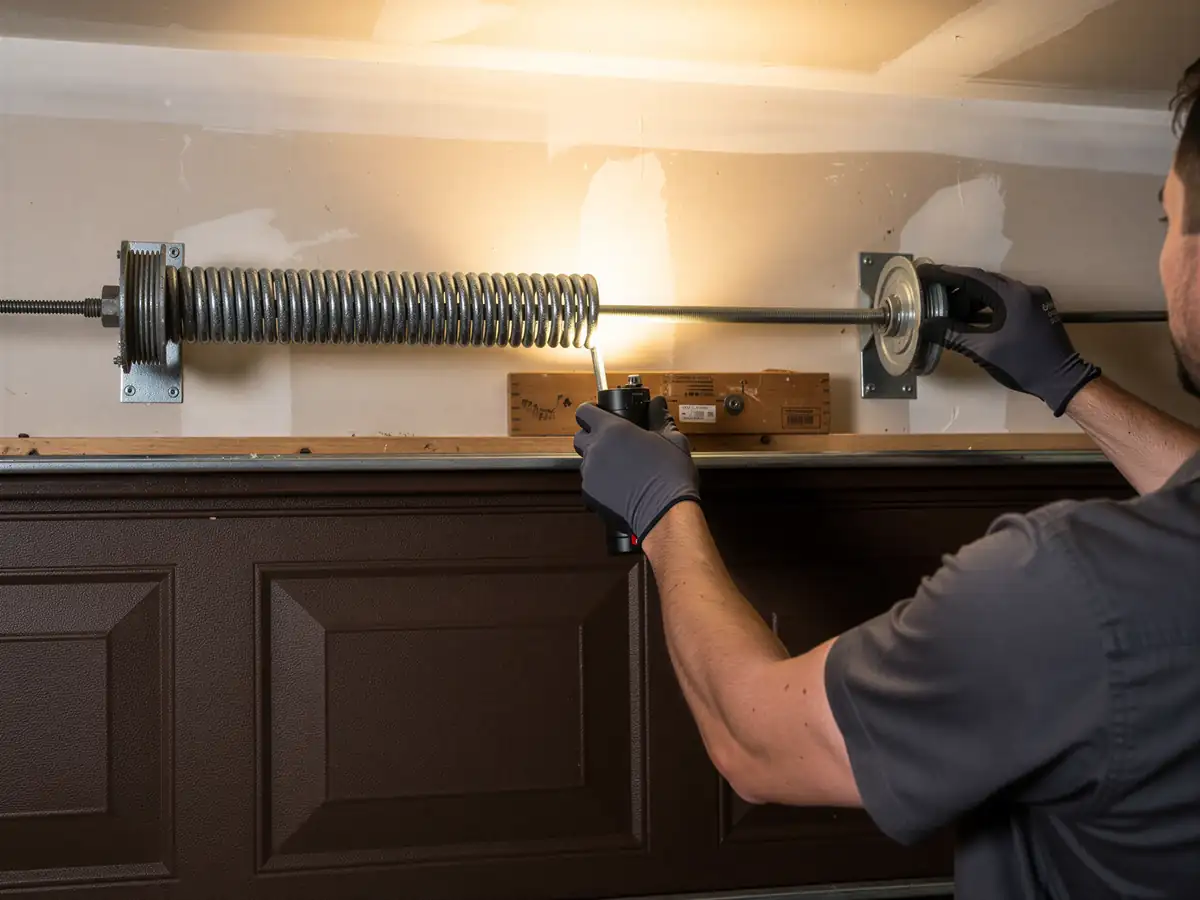
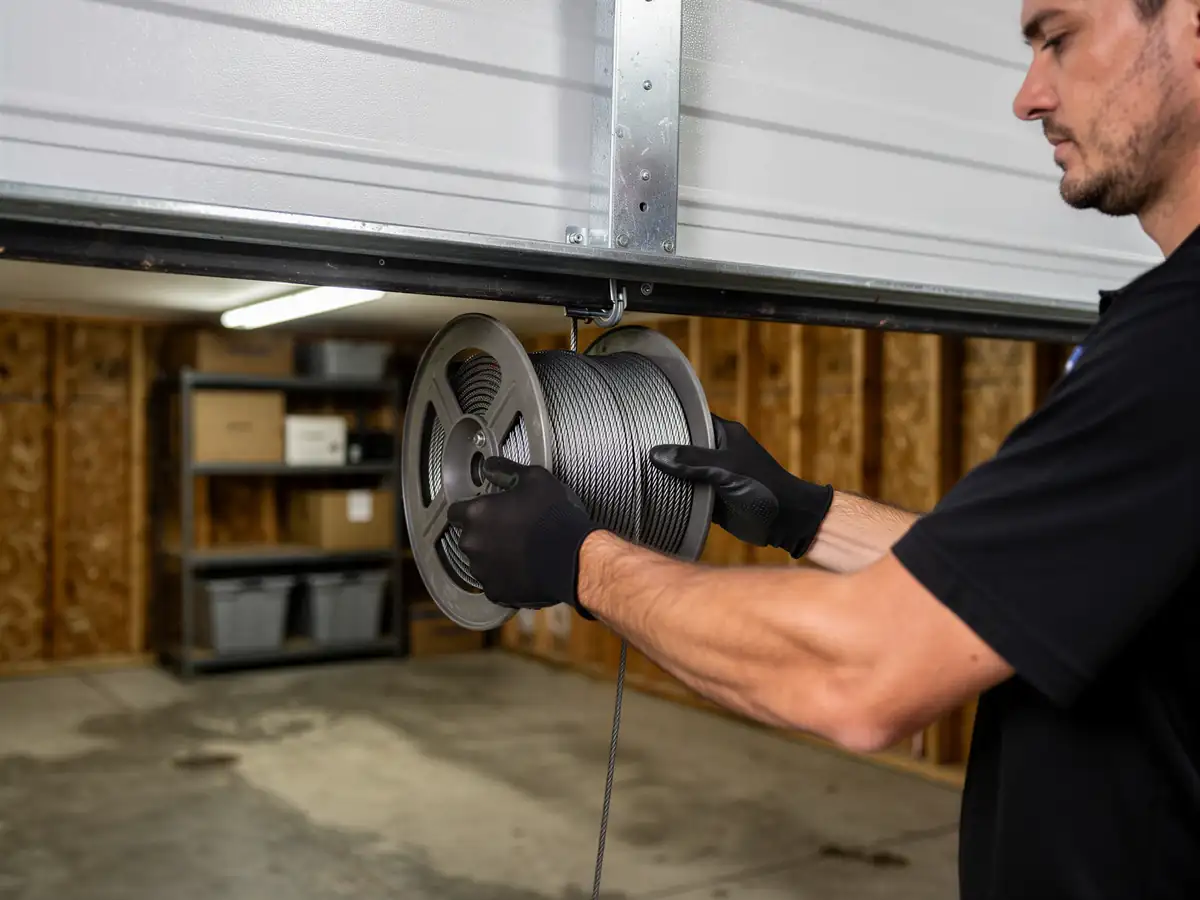
Once we've ruled out the easy explanations, we look at what's specific to the house. A door on 1960s-70s hardware, common across this service area, usually has side-mounted torsion springs on a stamped steel header bracket that wasn't built to carry today's heavier insulated panels. We check the bracket for stress deformation, not just the spring itself. If the house dates closer to 1938, we also check for a wood jamb that's shifted slightly, which throws off door square even when the hardware itself is fine. We pull the cable drums to look for wear grooves, since cold-season spring strain shows up there before it shows up anywhere else. None of this is a guess; it's the order that catches the actual cause instead of the symptom, and it's shaped by what we know about how doors age in this climate and on this housing stock.
When It Stops Being a DIY Job
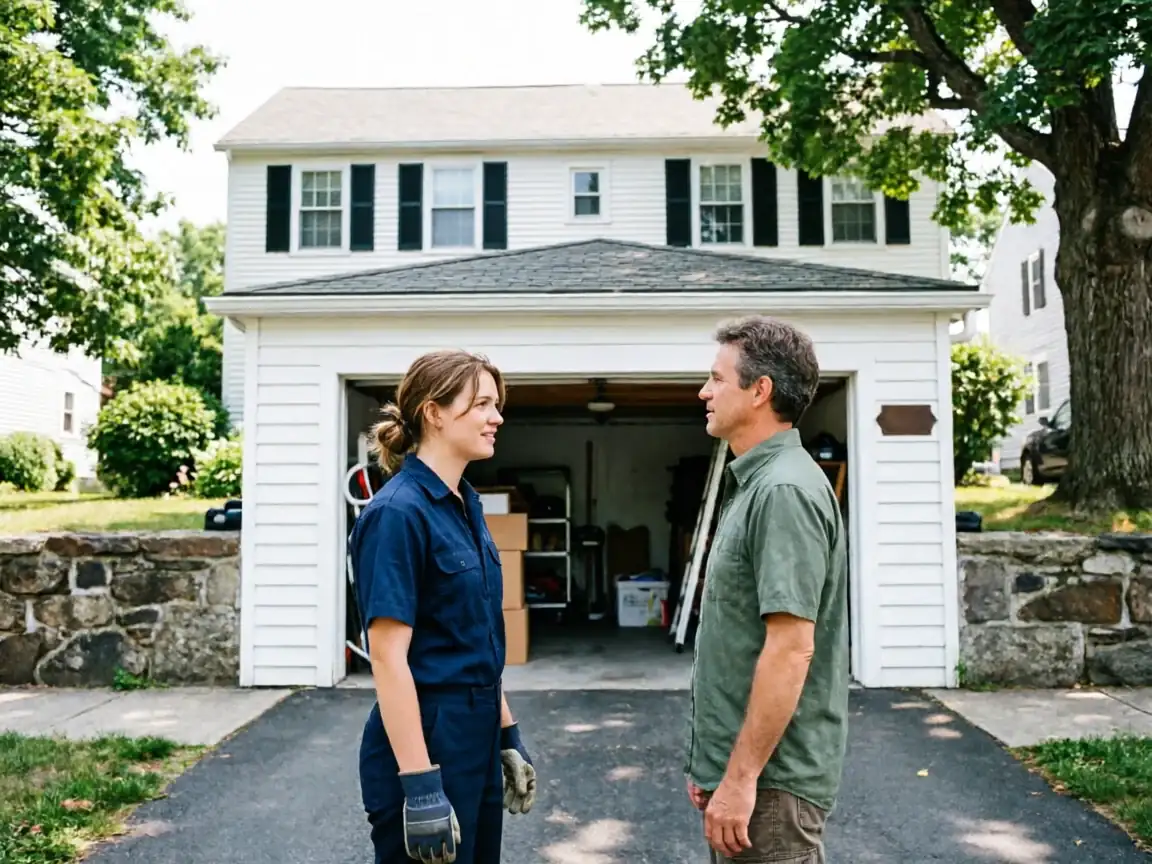
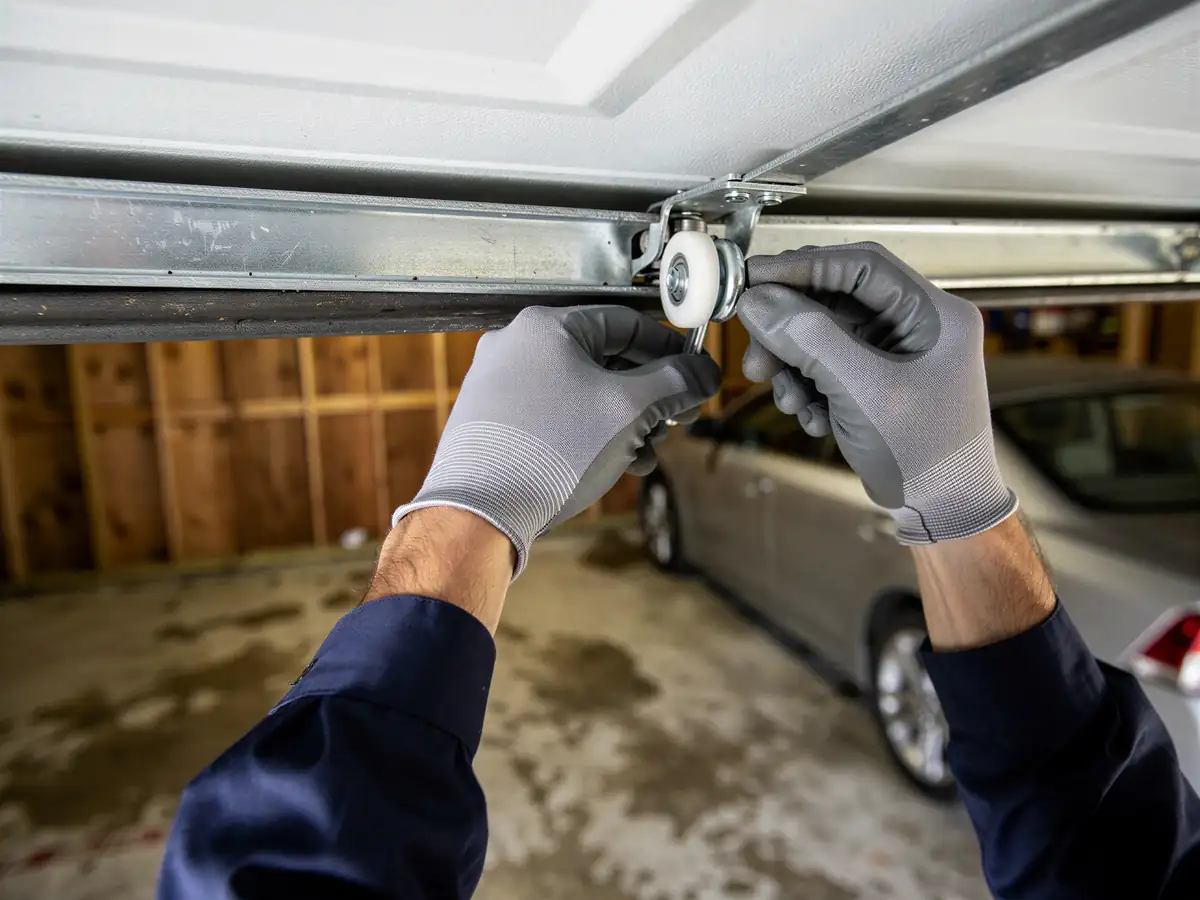
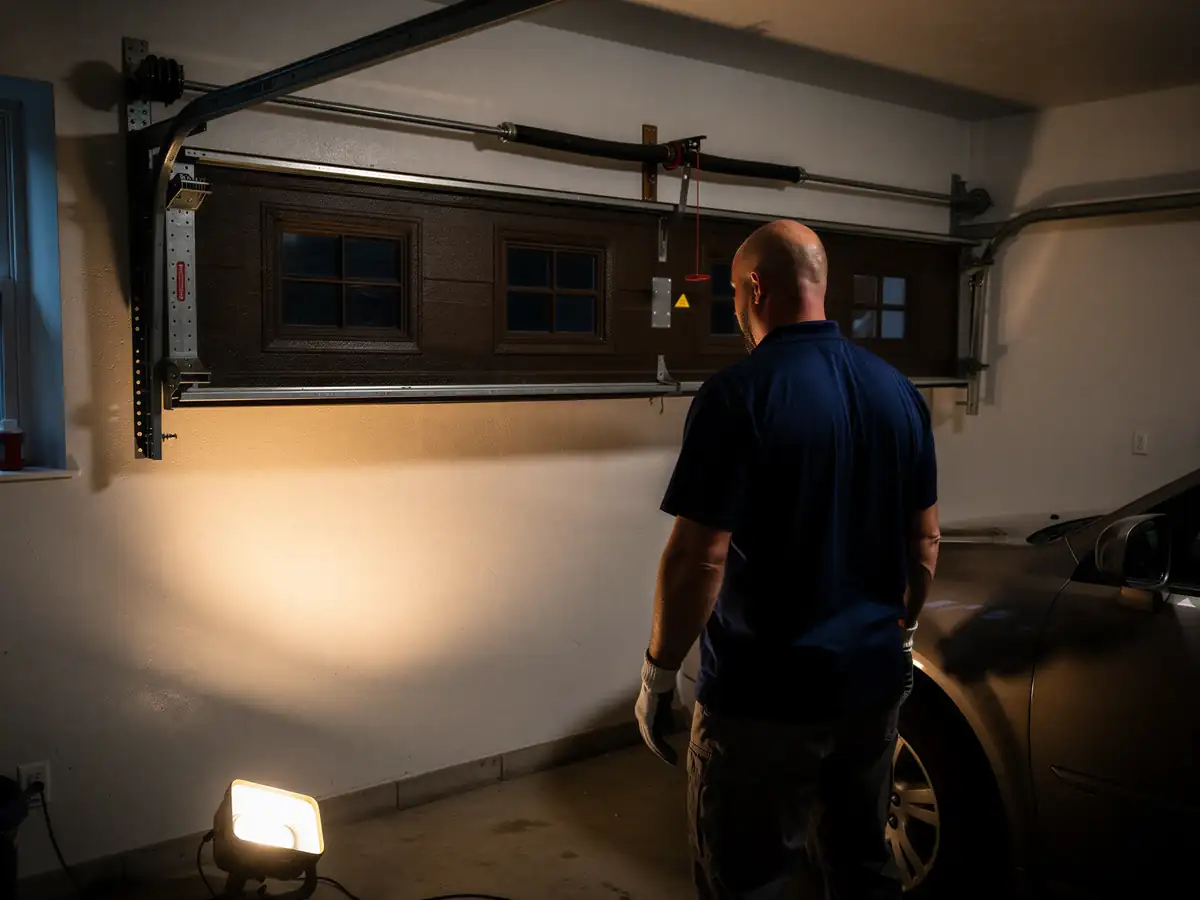
A torsion spring under tension, especially one sized for an older house's original door weight, is not something to loosen or wind yourself. We'll tell a homeowner straight when a repair is reasonable to attempt and when it isn't. Replacing a roller or tightening a loose hinge bolt, fine, most people can do that safely. Adjusting spring tension, re-tracking a door that's jumped its rail under cold-weather binding, or replacing a bracket that's started to deform are not jobs to learn on your own door. We also won't pretend every repair is worth doing. If a door from the early housing stock in this area has a cracked panel and a worn-out opener both at once, replacement is usually the honest answer instead of patching two failures separately.