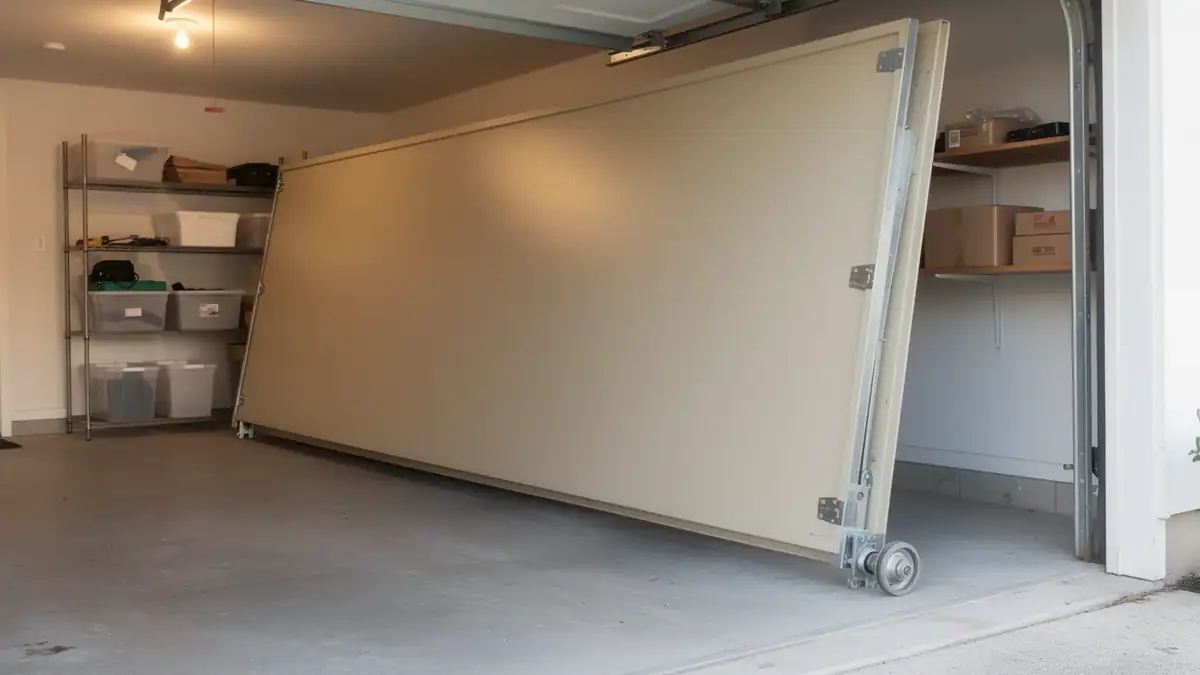
Leaving It Alone
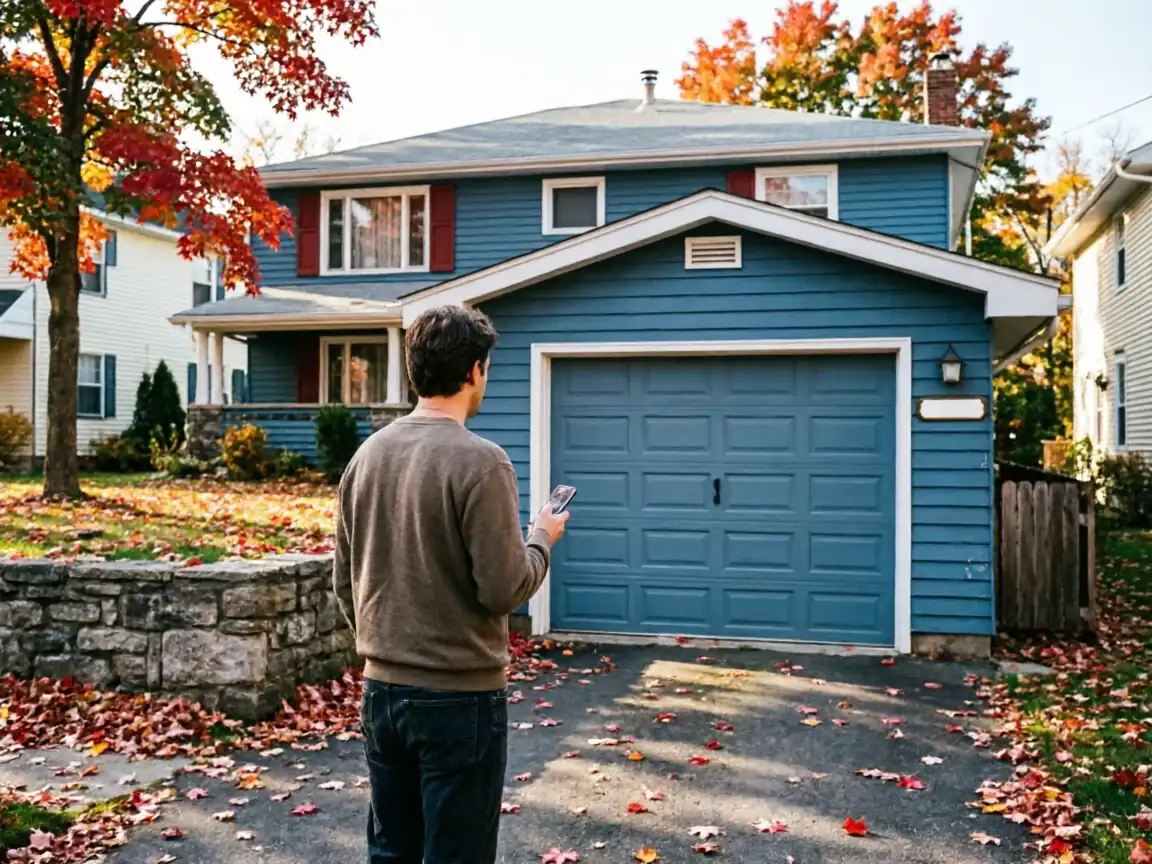
A door that's walked halfway off its track doesn't fix itself, and running the opener through it makes the job worse every time you try. Most of the houses around Chevy Chase, Kensington, and the older sections near Forest Glen were built between 1938 and 2014, with the bulk of that stock going up in the 1960s and 70s. That means a lot of original or close-to-original track brackets, bolted to framing that's had fifty-plus years to settle and shift a few sixteenths of an inch. A track that was plumb in 1973 isn't necessarily plumb now.
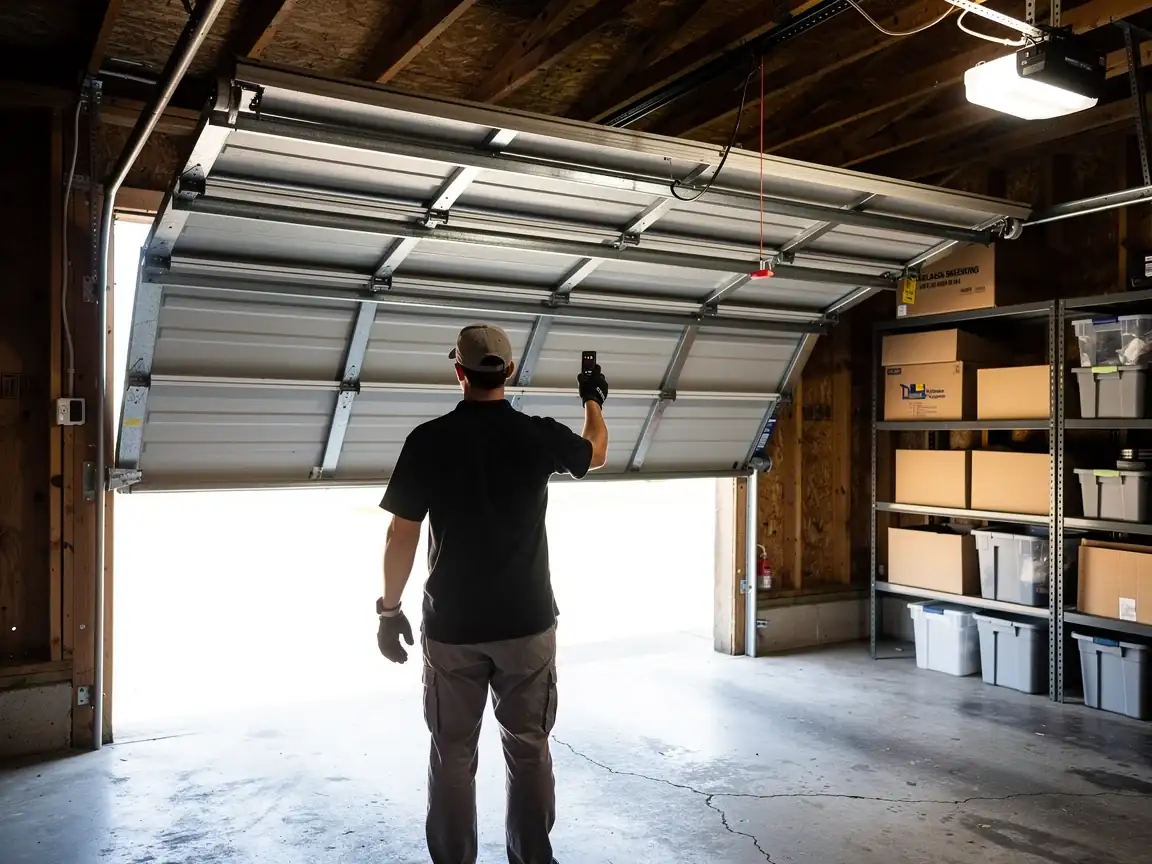
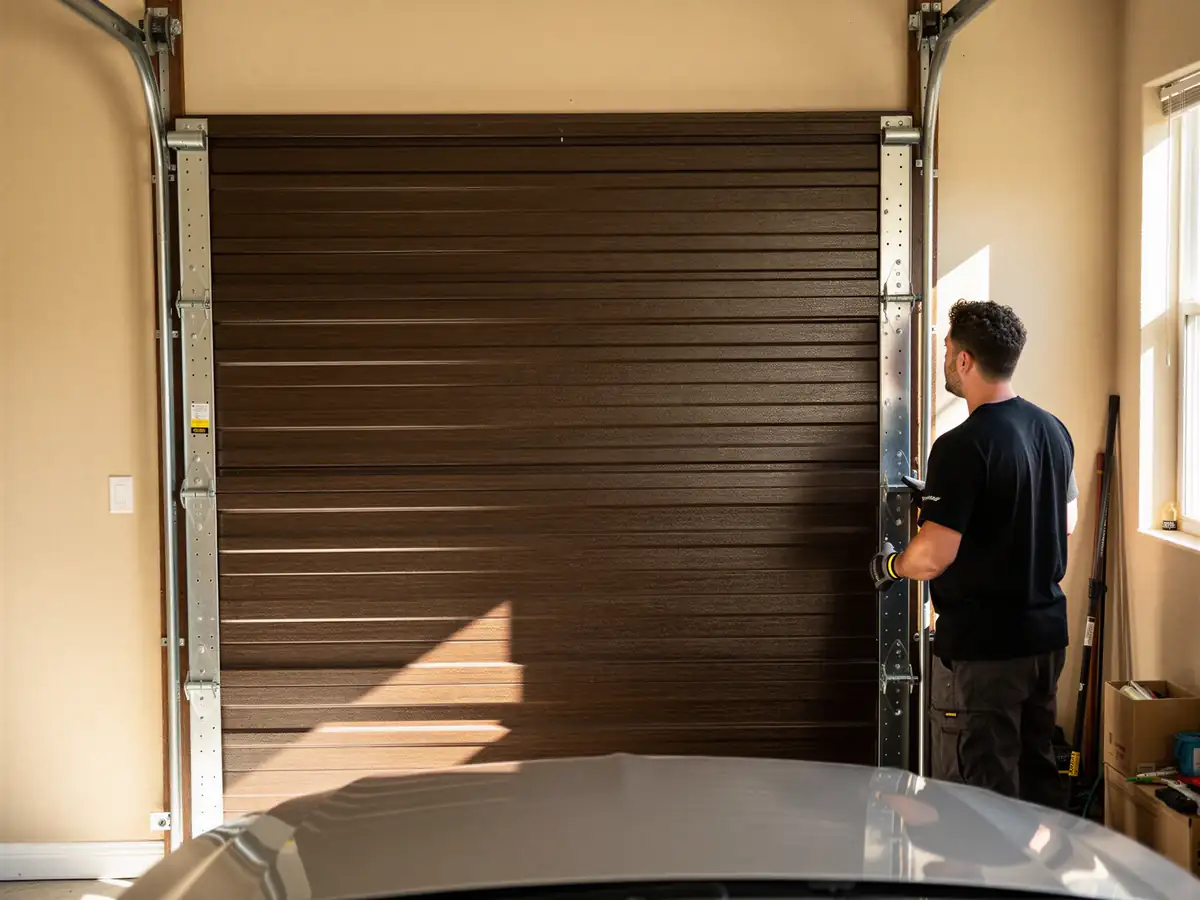
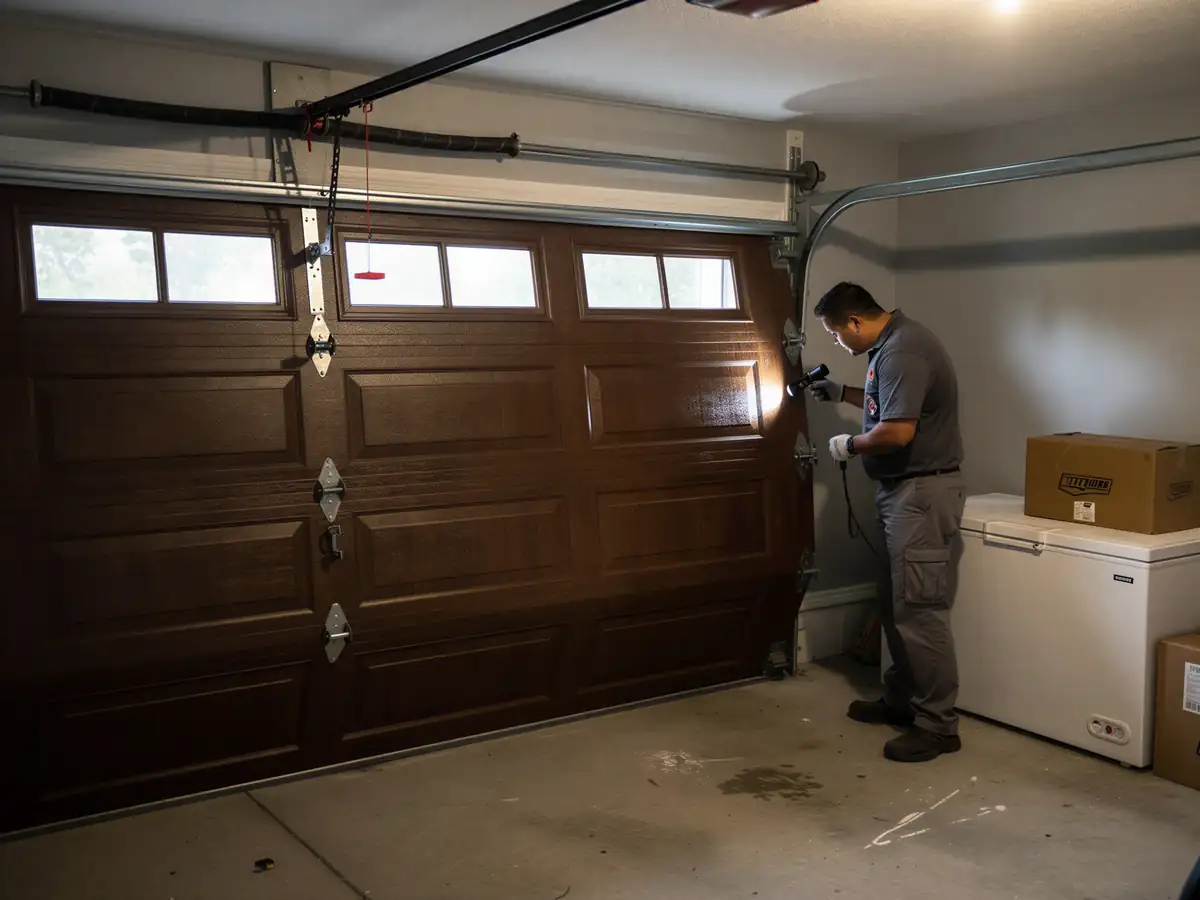
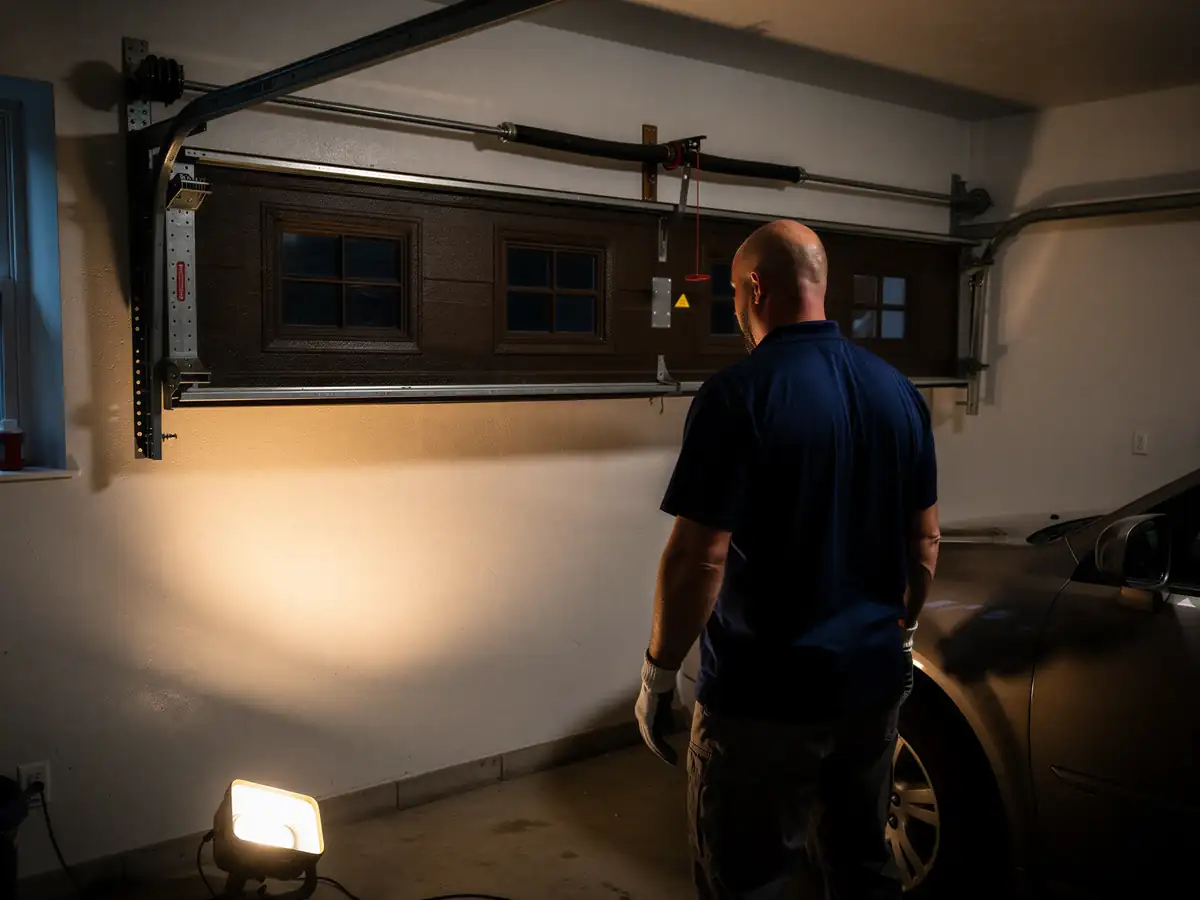
Ignoring a mild off-track condition usually ends one of two ways: the rollers chew through the track lip until the door drops a panel, or a cable jumps its drum and the whole door comes down unevenly. Neither is a weekend project once it gets there. If you notice the door riding crooked, hesitating, or scraping one side of the opening, that's the early warning, not a quirk to live with.
What Local Conditions Do
Bethesda sits in a severe cold climate band
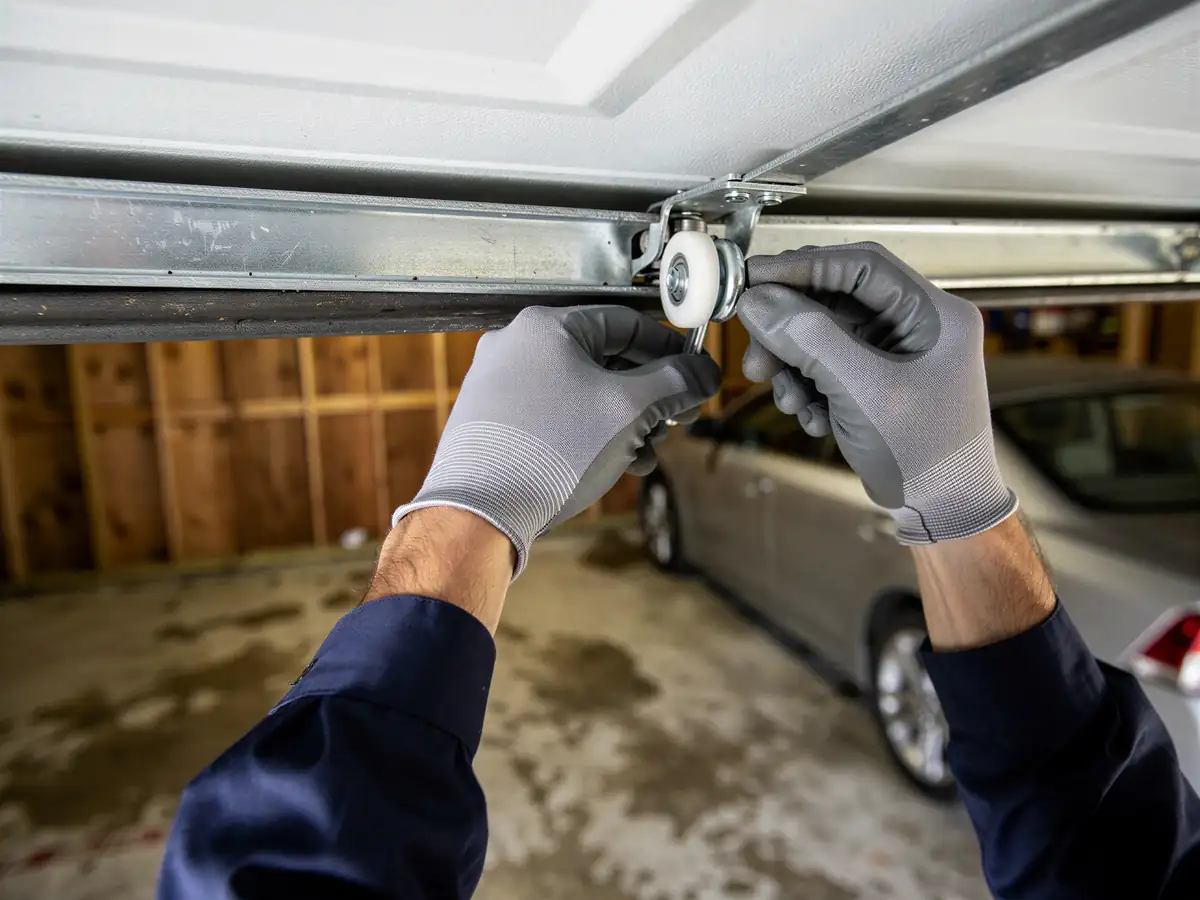
Which means real freeze-thaw cycles every winter, not just a few cold snaps. That cycle works on two things at once: the wood or steel jamb the track is lagged into, and the lubrication in the rollers themselves. Cold stiffens grease, so rollers that normally ride smooth start binding, and a binding roller pulls sideways on the track instead of rolling straight through it.
Houses built in the 1960s and 70s era that makes up most of this area's stock were framed to the code and materials of that decade
Which didn't always account for the kind of seasonal movement a garage opening sees over fifty winters. Mounting bolts back out a little each freeze-thaw cycle, brackets loosen a fraction, and the track drifts out of square. None of that shows up as a sudden failure. It shows up as a door that's slightly harder to close than it was last spring.
What Is Going On
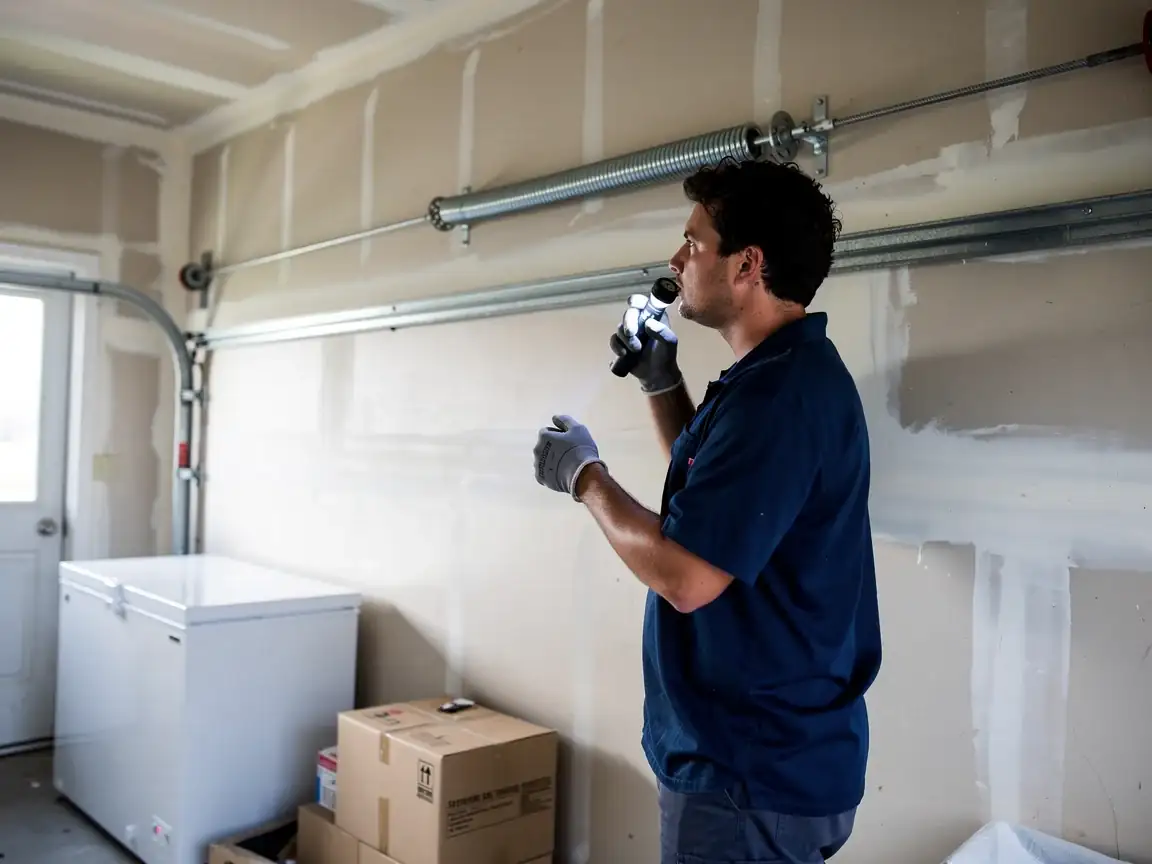
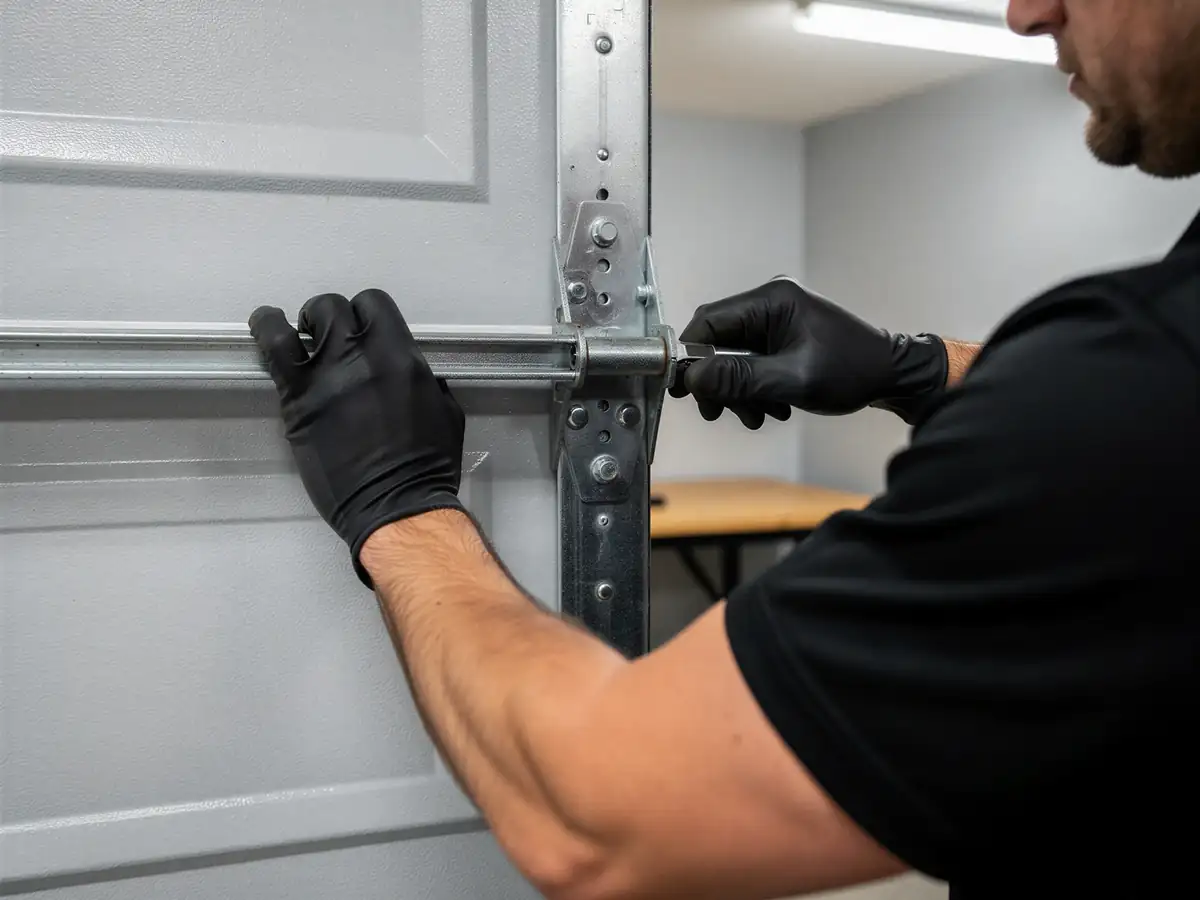
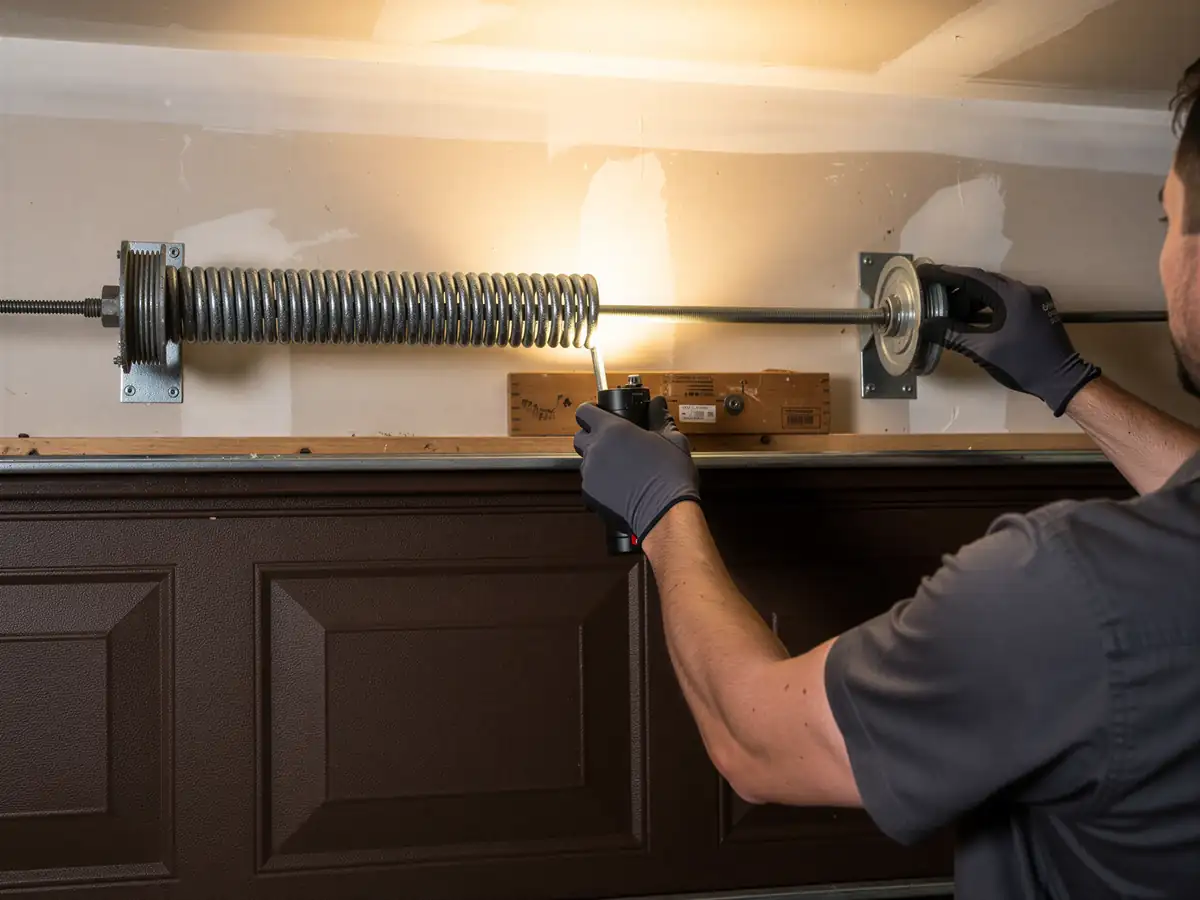
Three things usually cause a door to leave its track, and in this area all three trace back to the age of the hardware. First, a bent track - from a car bumper tap or just decades of flex - creates a pinch point rollers can't pass through cleanly, so they jump the rail. Second, loose or rusted track brackets, common in homes from the 1938-2014 build range where original fasteners were never upgraded, let the whole rail rack sideways under load. Third, a broken or unevenly wound spring changes the balance of the door enough that one side lifts faster than the other, twisting the panels against the track until something gives.
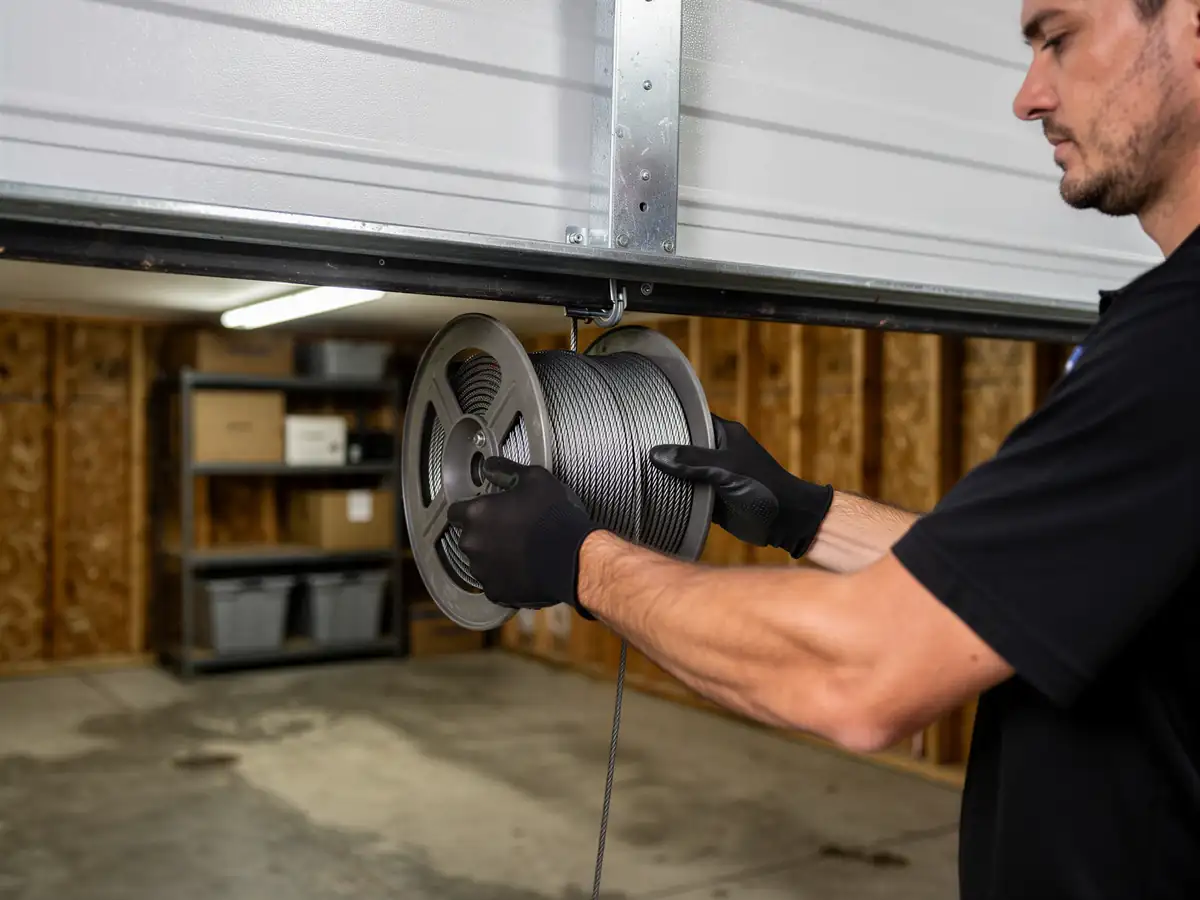
On older torsion setups still in service from that original 1973-median construction window, a failing cable drum does the same thing from the other end: the door comes down crooked instead of flat. None of these are cosmetic issues. Each one gets worse with every open-close cycle, and each one is tied to hardware that's had decades to wear.
When It Stops Being a DIY Job
Straightening a bent track yourself with a rubber mallet is a real way to get hurt, since a door under spring tension can drop the moment a roller clears the rail. We don't recommend touching anything spring-related without releasing tension first, and honestly, if the track is bent more than an inch out of true, replacing that section is usually faster and safer than trying to bend it back.
One limitation worth saying plainly: if your door and track are both original to a 1960s or 70s build, we often can't source an exact replacement bracket or rail profile. In that case the honest fix is a new track system sized to the existing opening, not a patch. Call once the door is visibly leaning, scraping, or dropping unevenly - waiting past that point usually turns a track repair into a full door replacement.