Leaving It Alone
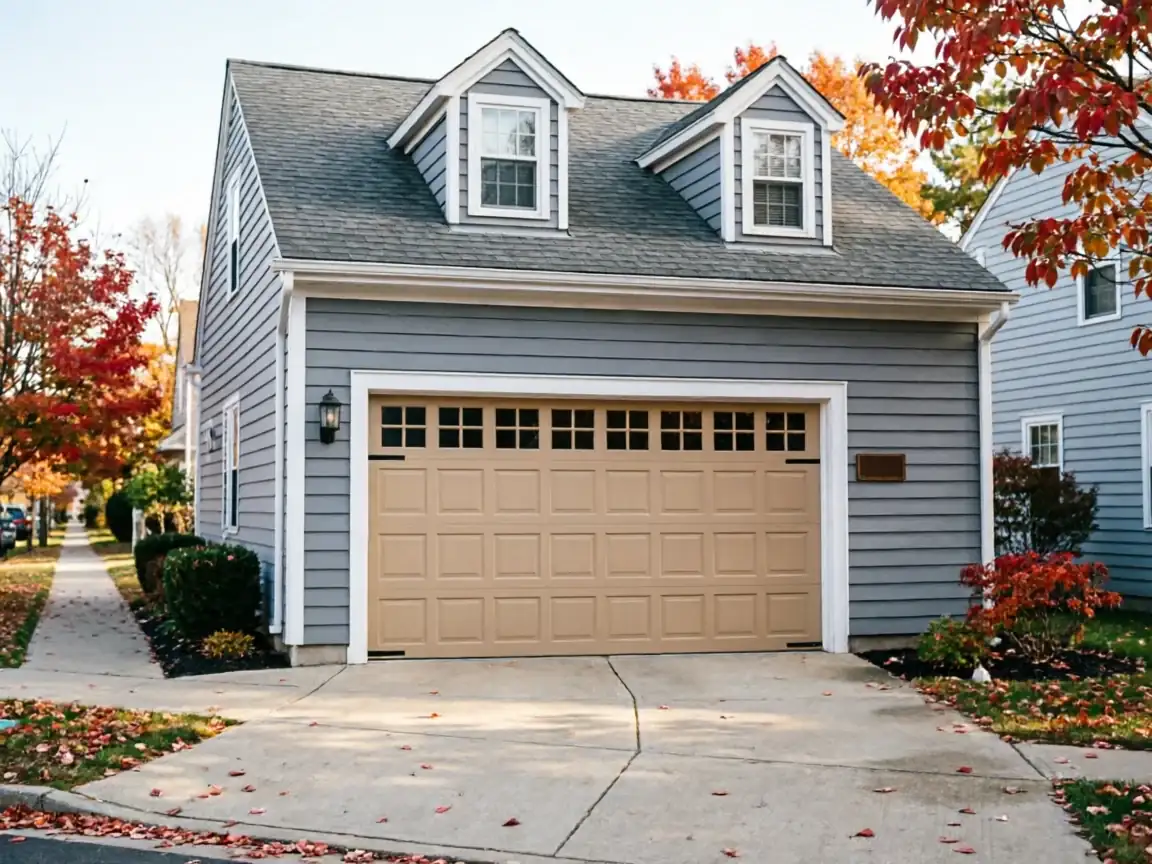
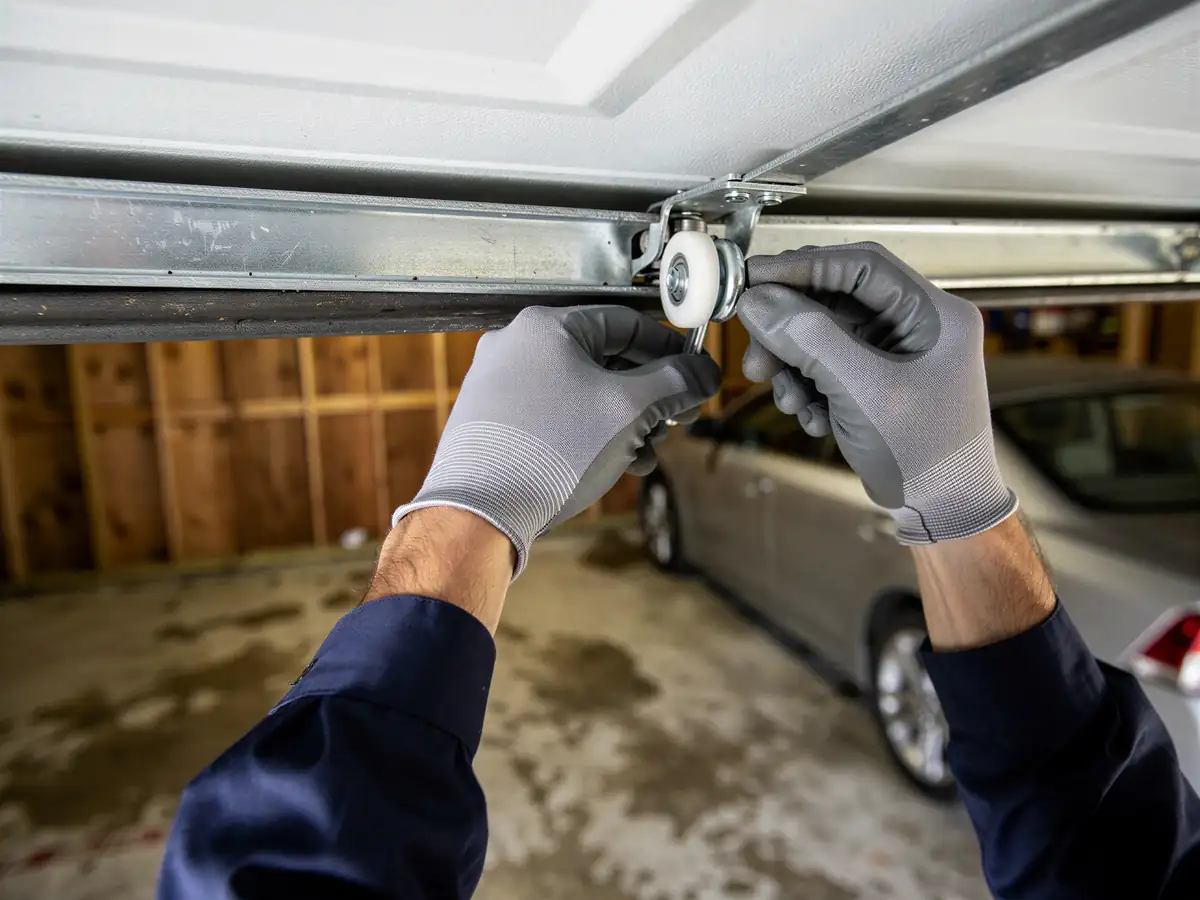
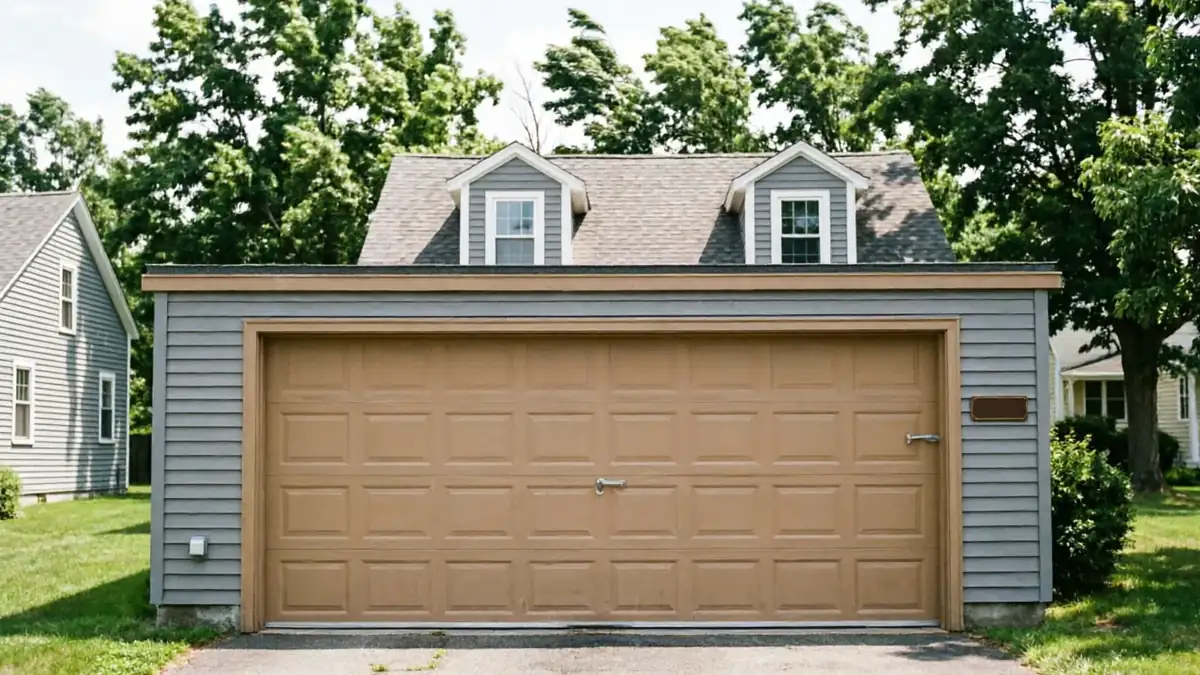
A wide double door - the kind you see on the ramblers and split-levels built across this area between the 1960s and 70s - has more surface for wind to push against than a single-car door, and more panel to flex before anything visibly breaks. Leave a wide door alone on a house from that era and the first sign of trouble usually isn't the door itself. It's the track pulling a quarter-inch off the jamb, or a top roller that's started riding the edge of its channel instead of the center. None of that stops the door from opening and closing, so most people don't look twice.
The houses on this side of the county, with a median build year around 1973, were not built to a wind-load standard anyone would specify today. The hardware was sized for the door's weight, not for gusts hitting a flat 16-foot panel broadside. That gap between what the hardware handles and what the door actually experiences doesn't show up as a sudden failure. It shows up as years of small flex nobody was watching for.
What Local Conditions Do
Bethesda sits in a cold-severe climate band
Which matters here for a reason that has nothing to do with the cold itself: the freeze-thaw cycle loosens fasteners. A track bracket that's lagged into a jamb stud moves a fraction with every freeze and thaw, and on a wide door that fraction adds up faster than it does on a single door, because the door has more weight and more leverage pulling on each bracket.
So you get two things stacking on top of each other in this climate
Wind load pushing the panel, and seasonal freeze-thaw loosening the fasteners that are supposed to hold the track rigid against that push. On a narrow door, a loose bracket is a nuisance. On a wide door built on original 1960s-70s hardware, it's the difference between a track that holds its line and one that lets the door walk sideways an inch every time a gust catches it square.
What Is Going On
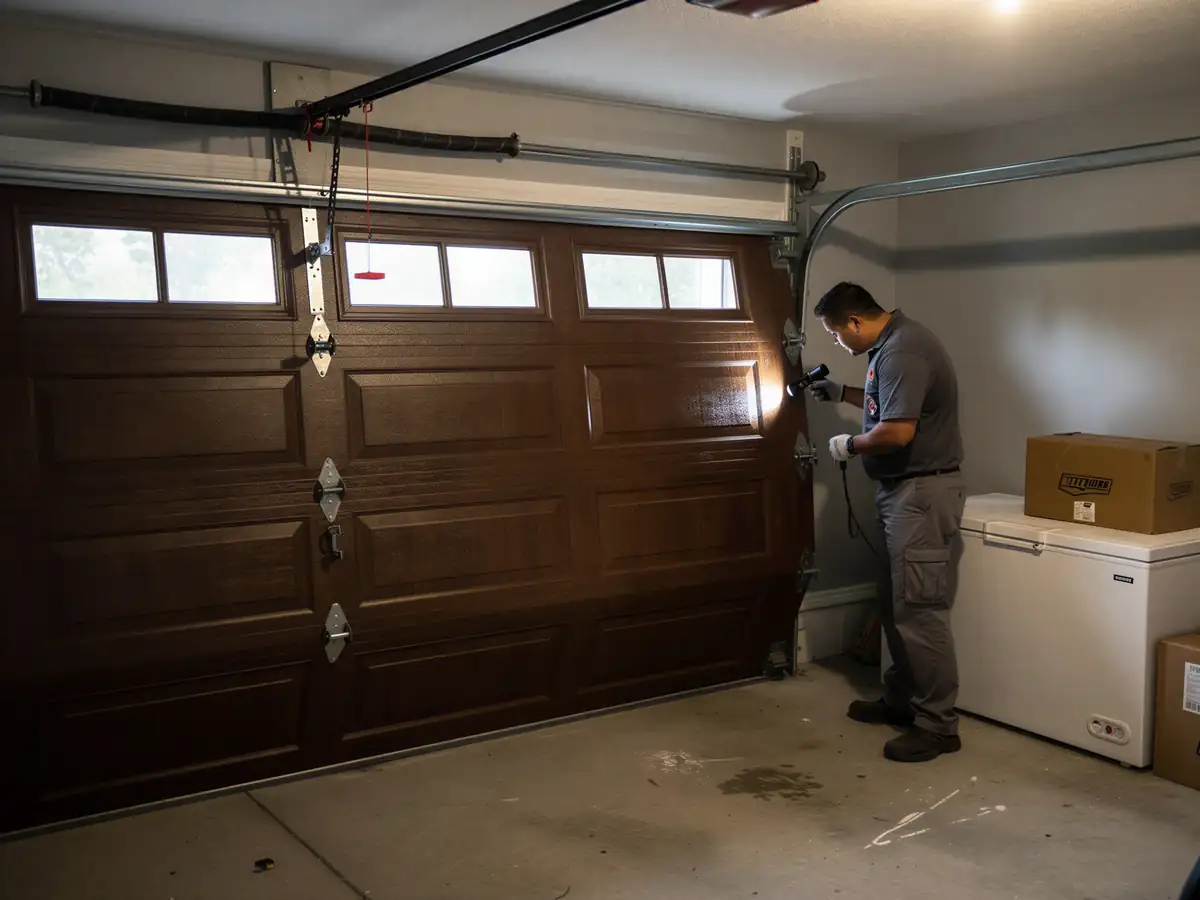
What you're actually seeing, when a wide door starts binding or rattling at the top corners, is cumulative distortion - not a single break. The panel itself may be fine. What's failed is the alignment between the panel and the track, caused by repeated flex that a narrower door on the same hardware would never generate. Houses in this area built before the 1970s often still run the original track gauge, which was adequate for the door weight at install but was never rated for the sustained wind pressure a two-car-wide panel takes on over fifty-plus years of use.
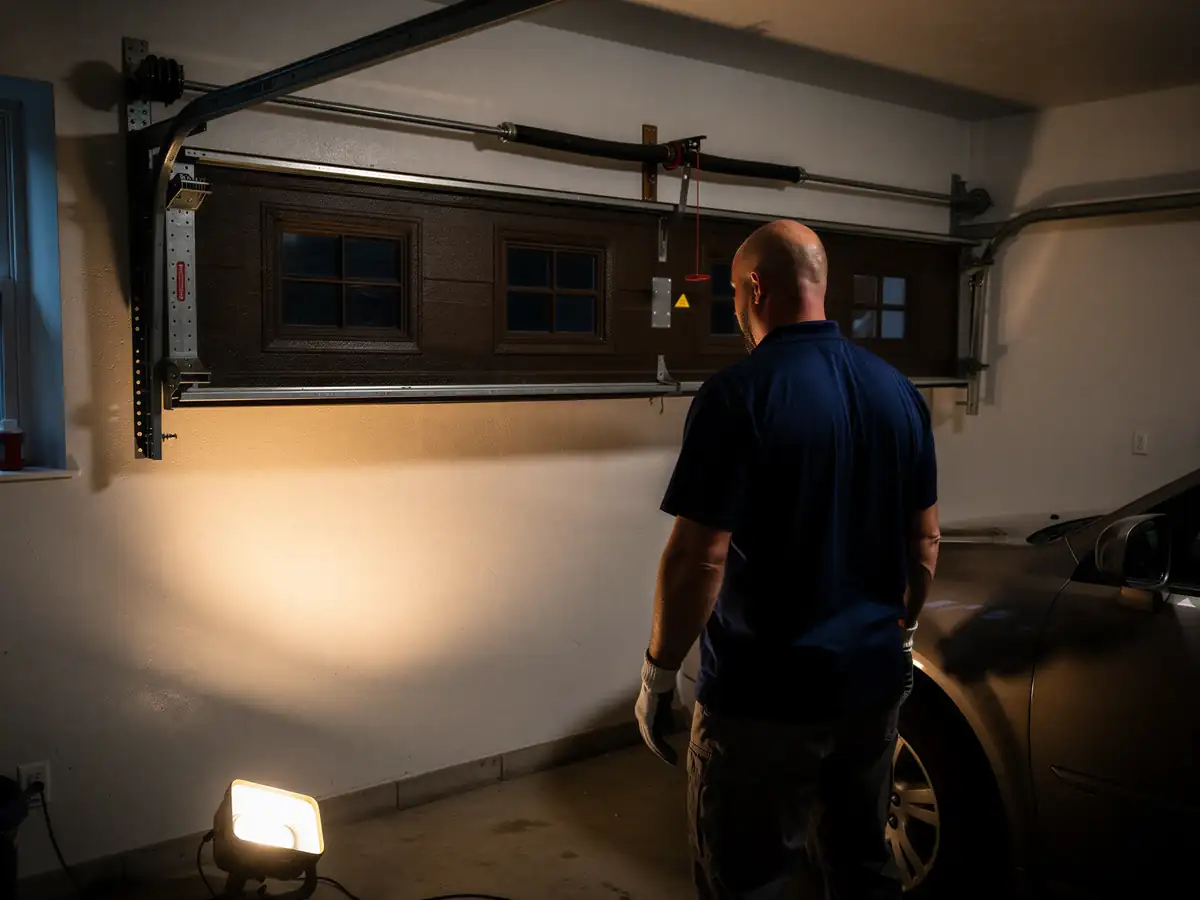
The practical result is a door that looks straight when it's down and closed, but that you can watch twist slightly when it's halfway up - visible if you stand to the side and watch the top panel against the track line. That twist is the wind-and-fatigue story playing out in slow motion, and it's specific to wide doors on older hardware, not something you'd see on a single-car door of the same age.
When It Stops Being a DIY Job
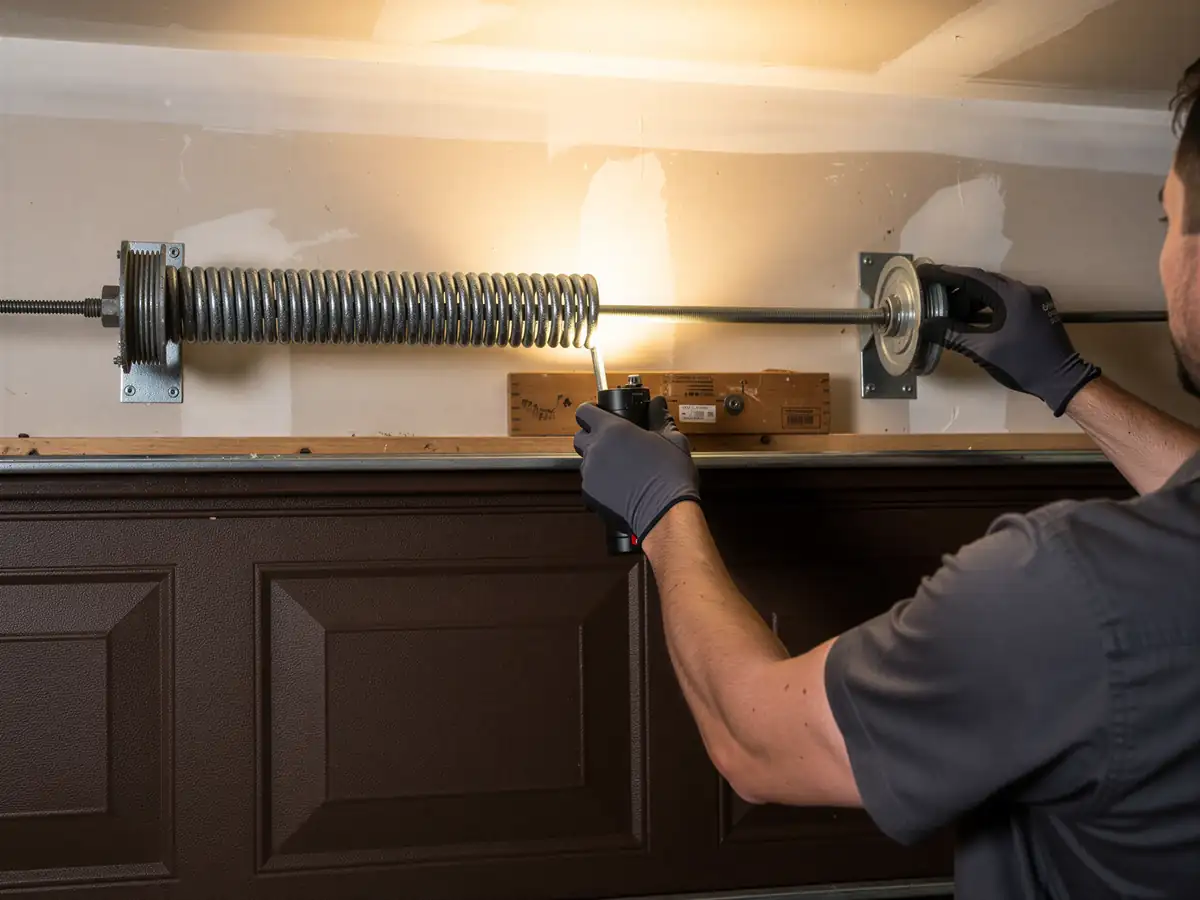
Tightening a loose bracket is reasonable DIY work. Re-aligning a track that's walked out of plumb on a 16-foot door is not - the door is heavy enough, and the leverage involved is enough, that doing it wrong can pull the whole assembly loose while it's under spring tension. If you're seeing the top-corner twist described above, or if the door has started requiring more force to close evenly on both sides, that's a sign the track geometry itself has shifted, not just a fastener.
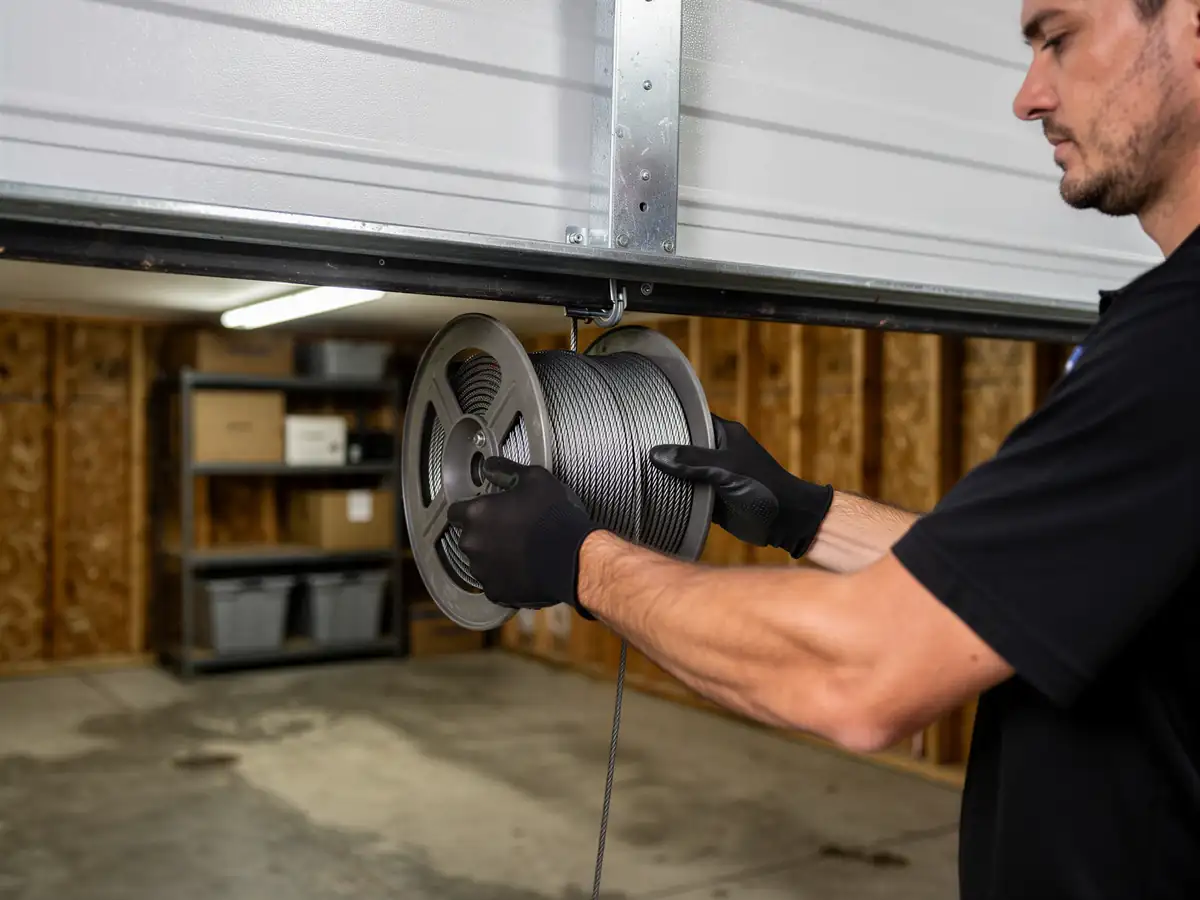
We'll say plainly: if your hardware dates to the original install on a house from this era, a track repair is often a band-aid. Given what median household income looks like across this service area, replacing the door and hardware outright is sometimes the better call financially over patching a fifty-year-old system piece by piece - but that's a judgment we make door by door, not a blanket rule. We don't push replacement on a door that still has life in it.