The Symptom
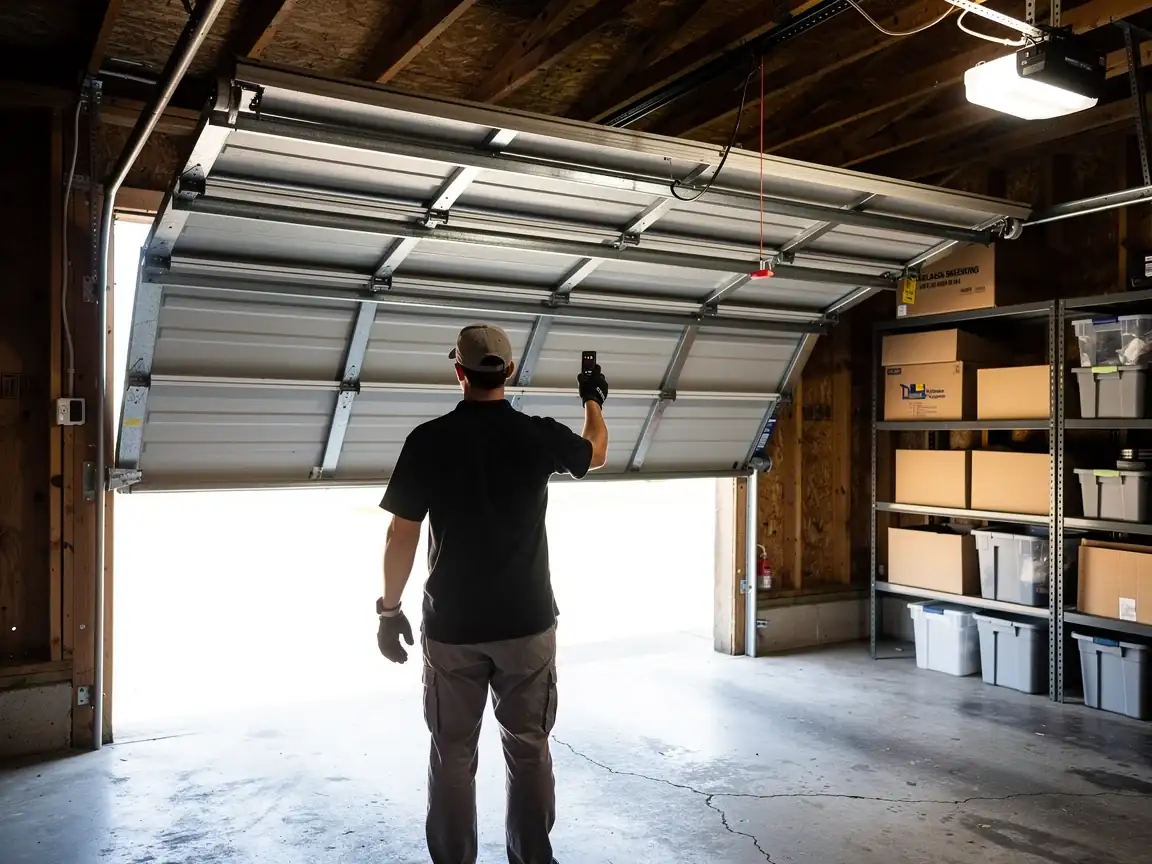
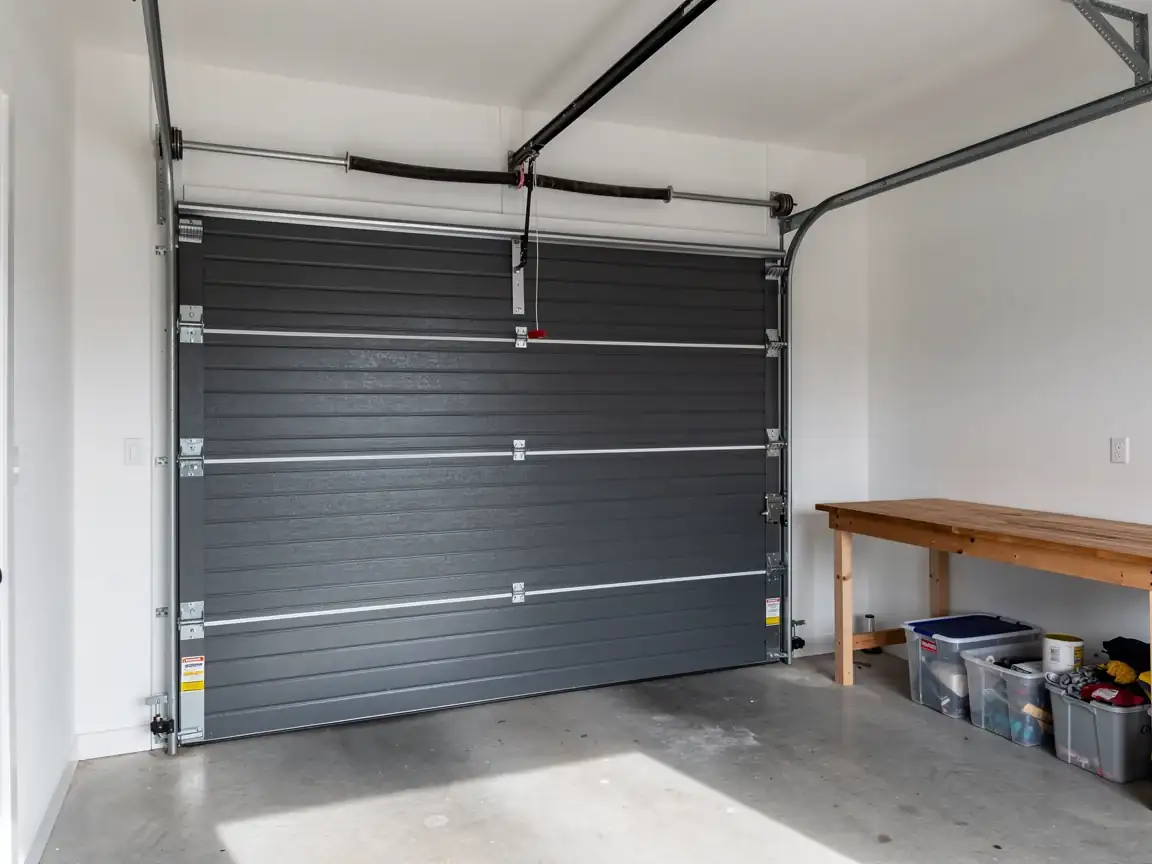
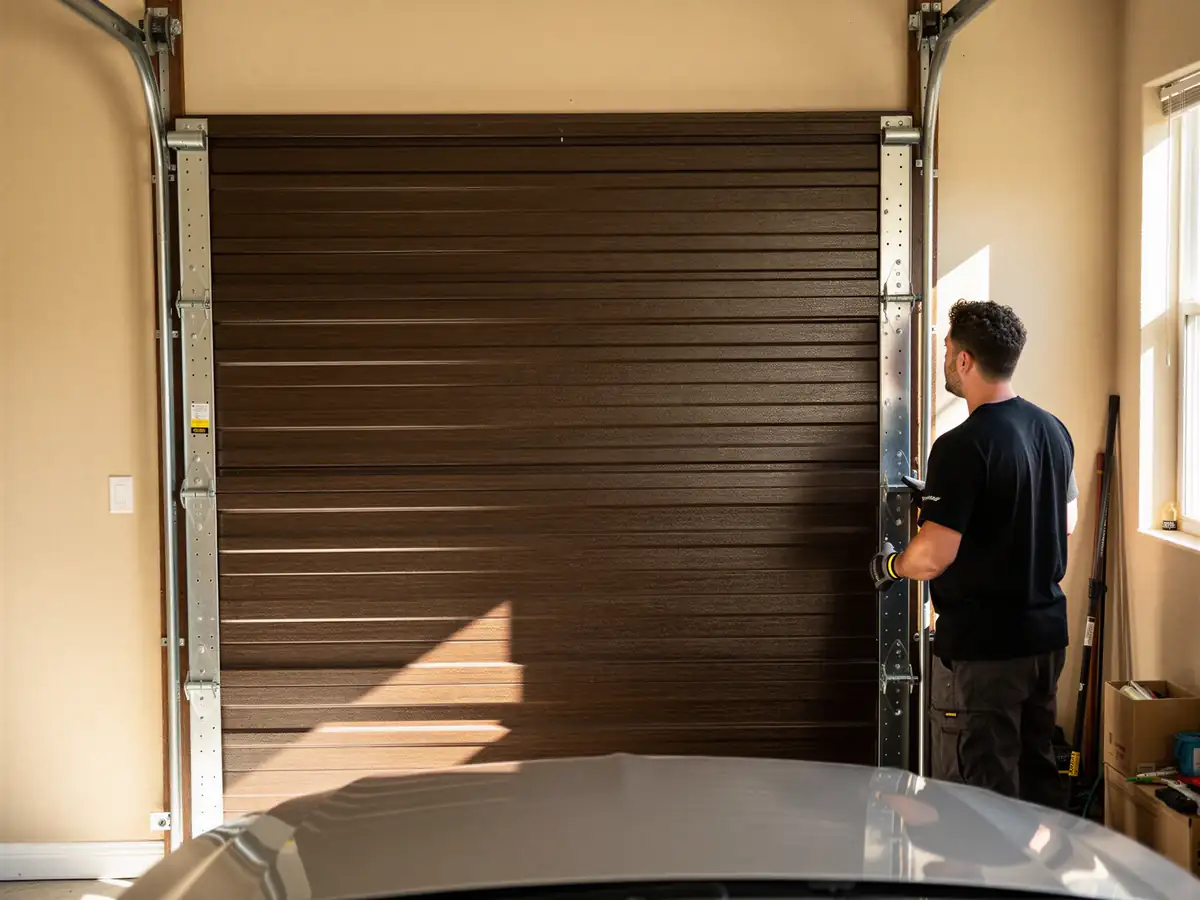
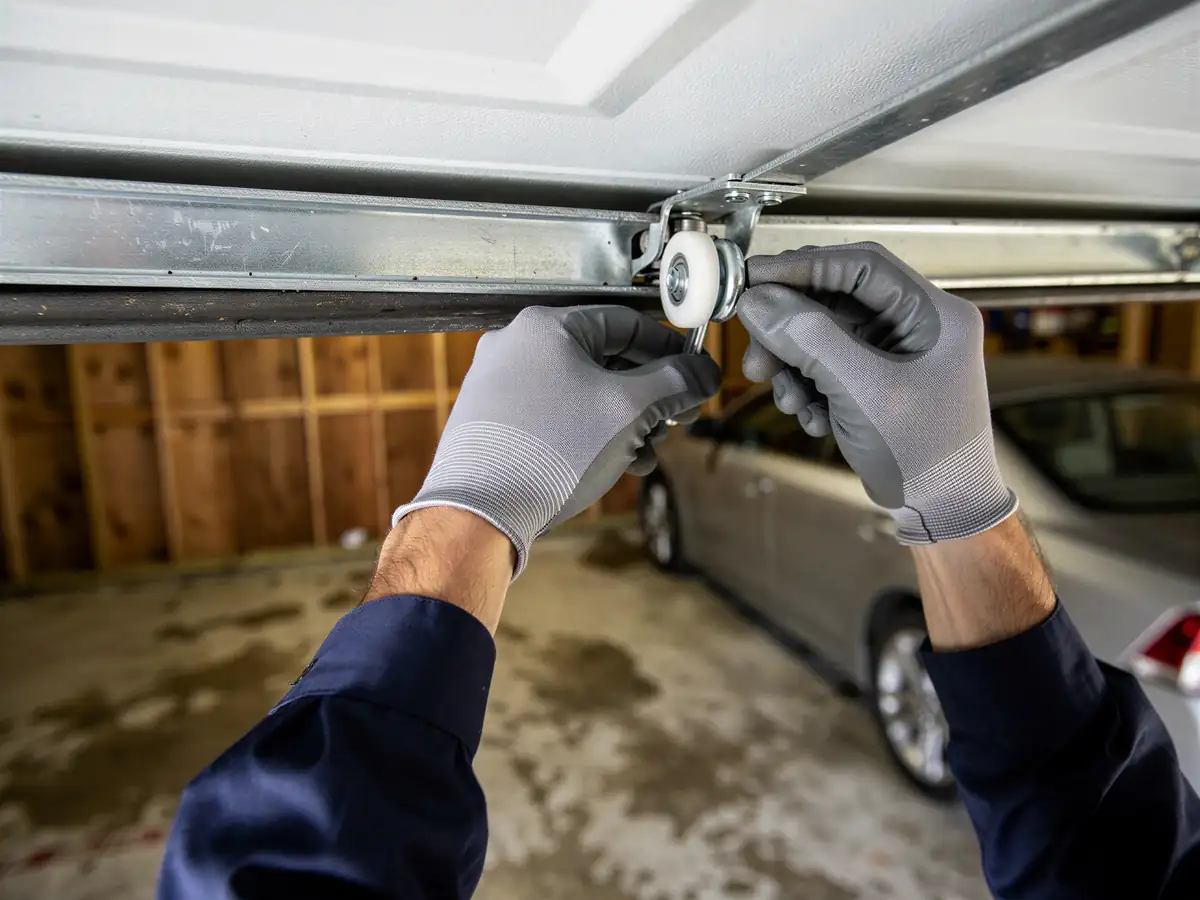
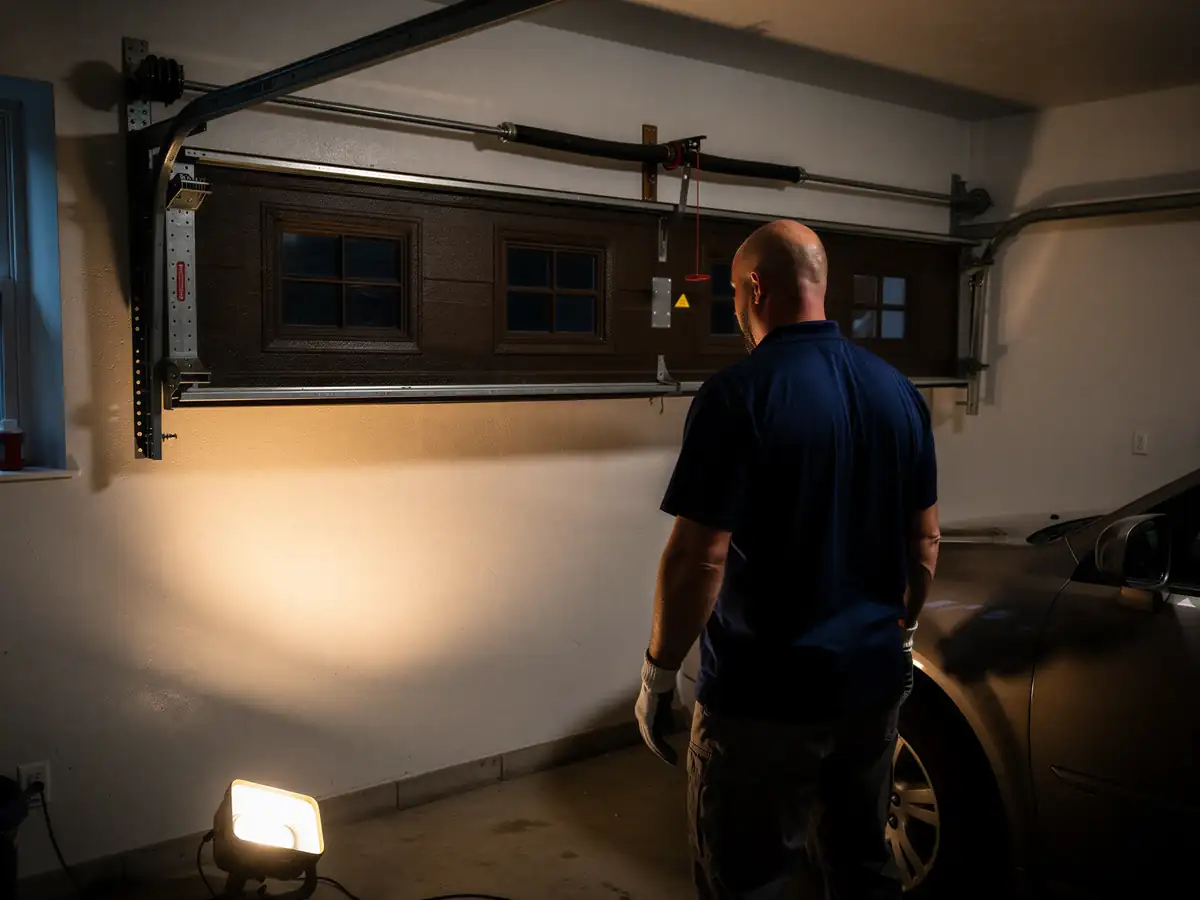
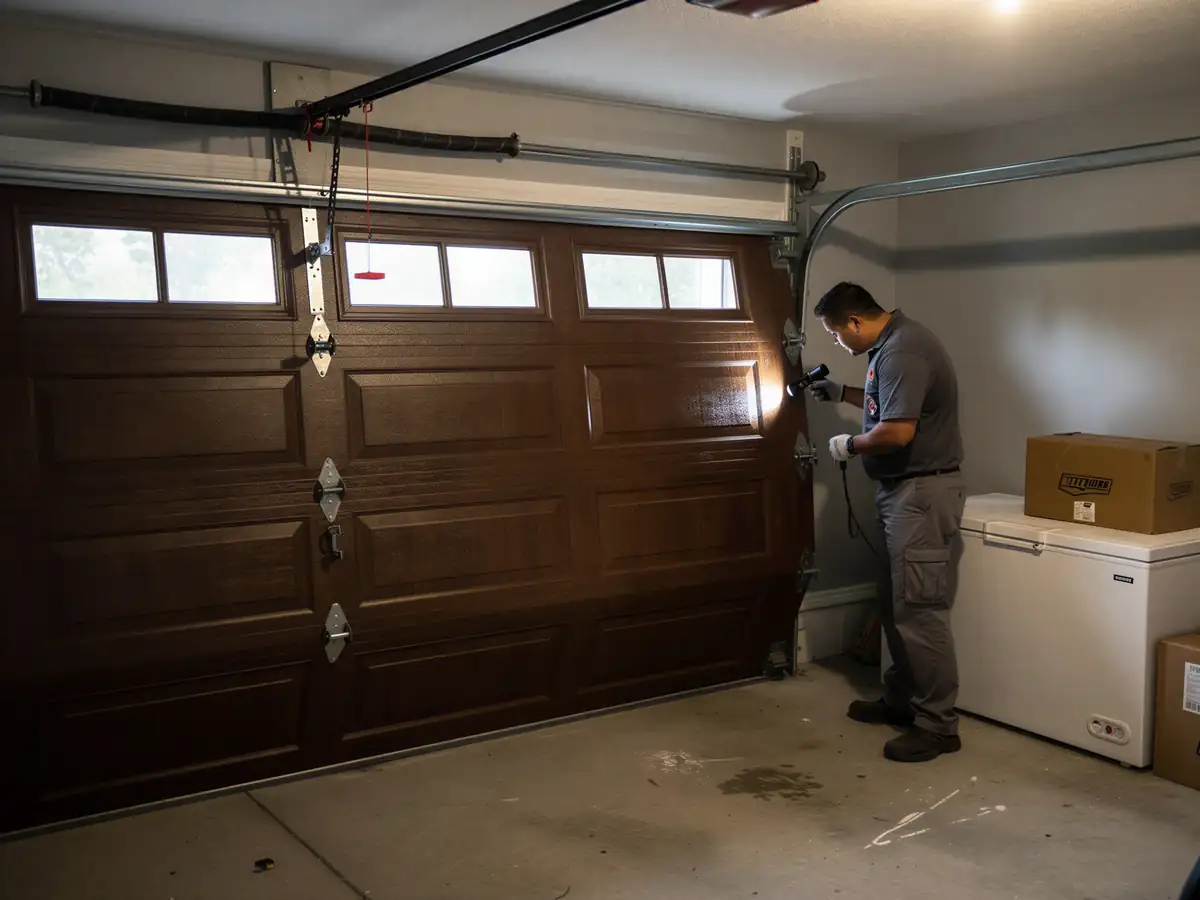
A door that's off track usually shows itself one of a few ways: it stops halfway and won't budge, it hangs crooked with one side higher than the other, or you hear a grinding, popping sound right before it stalls. Sometimes a roller has jumped the track entirely and you can see daylight between the wheel and the rail. Sometimes the whole door has shifted and is leaning against the frame.
Don't keep hitting the opener button if this happens. Running the motor against a door that's off track puts stress on the opener's gears and can bend the track further, turning a repair into a replacement. If the door is partway open and stuck, leave it. If it's come down and is sitting crooked at the bottom, don't try to force it closed by hand.
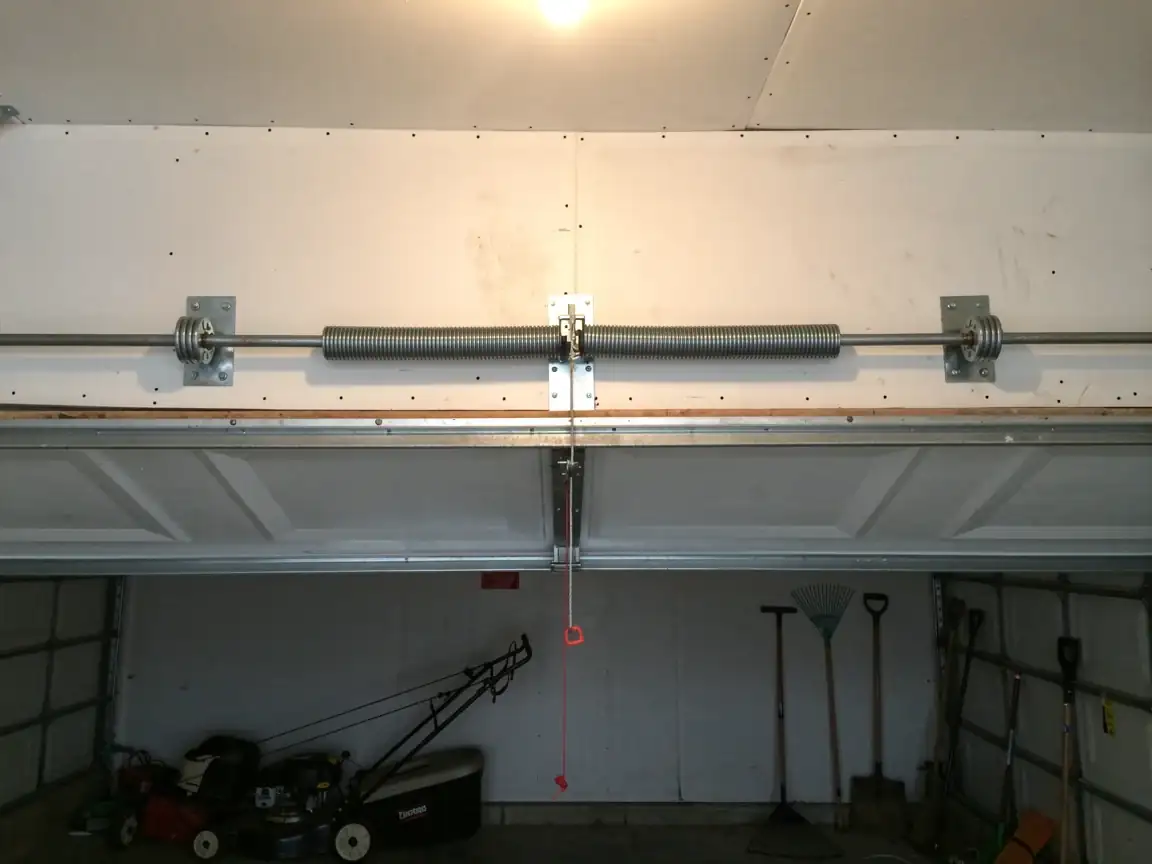
This is different from a door that simply won't open - that's usually a spring or opener problem. An off-track door has a mechanical misalignment you can often see just by looking at the tracks on either side of the opening, comparing how they sit against the wall.
How Long It Takes
Most off-track calls get the door back on its rails and moving the same visit
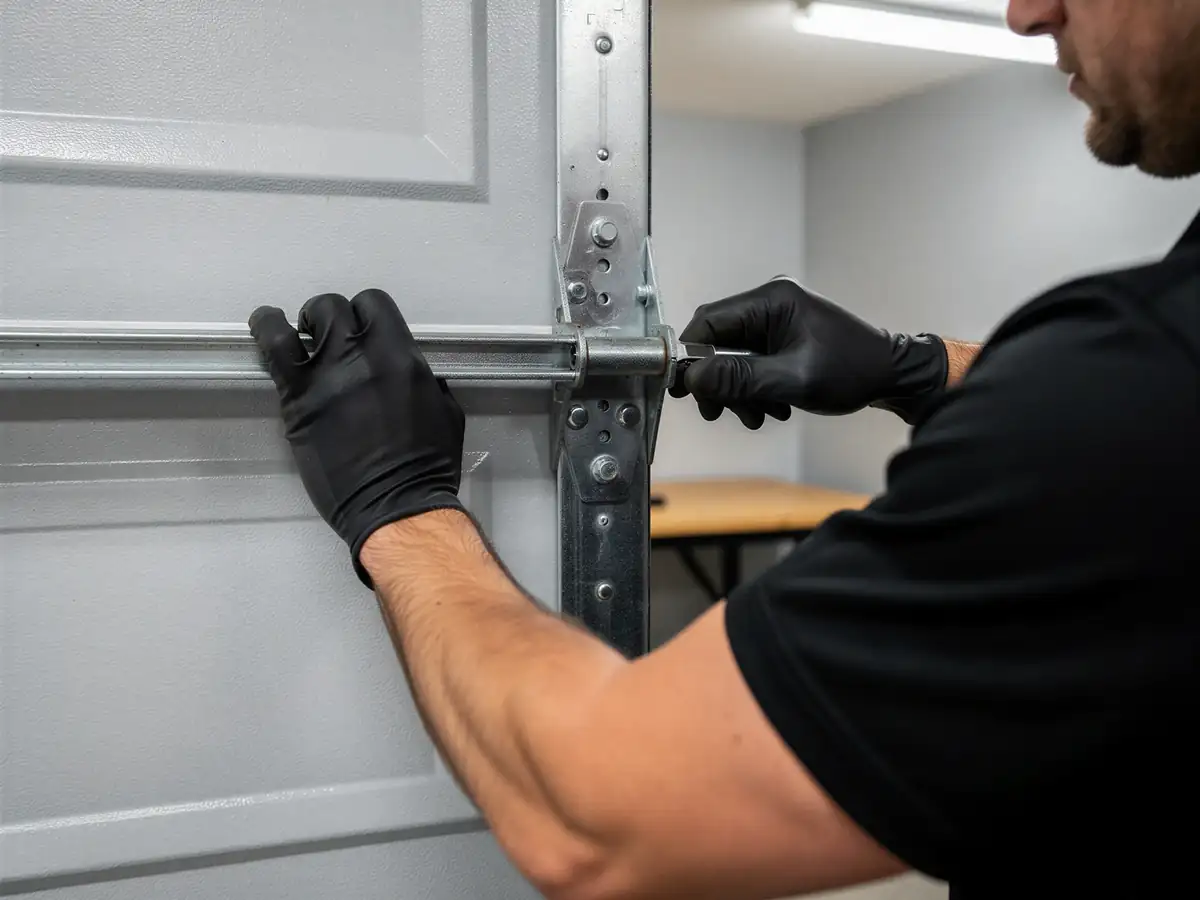
Realigning a track, replacing a bent section, or swapping a broken roller is bench work for someone who's done it before - it doesn't require ordering a custom panel or waiting on a part that has to ship in.
Where it takes longer is when the track itself is bent badly enough that straightening it won't hold
Or when the door has come off because something behind it broke first - a cable, a hinge, or the bottom bracket. In those cases the tech has to diagnose and fix the root cause, not just hang the door back up, and that's a longer job than a straightforward realignment.
Honest limitation: if the door panel itself is dented or cracked from coming off track
That's not a same-visit fix. Panels often have to be ordered, and on older sectional doors the exact panel profile isn't always still in production, which can mean a longer wait than anyone wants.
The Cost of This Job
We don't publish a flat number here because an off-track call can mean a ten-minute roller swap or a full track replacement, and those aren't the same job. What drives the cost is how much got damaged on the way off the rail - a bent track section, a cracked roller bracket, or a bottom panel that took the brunt of the fall.
What we can tell you is what the visit covers: a tech inspects both tracks, the rollers, the cables, and the opener's travel limits before touching anything, because putting a door back on a track that's still bent just sets up the next failure. If the fix is a track swap, we price the parts and labor before starting, not after.
Given that median household income across this service area runs around $116,255, most of our customers want a straight answer before work starts rather than a guess - so that's what the inspection is for.
What Causes It Around Here
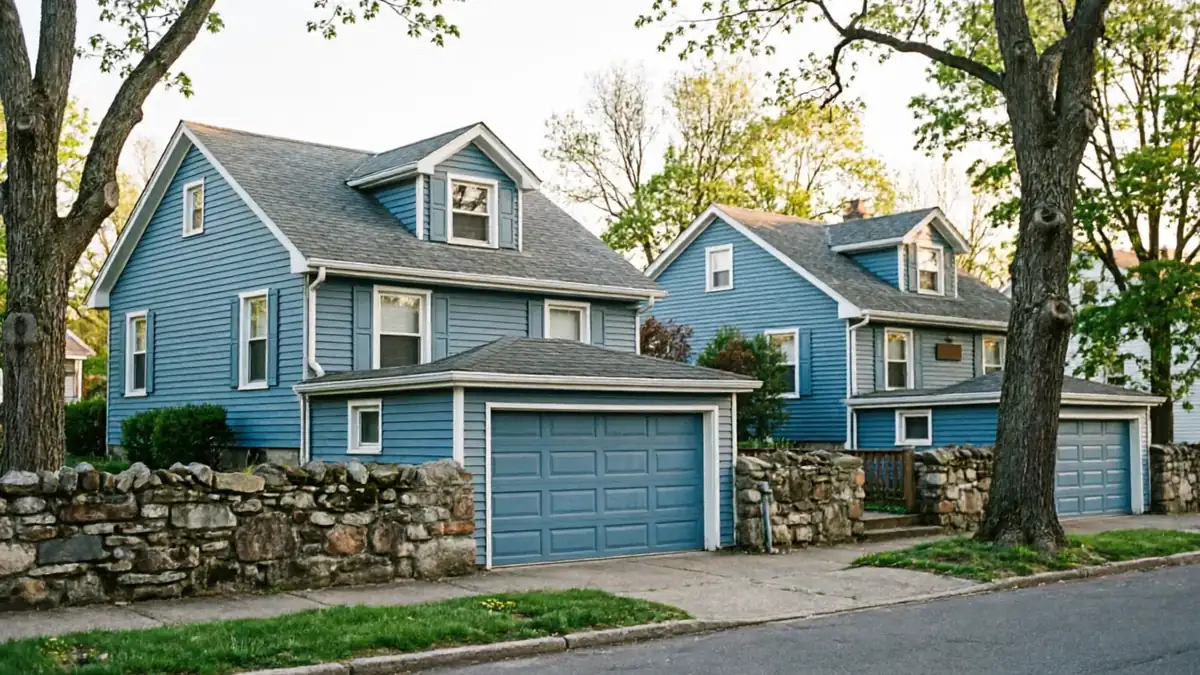
This part of the region has a lot of housing built between 1938 and 2014, with the bulk of it going up through the 1960s and 70s - doors and track hardware from that era were installed to the standards of the day, and standards for track gauge and roller clearance have tightened since. On a door that old, the tracks are often slightly narrower or the brackets slightly looser than what a new door expects, which makes it easier for a roller to walk off the rail over time.
Cold is the other half of it. This area sits in a severe cold climate band, and steel track contracts in hard freezes just like anything else metal. A track that was a hair out of plumb in July can bind or flex more in January, and that's often when a roller finally jumps rather than just riding rough.
Across the 75 or so named areas we work in, this combination - older track hardware plus hard winter swings - is the single most common reason we get an off-track call, more than any one bad spring or rushed install.