Leaving It Alone
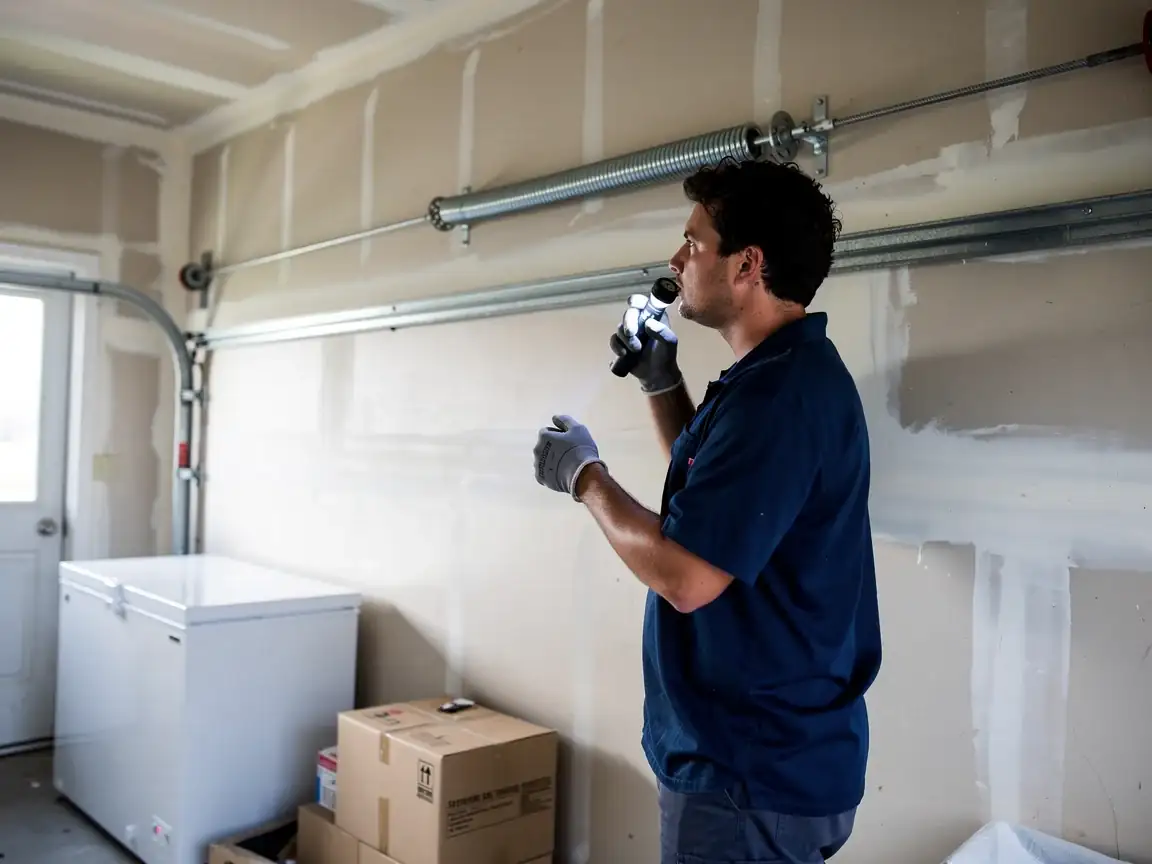
A garage door is one of the few machines in a Bethesda house that homeowners expect to just keep running without a look under the hood, and for a lot of the stock here built between 1938 and 2014, with the median going back to 1973, that's a bad bet. A door installed when a house in Chevy Chase or Kensington was new is well past any reasonable service life. Letting a new sound go unchecked on hardware that old isn't neglect exactly, it's just math - the parts have been working for decades and they don't send a warning before they fail.
We're not going to tell you every squeak means a $400 repair. Most don't. But on a torsion spring or a set of rollers that have been cycling since the Johnson administration, a new noise is data, not ambiance. Ignoring it costs you nothing until the day it costs you a cable snap mid-lift, or a spring breaking while the door is up and loaded.
The honest version: we can't tell you how long you have before a specific noise turns into a specific failure. Nobody can, not without seeing it. What we can tell you is which noises are worth a call now and which ones can wait for your next service.
What Local Conditions Do
Bethesda sits in a cold-severe climate band
And that matters more to a garage door than people think. Steel contracts in cold weather. Grease thickens. Nylon rollers that were quiet in August get noisy in January because the lubricant on the track has stiffened up and the roller is dragging instead of rolling. If your door got louder specifically when the temperature dropped, that's not the door getting worse - that's the cold exposing a maintenance gap that was already there.
The 1960s and 70s stock that makes up most of the housing across this area was built with hardware specs from that era
Which means steel tracks and springs sized for a different set of expectations than what's sold today. Combine original-era hardware with 40 to 60 winters of temperature swings and you get metal fatigue that shows up as noise before it shows up as failure. A grinding sound on a cold morning that goes away by afternoon is often a spring or bearing telling you it's lost tolerance, not just stiff grease.
We service across this area and the conditions are consistent
Older doors, cold winters, and hardware that wasn't built with synthetic lubricants in mind. That combination is why noise diagnosis here isn't the same conversation you'd have in a warmer climate with newer housing stock.
What Is Going On
A rhythmic thump once per rotation usually means a flat spot on a roller or a bent track section - common on doors that have been cycling since before 1990, which describes a large share of houses in this area given the 1973 median build year. A sharp metallic bang, usually once, almost always means a spring letting go, torsion or extension. That's not a sound you wait on.
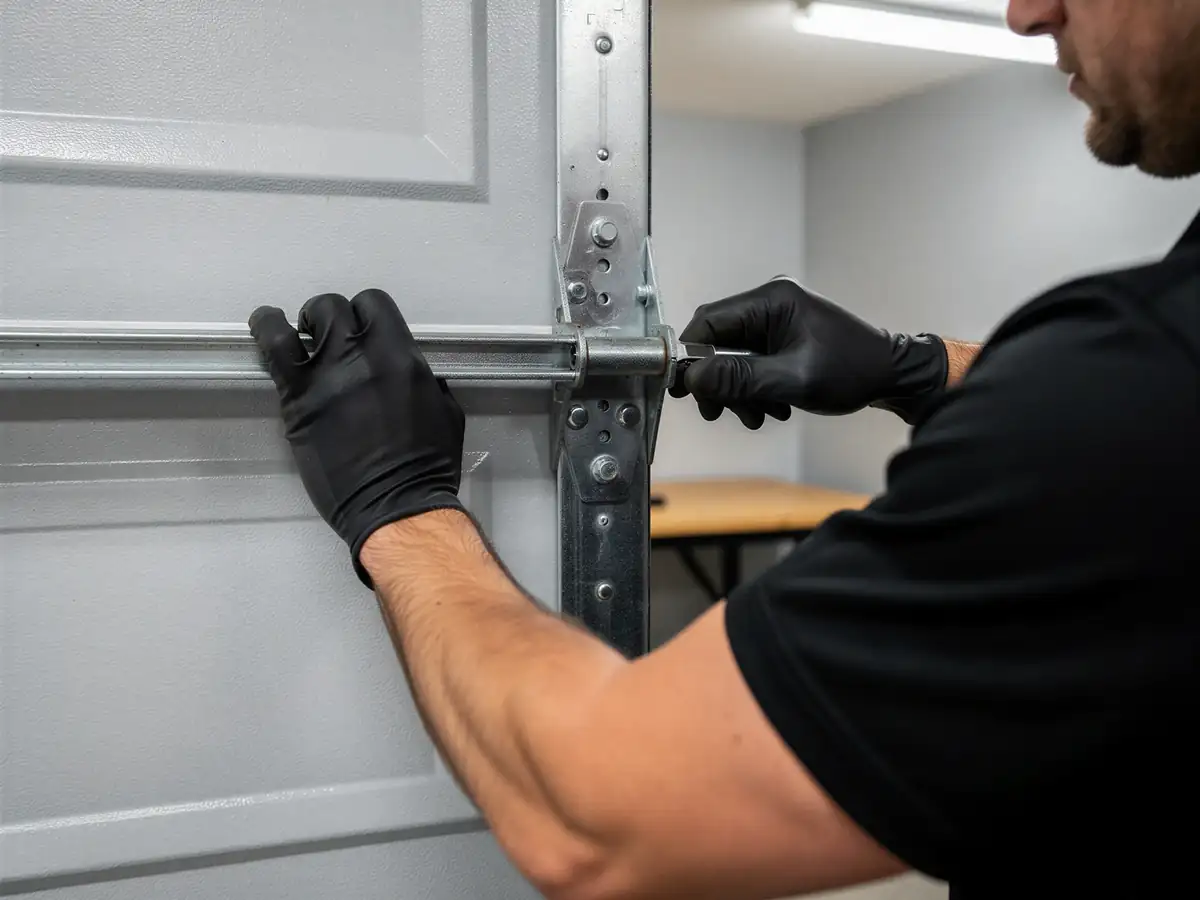
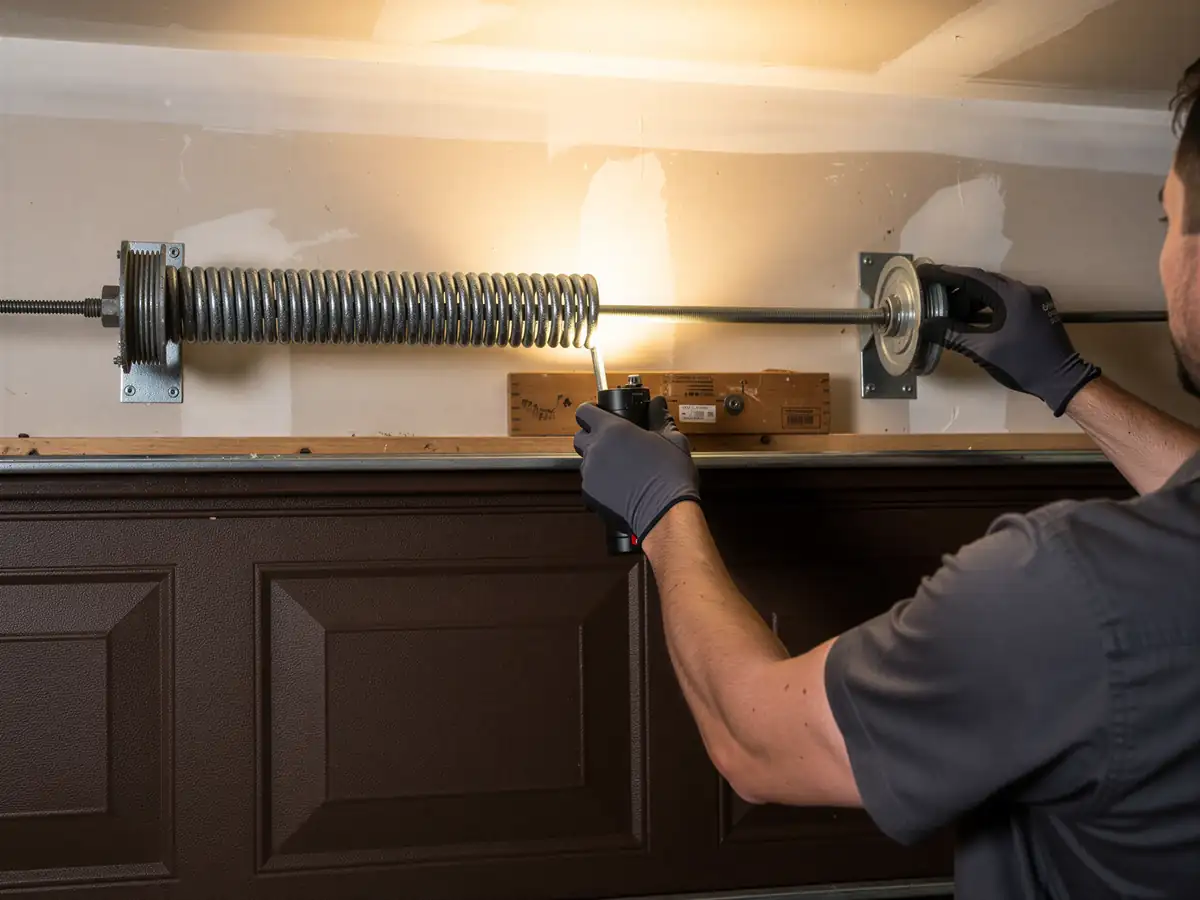
A grinding or scraping noise that tracks with the door's movement, start to finish, often points to a dry or worn bearing plate at the end of the torsion shaft - original equipment on older builds doesn't get replaced until it fails, and it will eventually announce itself exactly this way. A high-pitched squeal localized to one spot on the track is almost always a roller, and on 1960s and 70s stock, those rollers are frequently the original steel ones rather than nylon, which squeal louder and longer as they wear.
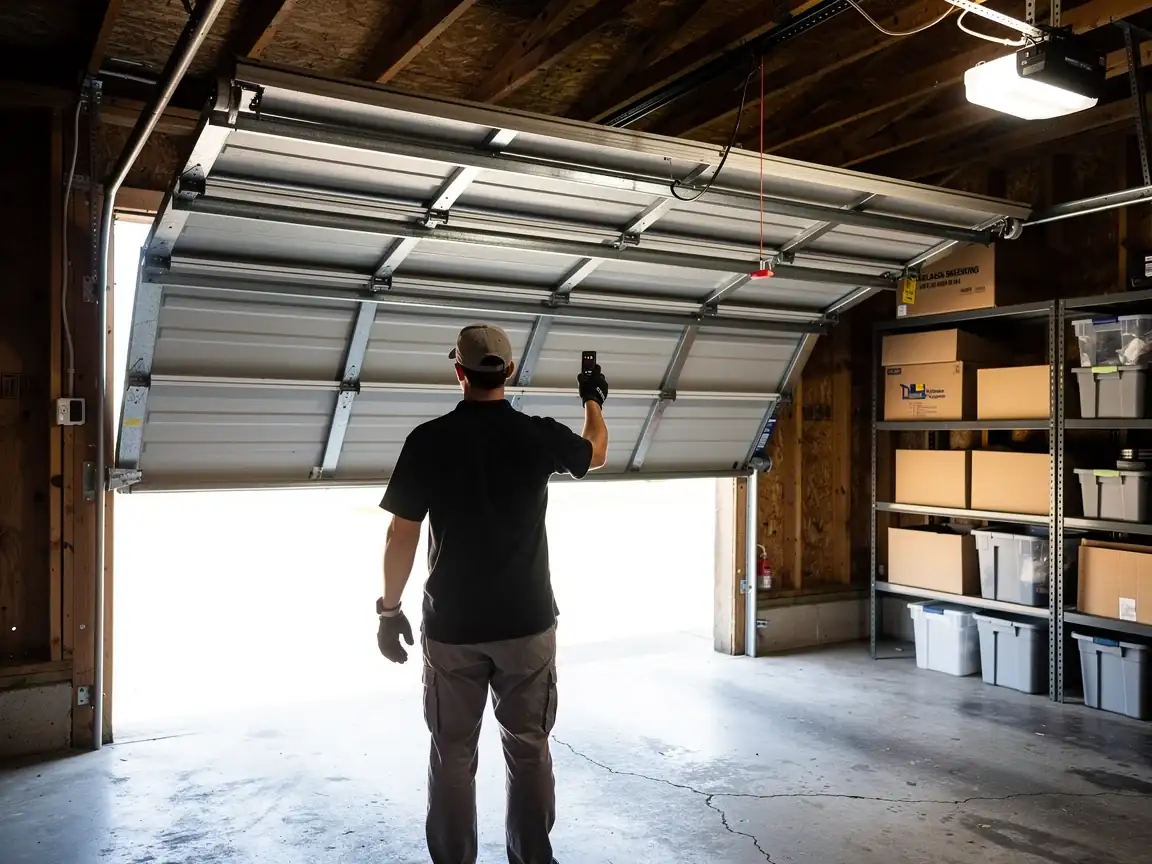
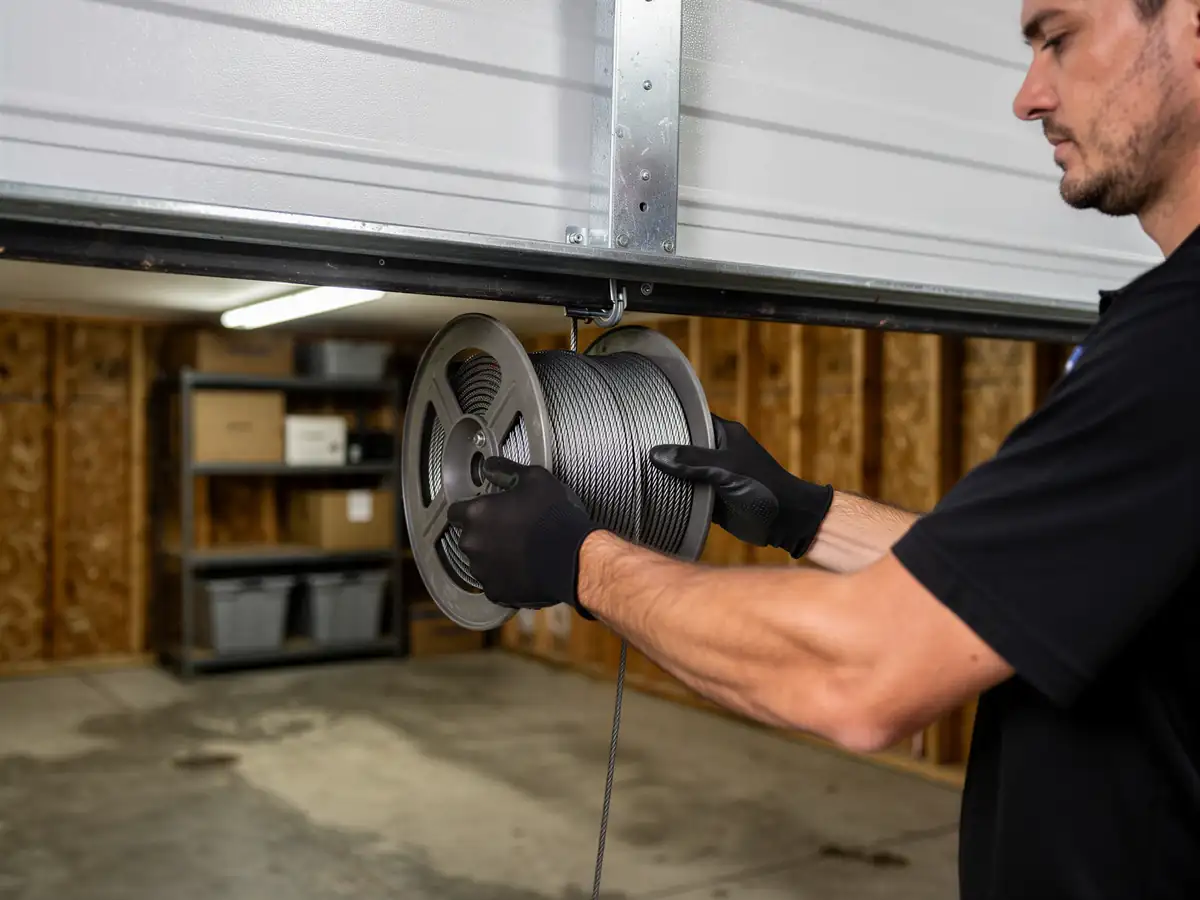
A loud pop followed by the door refusing to open is different from all of these - that's a cable or a broken spring, and at that point the noise has already told you what it needed to. The pattern matters more than the volume. A quiet door that starts making any consistent noise, on a house built in the era most of this area was built in, is worth fifteen minutes of someone's attention before it's worth a service call.
When It Stops Being a DIY Job
Tightening a loose hinge bolt or putting a few drops of oil on a roller - fine, do it yourself, nobody needs a truck for that. But torsion springs are under real tension, and on older hardware common to this part of the area, the spring may not match anything you can buy off a shelf without someone measuring wire gauge and wind direction first. That's not a job to learn on a ladder.
We won't talk you into replacing a door that's making noise but still working fine if a $20 part fixes it - that's not how we'd want to be sold to either. But if the noise is coming from the spring system, or if the door is original to a house built in the 1960s or 70s and has never had the torsion hardware serviced, replacement parts for that era aren't always sitting on a shelf, and sourcing them can add time to a repair that a newer door wouldn't need. That's the honest limitation here: we can usually fix it, but on genuinely original hardware from a house this old, the part might take longer to get than the repair itself.
If you're not sure which category your noise falls into, that's a reasonable thing to call about before it becomes a cable snapping under load.