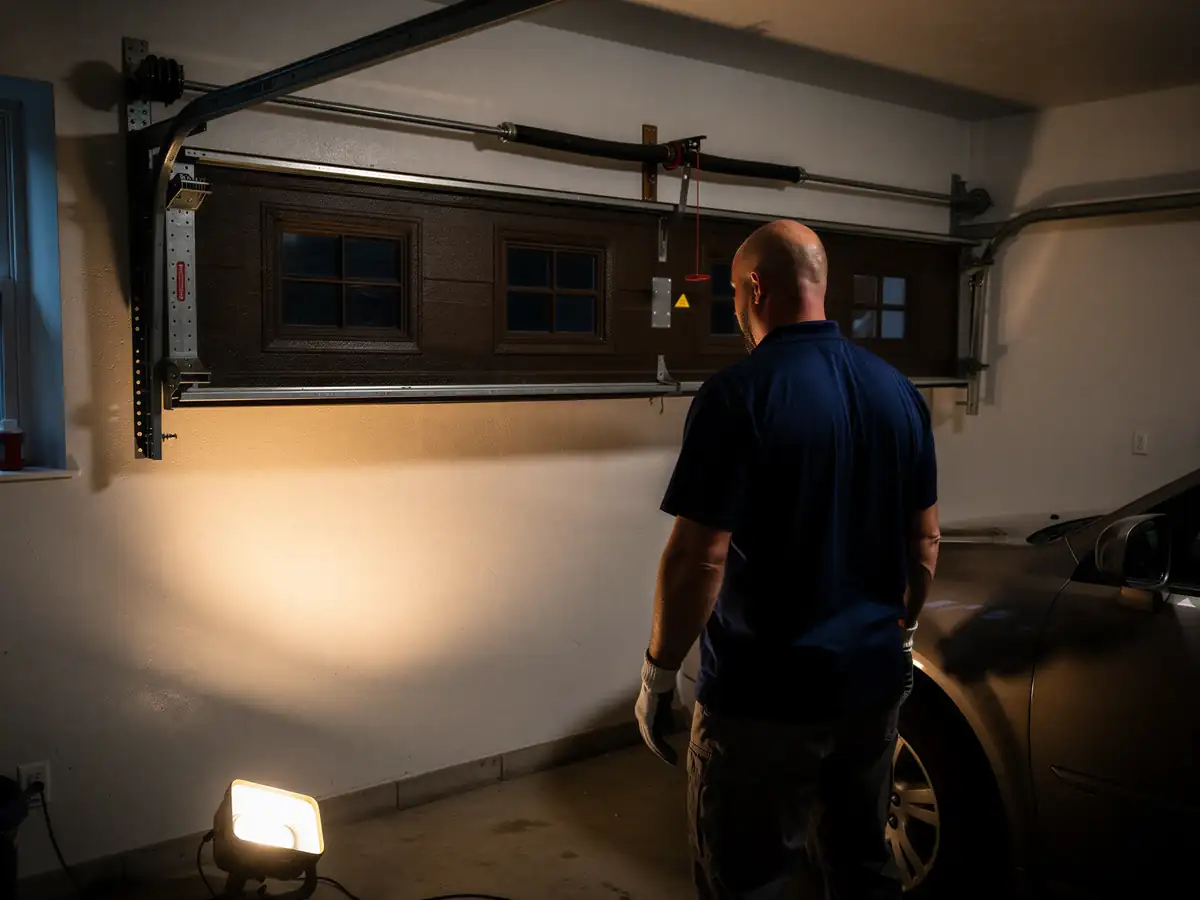
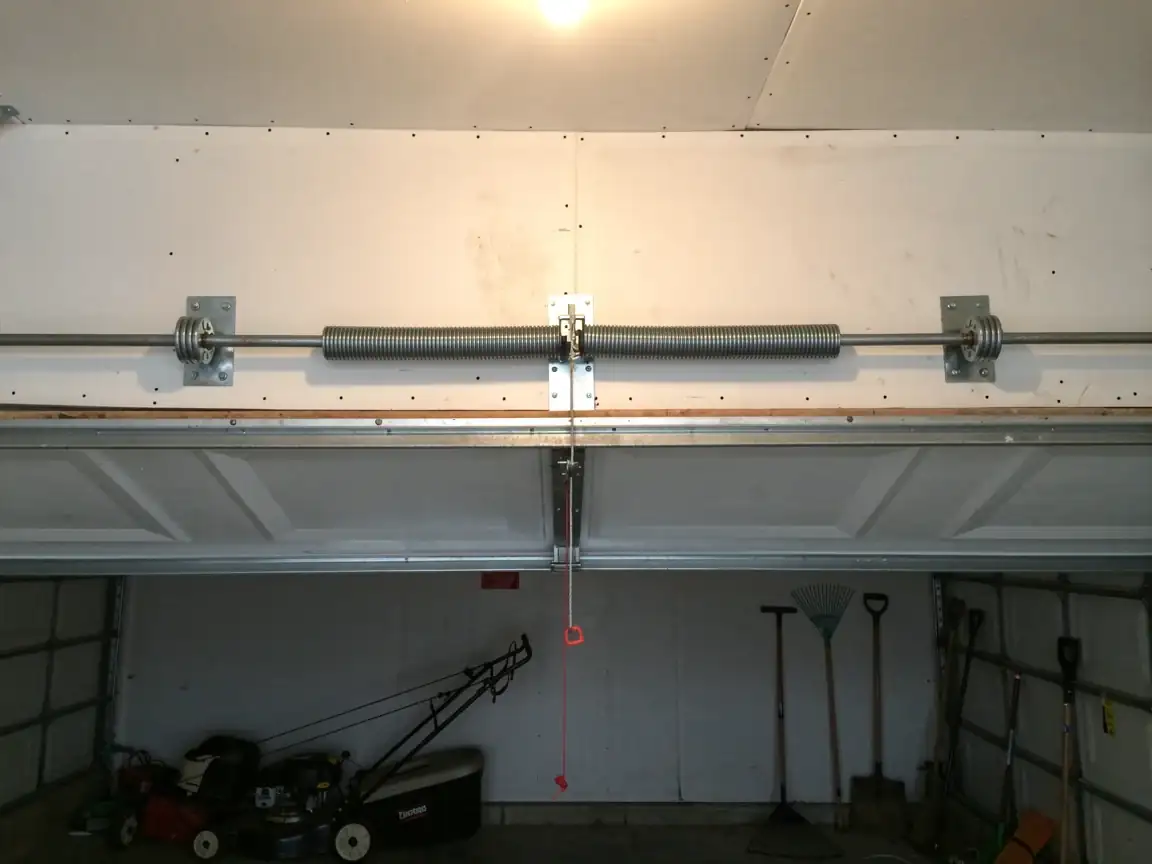
The Symptom
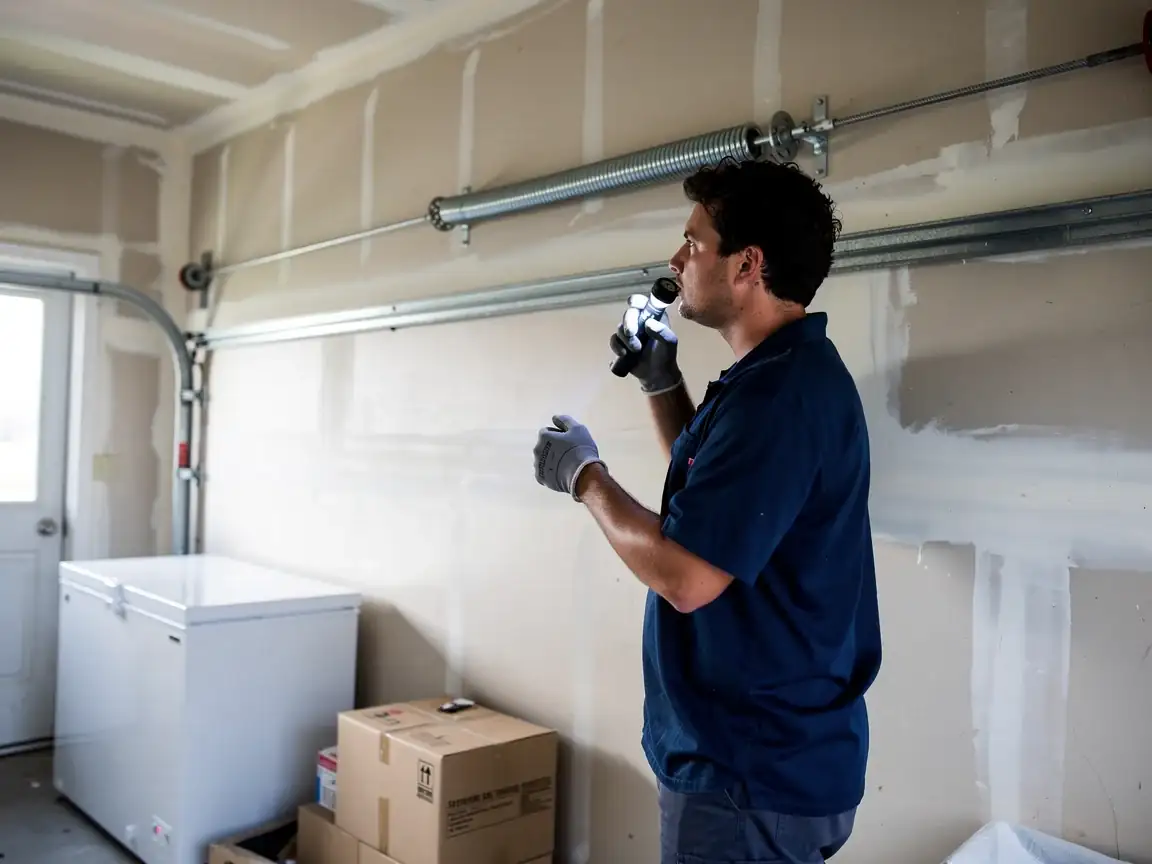
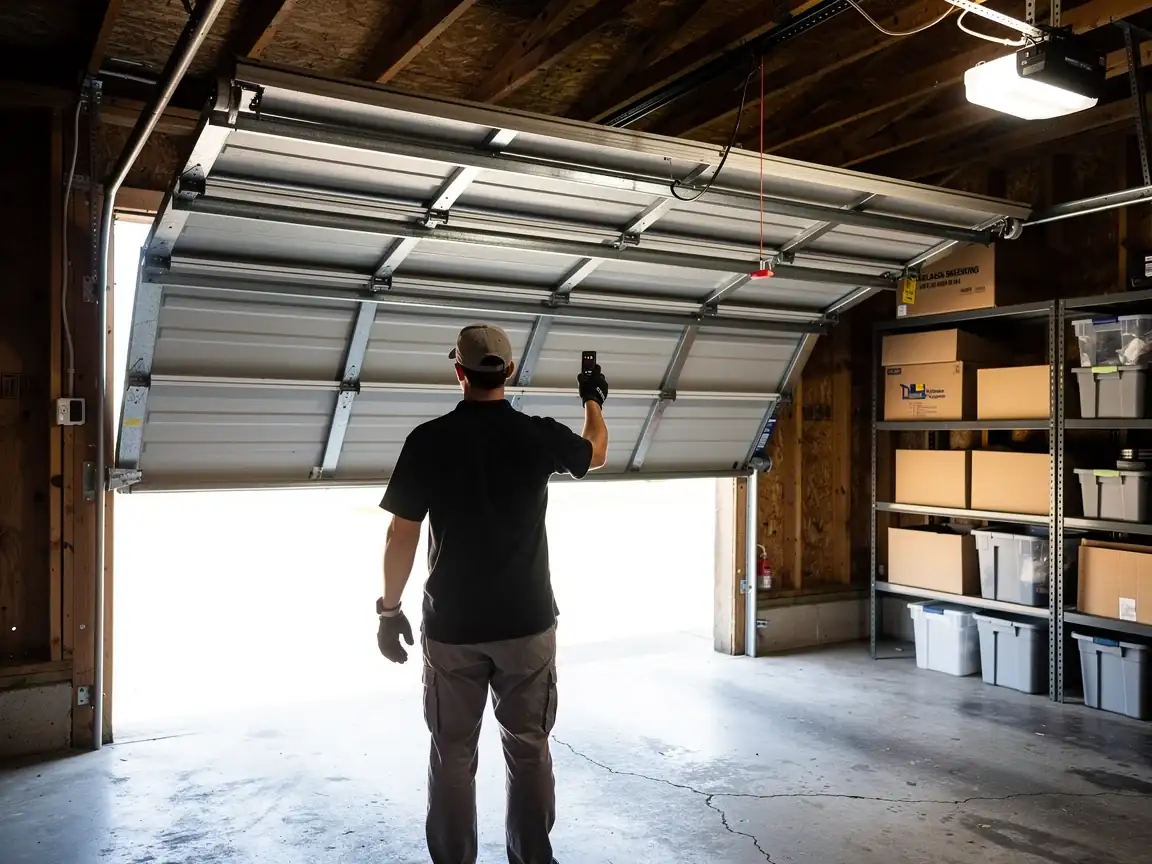
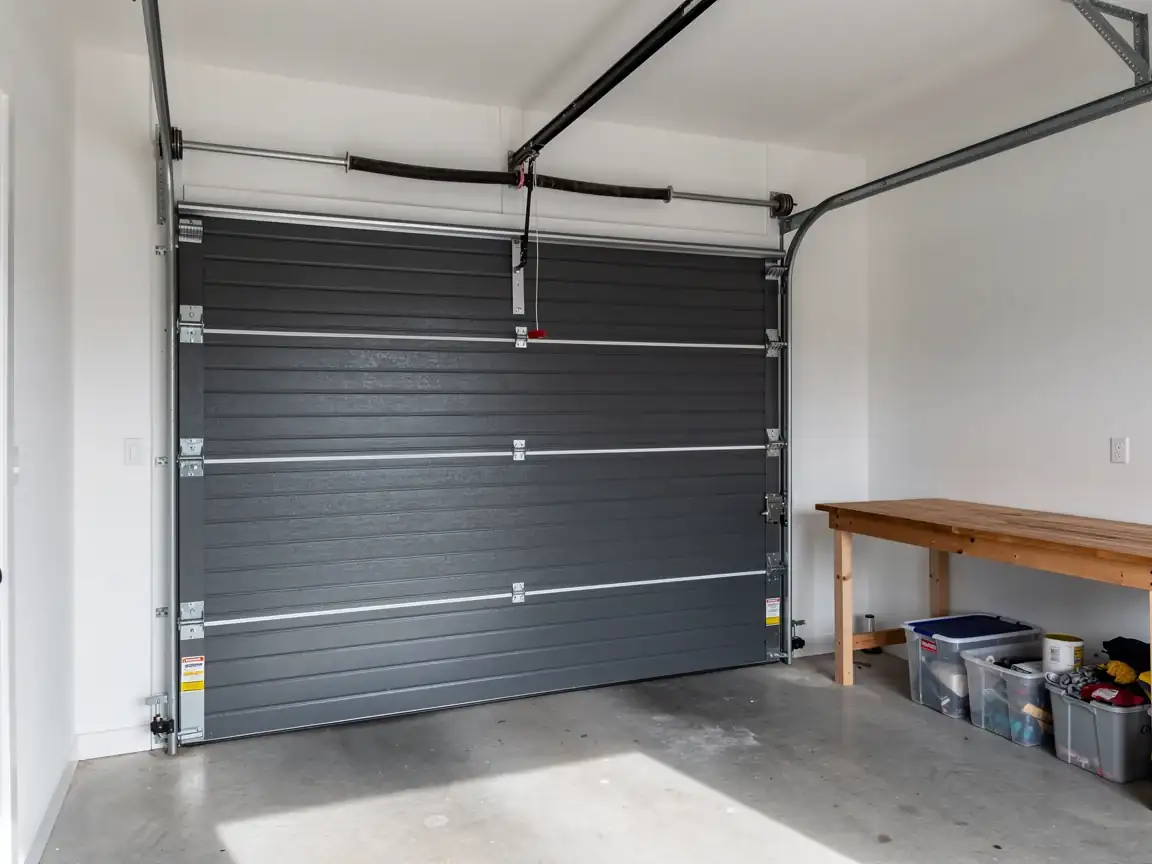
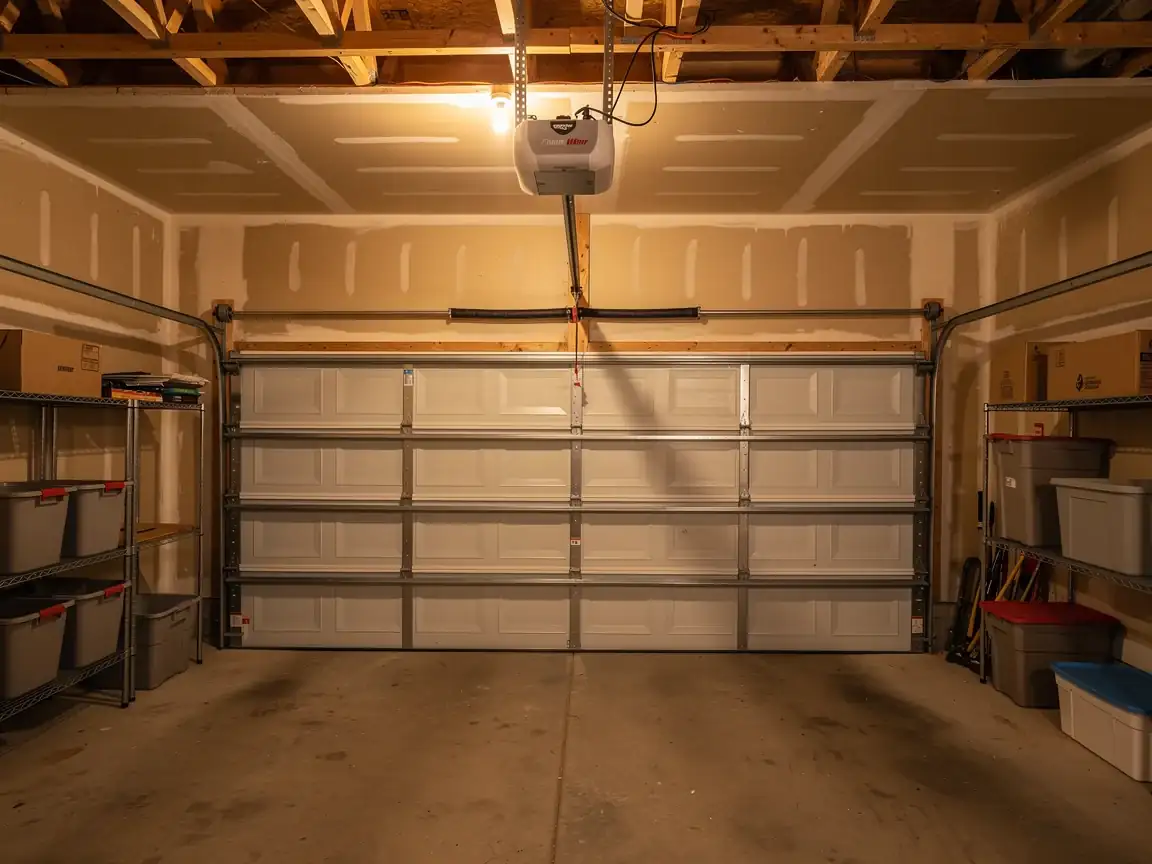
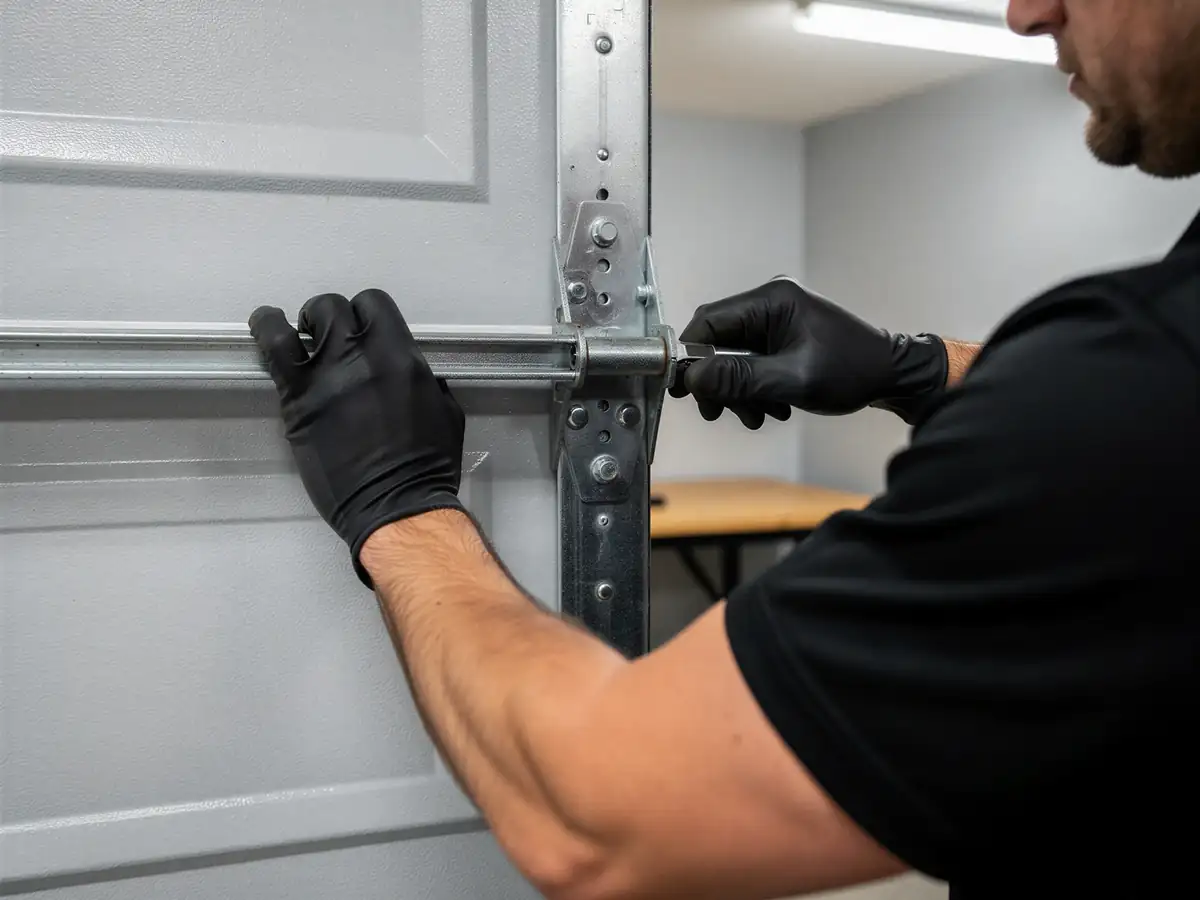
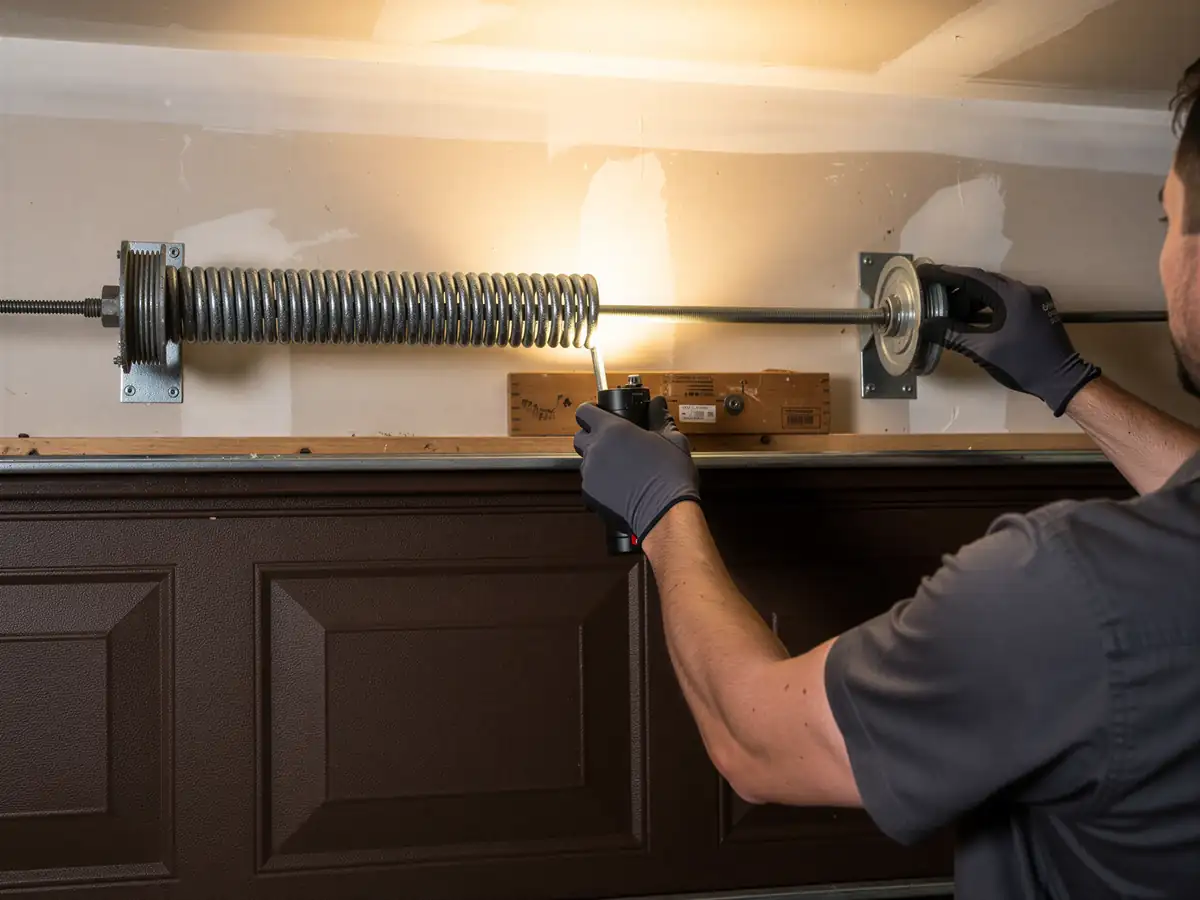
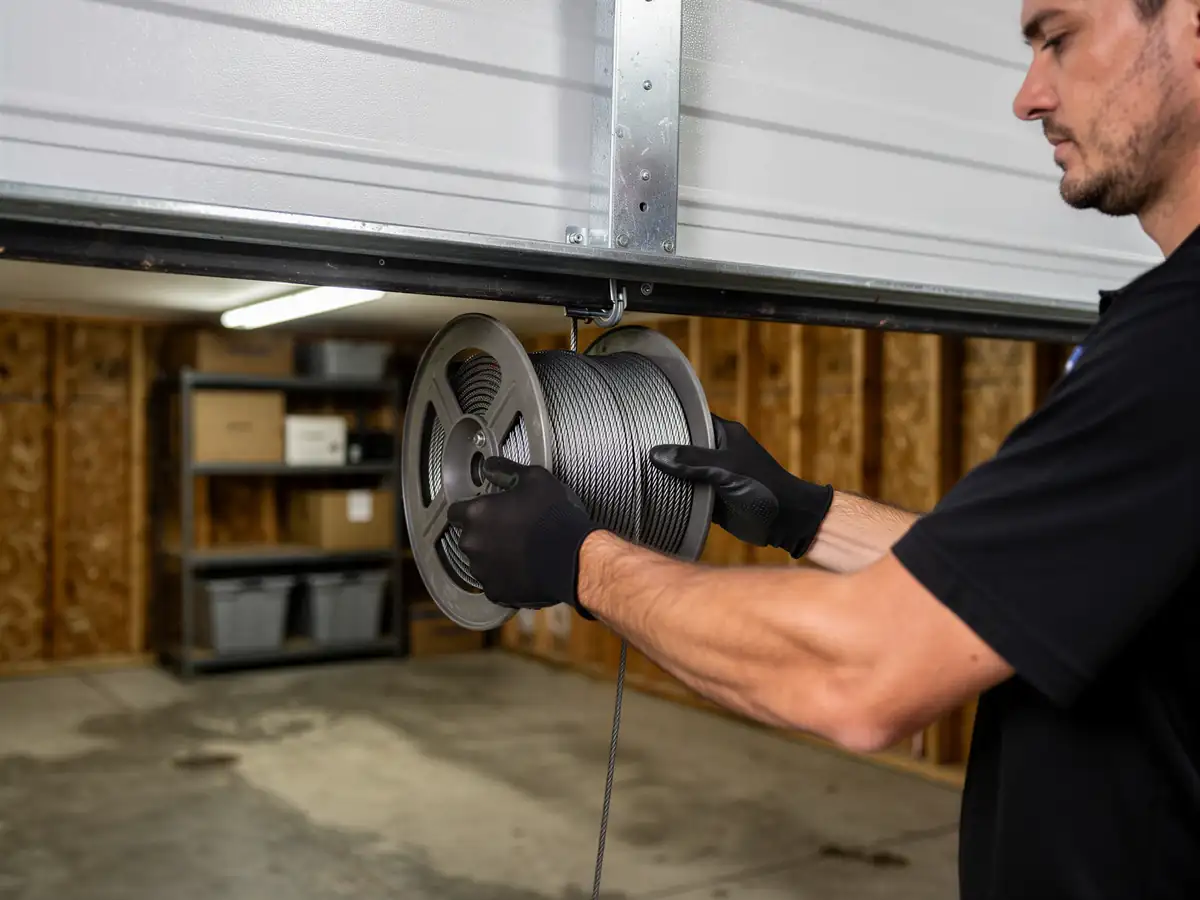
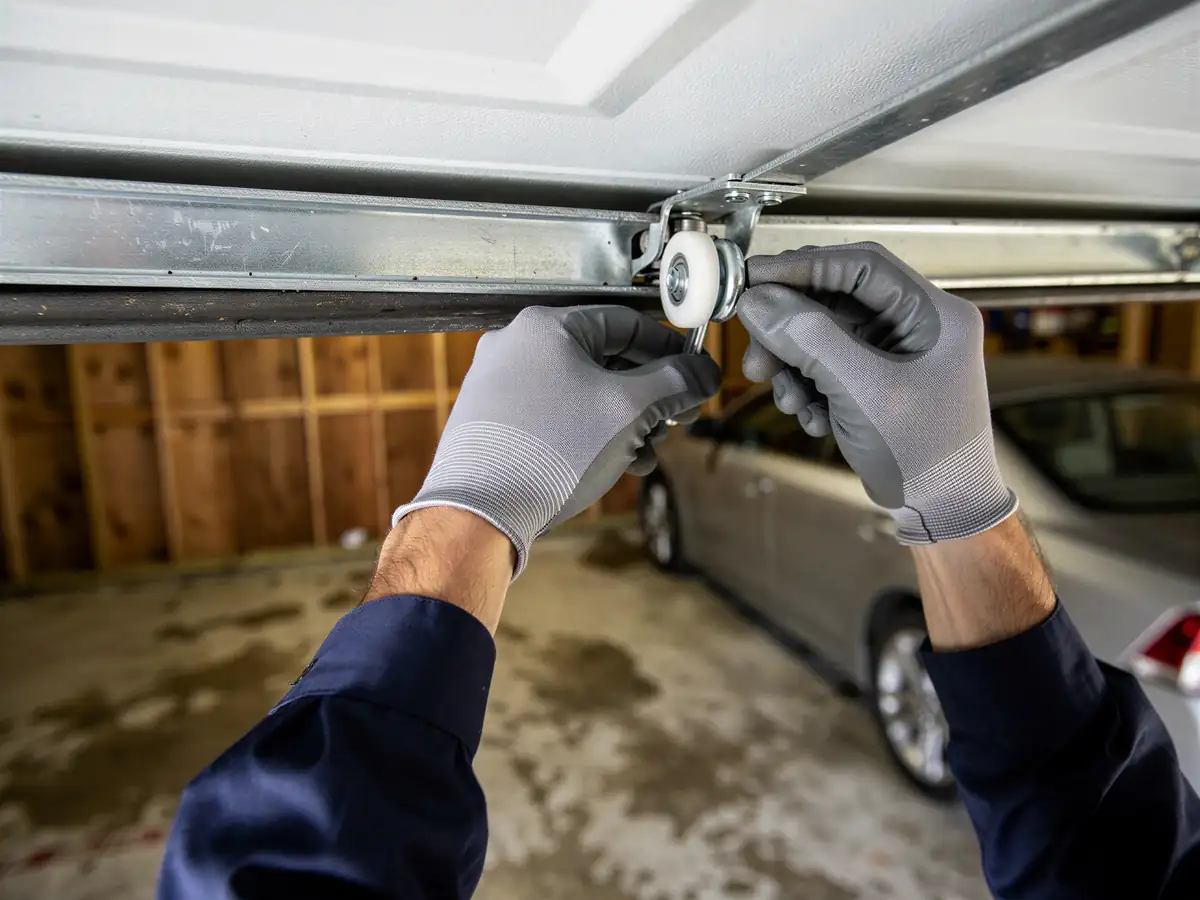
The door won't open, or it opens halfway and stops. Sometimes it's a loud bang from the garage followed by the door going dead weight - that's a torsion spring letting go. Other times the opener runs but the door doesn't move, which usually means a cable has come off the drum or a roller has jumped the track. If the door feels heavy when you lift it by hand with the opener disconnected, the spring is already weak even if it hasn't snapped yet.
A lot of Bethesda calls start the same way: it worked fine yesterday, and this morning it's stuck halfway up with the opener straining against it. That strain is the spring, not the motor. Running the opener against a broken or weak spring over and over is how you turn a spring job into a spring-plus-opener job, so if the door won't lift by hand, stop trying it with the button.
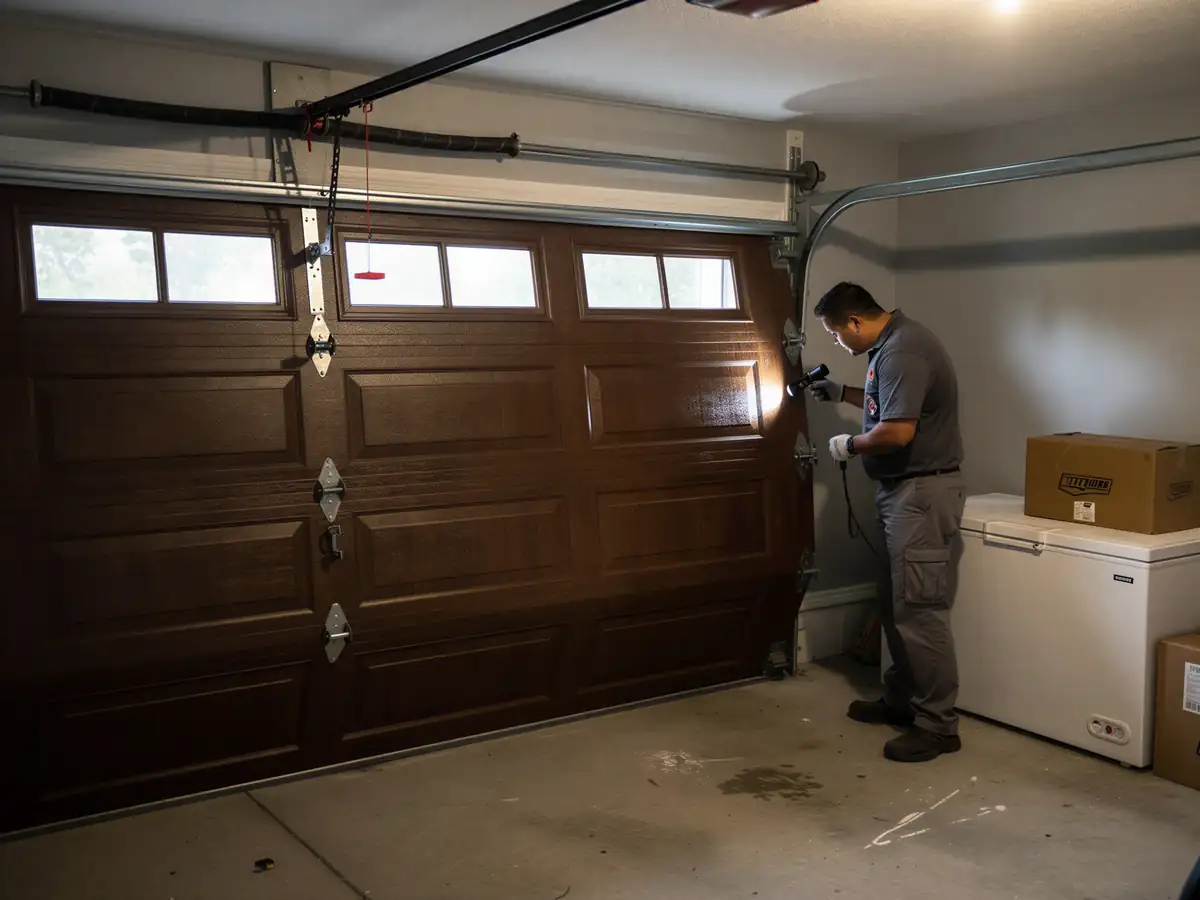
One limitation worth saying up front: if the door is binding on a bent track or an out-of-square frame, we need to see it in person before we can tell you whether it's a spring, a track, or both. Phone diagnosis on a stuck door is a guess.
How Long It Takes
What decides the time on a job like this isn't the symptom, it's what's behind the wall
Houses in this area run from 1938 up through newer builds, with the typical home dating to 1973, and a door install from that era often used hardware sizes nobody stocks on the truck as a default anymore. If your spring or track matches a standard current size, the fix is quick. If it's an older or oversized door - common on the bigger lots around Chevy Chase and Brookmont - we may need to confirm the exact shaft and drum size before we can finish the same visit.
Cold also plays a part
Steel moves differently at 20 degrees than it does at 70, and winter calls where the door has been sitting half-open in freezing air sometimes take longer just because the hardware is stiffer and slower to work with safely. We won't rush a spring job in the cold - that's exactly the kind of corner that ends with a cable snapping under tension.
We can't give you a number without seeing the door
But we'll tell you on-site, before any work starts, whether it's a same-visit fix or a parts-order situation.
The Cost of This Job
We don't post a flat price here because the honest range depends on what's actually broken and what size hardware your door needs - a standard torsion spring on a newer single door is a different job than a matched pair on an older double door with non-standard shaft length. What we can tell you is what drives the number: spring size and count, whether cables or rollers also need replacing, and whether the part is something we carry or something we have to source for an older install.
Across this service area, with 139,247 owner-occupied houses and a median household income around $116,255, we find most homeowners want one correct repair, not a cheaper patch that fails again in a year. A mismatched spring - wrong wire gauge or wrong length - will work for a while and then throw the door out of balance, which stresses the opener and the track too. That's a second bill waiting to happen.
We'll quote the job in person, in writing, before we touch anything, so you're deciding on an actual number, not an estimate over the phone.
What Causes It Around Here
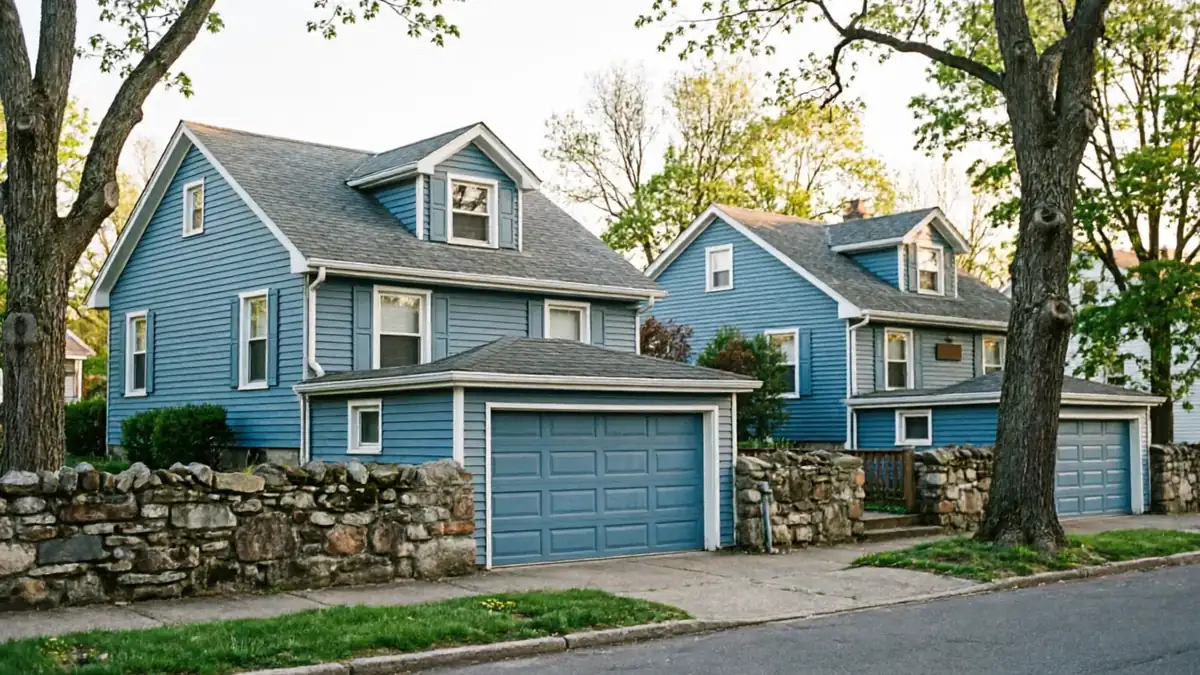
Two things line up in Bethesda to make spring and hardware failures common: age and climate. Housing in the wider area was built anywhere from 1938 to 2014, but most of it - across the 75 or so named neighborhoods from Chevy Chase and Kensington out to Wheaton and Aspen Hill - went up in the 1960s and 70s. Doors from that era are old enough that their original springs are long past rated cycle life, even on houses that have had little else done to them.
Then there's the cold. This area sits in a severe cold-winter climate band, and steel torsion springs lose some flexibility as temperature drops. A spring that's been slowly fatiguing for years is more likely to finally give out on a cold morning than a mild one, because the metal is stiffer and less forgiving right when the door is asked to cycle. We see the same pattern on tracks and rollers that haven't been lubricated for a winter or two - the grease thickens, the roller drags, and something that was marginal in October fails in January.
If your house falls in that mid-century band, it's worth having the spring and hardware checked before it fails on its own schedule instead of yours.